
7 Critical Mistakes to Avoid When Starting a Laundry Business in 2026
Starting a laundry business seems straightforward. You rent a shop, buy some machines, and wait for customers. But here's what most people don't realize until it's too late: the difference between a profitable laundry service and one that shuts down within a year often comes down to a few avoidable mistakes. Whether you're planning to open your first outlet in Mumbai, Bangalore, or a smaller city, understanding these pitfalls can save you lakhs of rupees and countless headaches. This guide covers the most common mistakes new laundry business owners make and how to avoid them from day one.
Underestimating Your Actual Operating Costs
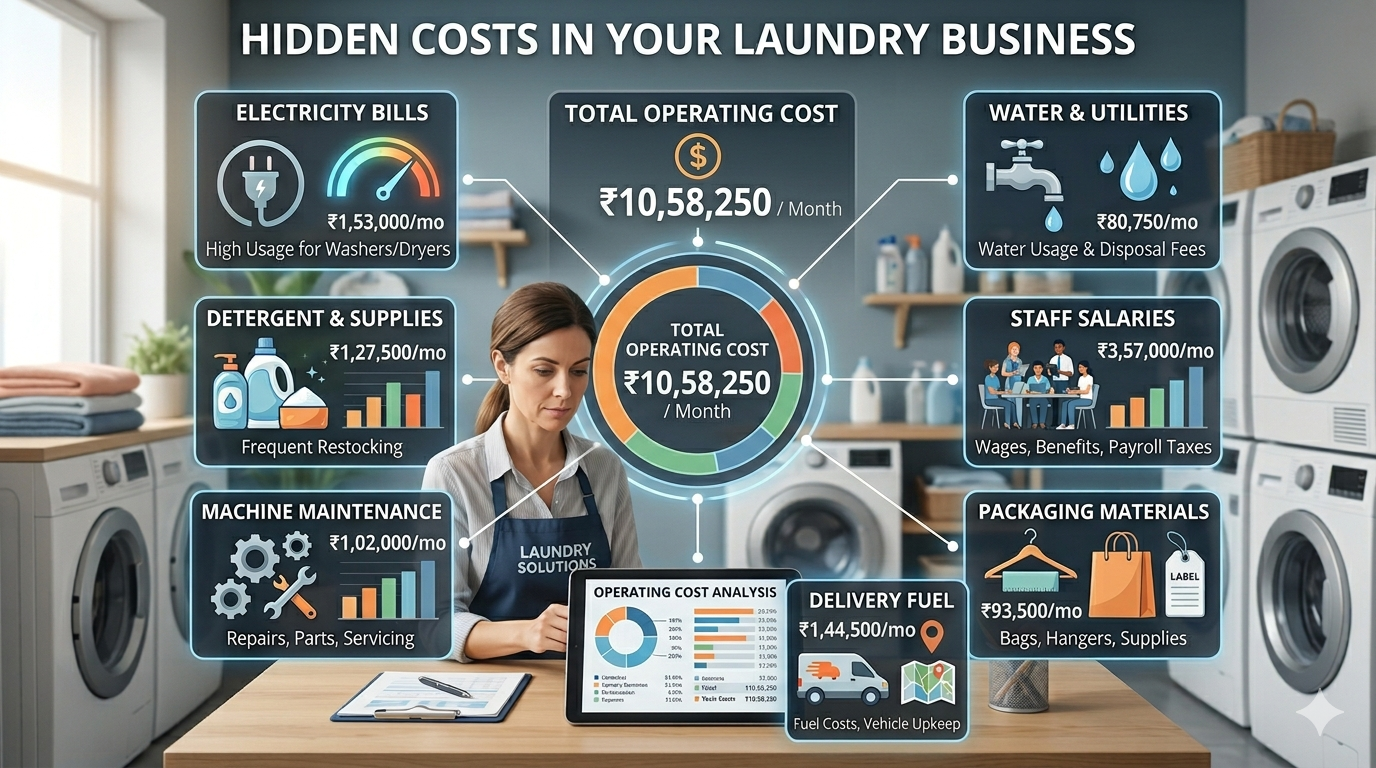
Many entrepreneurs focus only on the obvious expenses: rent, machines, and staff salaries. Then reality hits. Your electricity bill is double what you estimated. Detergent costs add up faster than expected. Machine maintenance becomes a monthly expense, not an occasional one.
The real problem? Most people calculate costs based on theoretical capacity. They assume machines will run at 80% capacity from month one. That rarely happens. In reality, you'll spend 3-4 months building a customer base while paying full operating costs.
Here's what gets missed: packaging materials, hangers, poly bags, tags, delivery fuel, staff uniforms, water treatment (if needed), insurance, and the cost of re-doing damaged items. One dry-cleaning shop owner in Pune told me his actual monthly costs were 40% higher than his initial projections. He survived only because he had kept extra capital aside.
Create a realistic budget that includes a 6-month runway where revenue is lower than expenses. Factor in seasonal variations too. Laundry demand drops during monsoon in some areas, spikes during wedding season in others.
Choosing Location Based Only on Rent
Low rent looks attractive. But a shop in a low-footfall area with cheap rent often costs more in the long run than a slightly expensive location with high visibility.
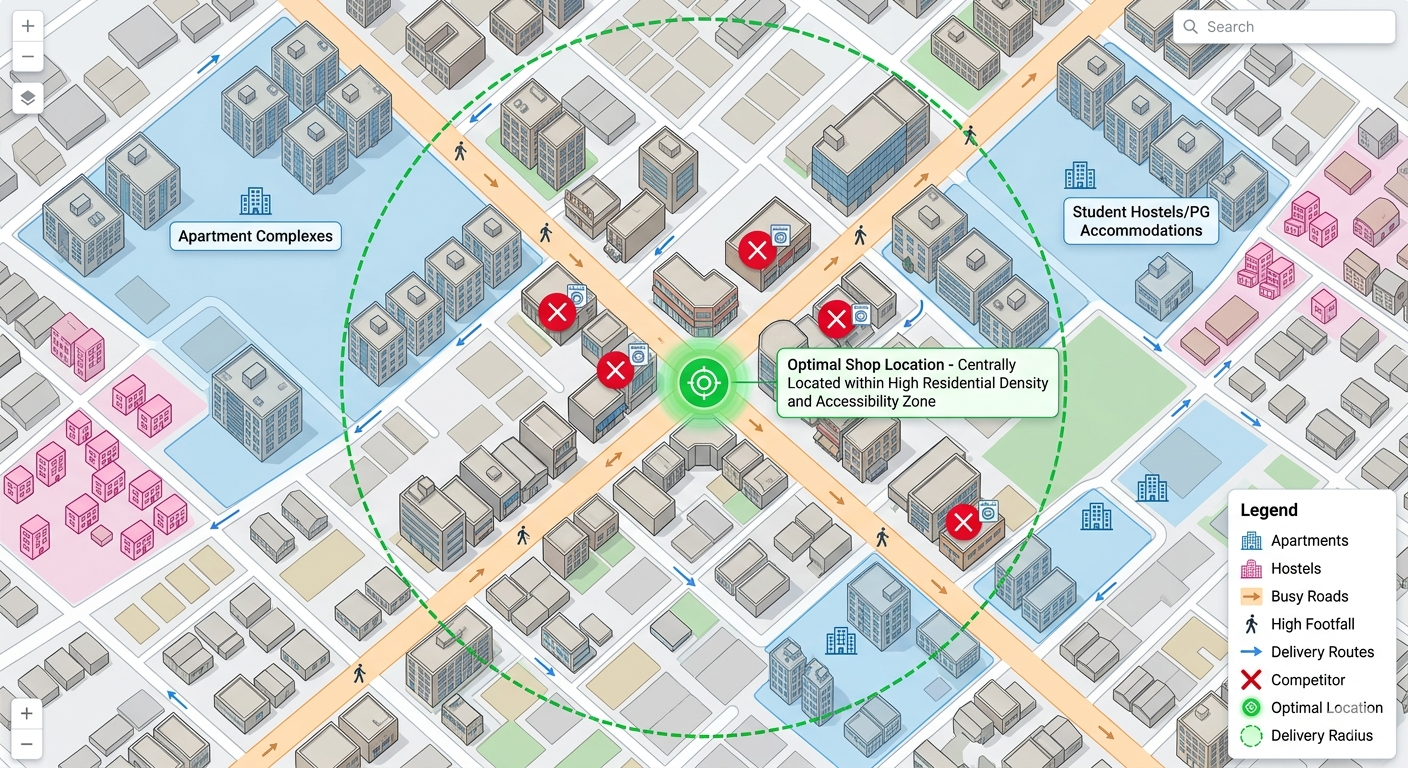
Your laundry business needs two things: residential density and accessibility. A ground-floor shop near apartment complexes, hostels, or working professional areas will always outperform a cheaper location tucked inside a commercial complex.
Visibility matters more than you think. Many customers discover laundry services while walking or driving past them. If your shop is on a lane that people don't frequent, you'll spend heavily on marketing just to inform people you exist.
Also consider competition. Being the only laundry service in a 2-kilometer radius isn't always good if that radius has low population density. Sometimes, being near competitors in a high-demand area works better because customers already know where to find laundry services.
One mistake I've seen repeatedly: choosing location without analyzing delivery logistics. If you plan to offer pickup and delivery, your location should allow easy access to your target service areas. Being centrally located in your coverage zone reduces delivery time and fuel costs.
Running Operations Without Proper Systems
This is where most laundry businesses lose money without realizing it. Paper-based order tracking, manual billing, and memory-dependent operations create chaos as you grow.
Picture this scenario: A customer comes to collect their clothes. You search through racks for 10 minutes. The item isn't ready yet, but nobody informed them. They're frustrated. You lose a customer. This happens multiple times a day when you don't have proper order tracking.
Staff dependency becomes another issue. Your billing person knows which customer gets which discount. Your delivery boy remembers addresses. When they're absent, operations slow down. Information stays in people's heads instead of in a system everyone can access.
Inventory management without software means you often discover you're out of a particular detergent only when you need it. Reordering becomes reactive instead of planned. This leads to emergency purchases at higher costs or customer orders getting delayed.
The biggest hidden cost? You can't analyze your business. Which services are most profitable? Which customers are high-value? What's your average order value? Without data, you're making decisions based on gut feeling rather than facts.
How much does it cost to open a laundry shop in India?
How Laundry POS Software Helps Avoid These Mistakes
Modern laundry POS systems aren't just about billing. They're about running your business with clarity and control. Here's how they address real operational problems.
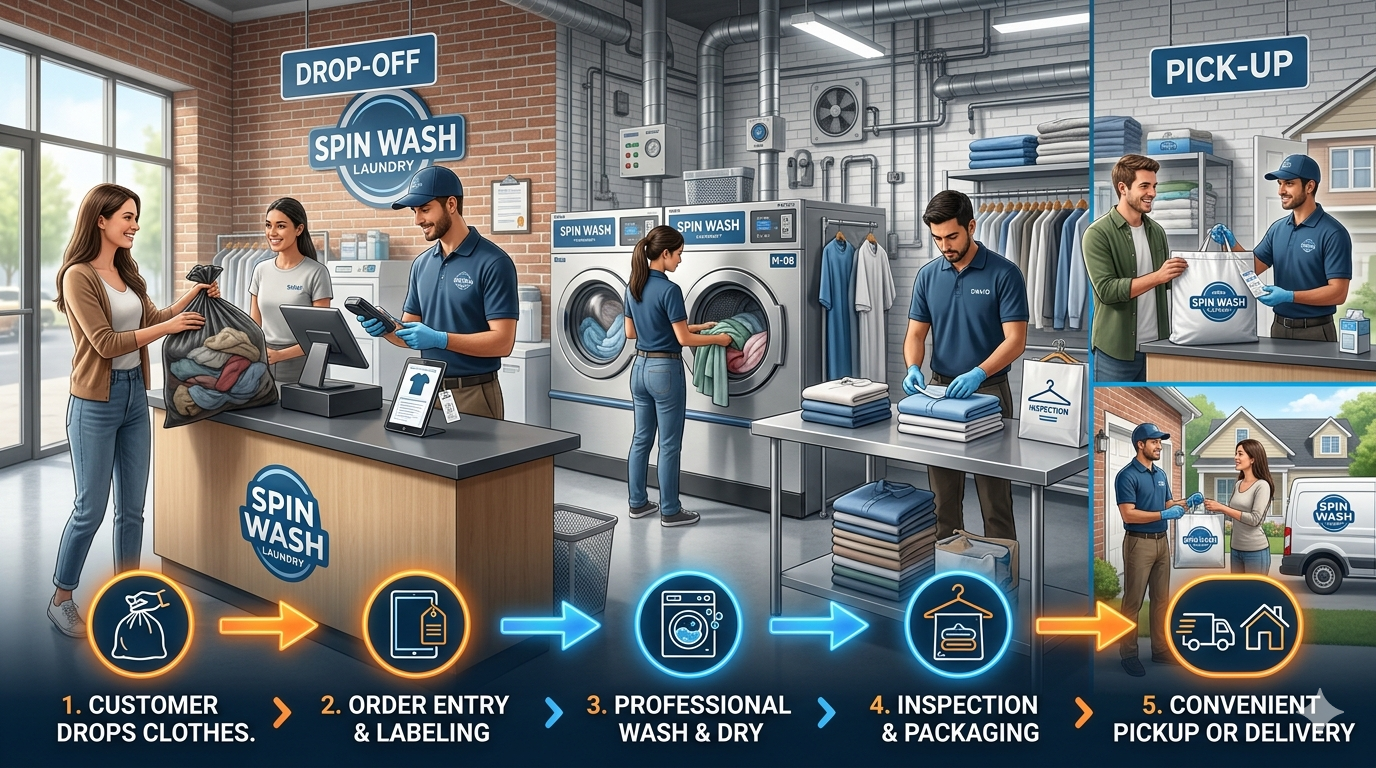
Order tracking becomes foolproof. Every item gets a barcode or unique ID. Customers receive SMS updates when their order is ready. Your staff can instantly check order status, payment status, and delivery schedule without asking anyone or searching through papers.
Customer management gets automated. The system remembers customer preferences, previous orders, pricing agreements, and payment history. New staff can serve existing customers without knowing their history because everything is in the system.
GST billing and compliance happen automatically. No manual calculations, no errors in tax computation. Your accountant gets clean data for filing returns. During tax season, instead of scrambling through paper bills, you generate reports in minutes.
Delivery management through mobile apps means your delivery person has all addresses, knows which orders to deliver on which route, and customers can track their delivery in real-time. This alone can reduce delivery-related complaints by 60-70%.
Multi-location control matters when you expand. One dashboard shows you what's happening across all branches. You spot problems faster, compare performance, and maintain consistent service quality.
The return on investment is straightforward. If software prevents even 2-3 customer complaints per week, reduces staff dependency, and gives you data to optimize pricing, it pays for itself within months.
Ezer Laundry POS System
Streamline your laundry business with our comprehensive POS system. Features include smart billing, garment tracking, WhatsApp notifications, and cloud backup.
Ignoring Customer Experience and Communication
Many laundry owners focus entirely on cleaning quality and ignore everything around it. But customers judge you on the complete experience, not just how well you wash clothes.
Communication gaps cause most complaints. Customers don't know when their order will be ready. They aren't informed about delays. Nobody tells them if an item can't be cleaned as expected. They show up expecting their clothes, only to face disappointment.
Delayed deliveries without communication are worse than delays with proper updates. If you know an order will be late, inform the customer proactively. Give them options. This simple practice builds trust even when something goes wrong.
Complaint handling matters as much as service quality. How quickly do you respond? Do you take responsibility? One unsatisfied customer will share their experience with at least 10 people. In apartment communities, word spreads fast.
Transparency about pricing prevents arguments later. Hidden charges, unclear pricing for stain removal or express service, and surprise bills damage trust. Display your rate card clearly. Inform customers upfront if their item requires special treatment with extra charges.
Small touches make a difference. Returning clothes properly packaged, folded, and on time. Remembering repeat customers. Offering small loyalty benefits. These things cost little but create preference over competitors.
Hiring Without Training and Standard Processes
Your staff represents your business. But many laundry owners hire people, give them basic instructions, and expect consistency. That's unrealistic.
Washing different fabrics requires knowledge. Wool needs different treatment than cotton. Stain removal techniques vary. Without proper training, your staff will make expensive mistakes. Damaged clothes lead to compensation costs and lost customers.
Quality control needs standardization. Every order should go through the same checks. Are all buttons present? Are there any damages? Is the cleaning satisfactory? Without a checklist, quality depends on individual staff member's attention that day.
Customer interaction requires training too. How should staff handle complaints? What information should they collect when receiving orders? How should they communicate with customers during pickup and delivery? These need standard scripts and processes, not improvisation.
Staff retention is easier when people feel trained and valued. High turnover in laundry businesses often happens because employees feel they're just doing labor without learning anything. Invest in making them better at their work. They'll stay longer and perform better.
Documentation helps here too. Don't keep processes in your head. Write down how each task should be done. This makes training new staff faster and ensures consistent service even when experienced staff are absent.
Neglecting Marketing and Customer Acquisition
Opening your shop and waiting for customers is not a strategy. Even if you offer the best service, people need to know you exist.
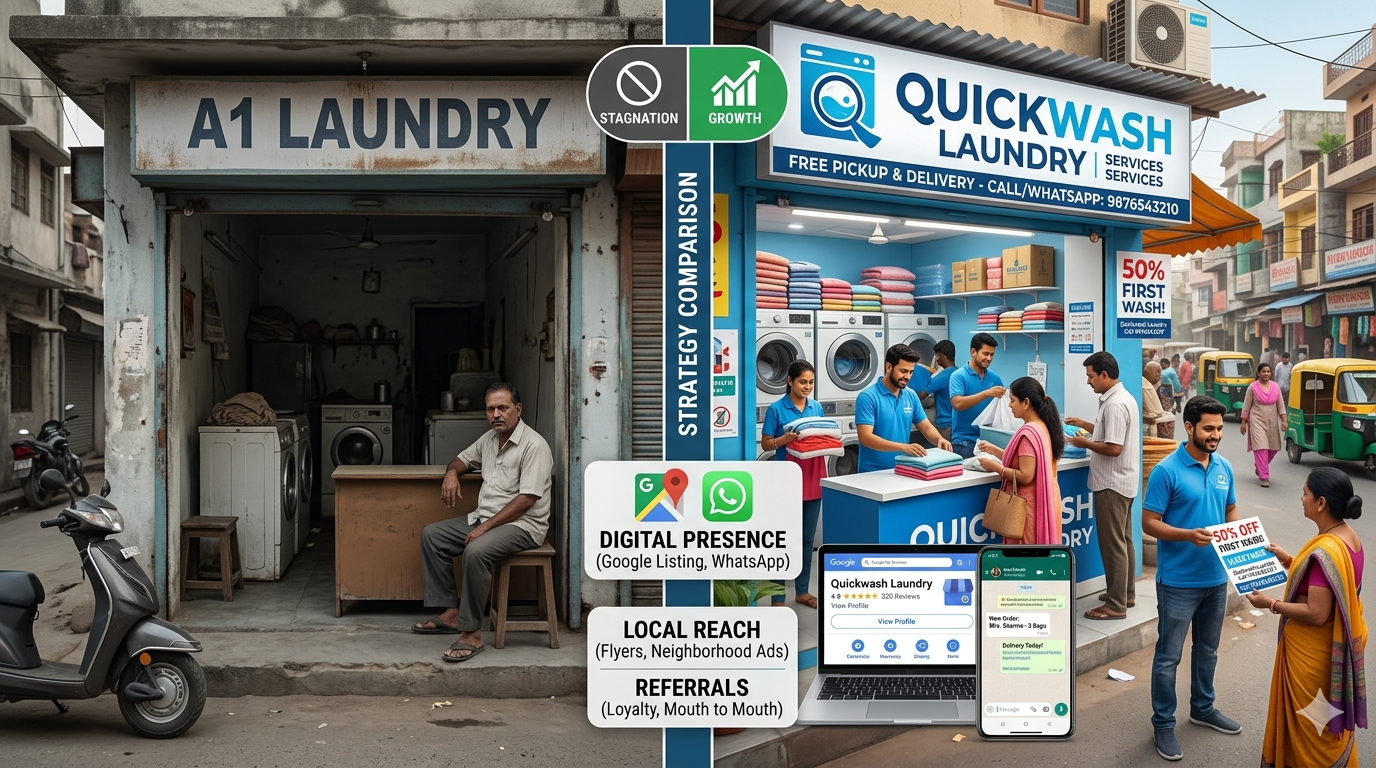
Local marketing matters most for laundry businesses. Your customers come from a 3-5 kilometer radius typically. Focus your efforts there. Distribute flyers in apartment complexes. Partner with housing societies for bulk deals. Sponsor small local events to get visibility.
Google My Business listing is non-negotiable. When someone searches "laundry near me" or "dry cleaning in [your area]", you should appear. Keep your listing updated with correct timings, services, and photos. Encourage satisfied customers to leave reviews.
Referral programs work exceptionally well in this business. Offer existing customers a discount for bringing new customers. People trust recommendations from neighbors and colleagues more than advertisements.
Digital presence doesn't mean spending lakhs on ads. A simple WhatsApp Business account where customers can place orders, get updates, and ask questions can be very effective. Many successful laundry businesses run primarily on WhatsApp in smaller cities.
First-customer discounts and trial offers reduce the barrier to trying your service. Once someone experiences good service, they typically continue. The challenge is getting them to try you the first time. Make that decision easier with an attractive first-order offer.
Not Planning for Growth and Scalability
Most people start small, which makes sense. But starting small without thinking about growth creates problems later. You'll need to rebuild systems, relocate, or restructure everything when you expand.
Machine capacity planning matters from day one. Buying one machine and then adding another doesn't work well. Machines of similar capacity and type are easier to manage. Plan your machine mix based on realistic growth projections, not just current needs.
Process documentation becomes critical as you hire more staff or open additional locations. If your success depends on you personally overseeing everything, you can't scale. Systems and processes that run without your constant involvement are essential for growth.
Technology choices should support expansion. If your software can't handle multiple locations or your billing system breaks down with higher volumes, you'll need to migrate later. That's disruptive and expensive. Choose solutions that can grow with you.
Financial management for growth means keeping some profits aside for reinvestment rather than taking everything out. New machines, additional staff, second location—all these need capital. Businesses that extract all profits and then take loans for expansion pay unnecessary interest.
Brand building happens gradually. Consistent quality, recognizable packaging, a clear value proposition—these create brand recall. When you're ready to expand to a second location, your brand should already have some recognition.
How to Start Your Laundry Business in 2026: Complete Guide
FAQs
What is the minimum investment needed to start a laundry business in India?
A small laundry shop with basic washing and dry-cleaning facilities typically requires ₹3-5 lakhs initial investment. This includes machines, shop setup, initial inventory, and 3-month operating costs. However, investment varies significantly based on location, shop size, and service offerings. Premium locations and full-service setups may require ₹10-15 lakhs or more.
How long does it take for a laundry business to become profitable?
Most laundry businesses take 6-12 months to break even and become consistently profitable. The timeline depends on location, marketing efforts, and operational efficiency. Businesses in high-demand areas with proper systems often achieve profitability within 6 months, while those in competitive markets may take longer to build customer base.
Do I need special licenses to operate a laundry business?
You'll need a GST registration (mandatory if turnover exceeds threshold), trade license from local municipal corporation, and potentially a pollution control certificate if using certain chemicals. Requirements vary by state and city. Fire safety certificate may be needed depending on your setup. Consulting a local business advisor ensures you have all necessary compliance covered.
Can a laundry business run without pickup and delivery services?
Yes, many successful laundry businesses operate as drop-off only, especially in high-footfall areas near residential complexes. However, offering pickup and delivery significantly expands your customer base and increases order values. In metropolitan cities, customers increasingly expect this convenience. Your decision should depend on your target market and competition.
What's the average profit margin in the laundry business?
Profit margins typically range from 20-35% after all expenses. Dry cleaning services usually have higher margins (30-40%) compared to regular washing (15-25%). Profitability improves significantly with volume, customer retention, and operational efficiency. Businesses using management software often report 5-10% better margins due to reduced errors, better inventory management, and lower operational waste.
How important is location compared to service quality?
Both matter, but they serve different purposes. Location determines how many potential customers discover you and your operational costs. Service quality determines whether those customers return and recommend you. A great location with poor service won't succeed long-term. Excellent service in a terrible location struggles to get initial customers. Ideally, you need both, but if forced to choose, location gives you more customers to prove your service quality to.
Should I start with a franchise or an independent laundry business?
Independent businesses offer higher profit margins and complete control but require you to build systems and brand from scratch. Franchises provide proven systems, brand recognition, and support but take a percentage of revenue and limit your flexibility. For first-time entrepreneurs, franchises reduce initial uncertainty. For those with business experience, independent setups often prove more profitable long-term.
Conclusion
Starting a laundry business offers genuine opportunity, but success isn't guaranteed simply by opening a shop. The mistakes outlined here—underestimating costs, choosing the wrong location, running without systems, ignoring customer experience, skipping staff training, neglecting marketing, and not planning for growth—account for most laundry business failures in the first two years.
The good news? All these mistakes are avoidable with proper planning and the right approach. Modern tools like laundry POS software eliminate many operational problems that once required years of experience to manage. Combined with strong fundamentals in location selection, customer service, and marketing, these technologies give new businesses a fighting chance against established players.
If you're planning to start your laundry business or looking to improve your existing operations, the time to implement proper systems is now. Learn more about how modern laundry management solutions can help you avoid these common pitfalls and build a profitable, scalable business from day one.