
How to Start Your Laundry Business in 2026: Complete Guide
Starting a laundry business in 2026 is actually a solid opportunity—and I mean that. Urban life keeps getting busier, and people genuinely need reliable cleaning services. Whether you're thinking about a small neighborhood shop or a proper dry cleaning setup, this guide covers what you actually need to know. From planning and paperwork to running daily operations and growing the business. With the right planning and modern tools (yes, you'll need some tech), you can build something profitable that your local community actually values.
Understanding the Laundry Business Landscape in India
The laundry industry in India has changed quite a bit. Traditional dhobis are still around, but there's now a whole professional service sector with organized players, better technology, and actual quality standards.
Customers today want convenience—pickup from home, fast turnaround, clear pricing, digital payments. That's the expectation now. This creates space for new entrepreneurs who can deliver professional service with these modern conveniences. You've got different customer segments: working professionals, hostel students, hotels and hospitality, hospitals, corporate offices needing bulk services.
Here's what matters: understanding your local market. Research who's already operating nearby, spot the gaps in service, and figure out which model fits your area. Self-service laundromat? Full-service laundry? Dry cleaning specialist? Maybe a mix?
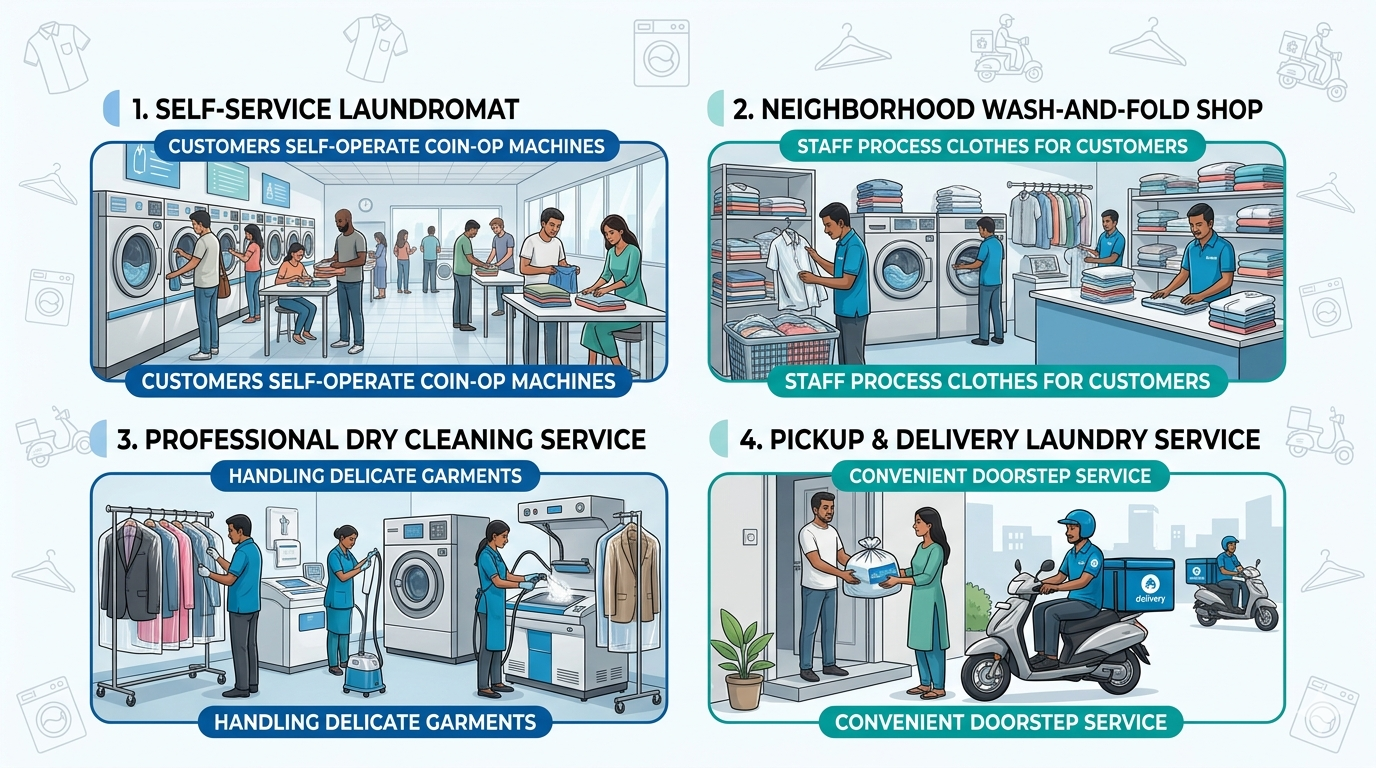
Step 1: Create a Solid Business Plan
Every successful laundry business starts with a proper business plan. Think of it as your roadmap, and you'll need it if you're seeking any financing.
Your plan should cover: market analysis of your area, what services you'll offer, pricing based on local competition, startup costs and where funding comes from, how operations will flow, marketing and customer acquisition, and financial projections for at least three years.
Be realistic with numbers. Calculate fixed costs—rent, electricity, water, staff salaries, equipment maintenance. Then factor in variable costs that shift with business volume. Most laundry businesses hit profitability within 12-18 months if managed properly.
Think about your unique value proposition too. What actually makes your service different? Eco-friendly cleaning? Faster turnaround? Premium fabric care? Competitive pricing? This isn't just marketing fluff—it guides everything you do.
Step 2: Choose the Right Location
Location can genuinely make or break this business. You need to balance high visibility, easy access, and rent you can actually afford.
Look for high residential density areas, particularly apartments and working-class neighborhoods. Near colleges, hostels, PG accommodations? That's steady business. Commercial areas near offices can lead to corporate tie-ups.
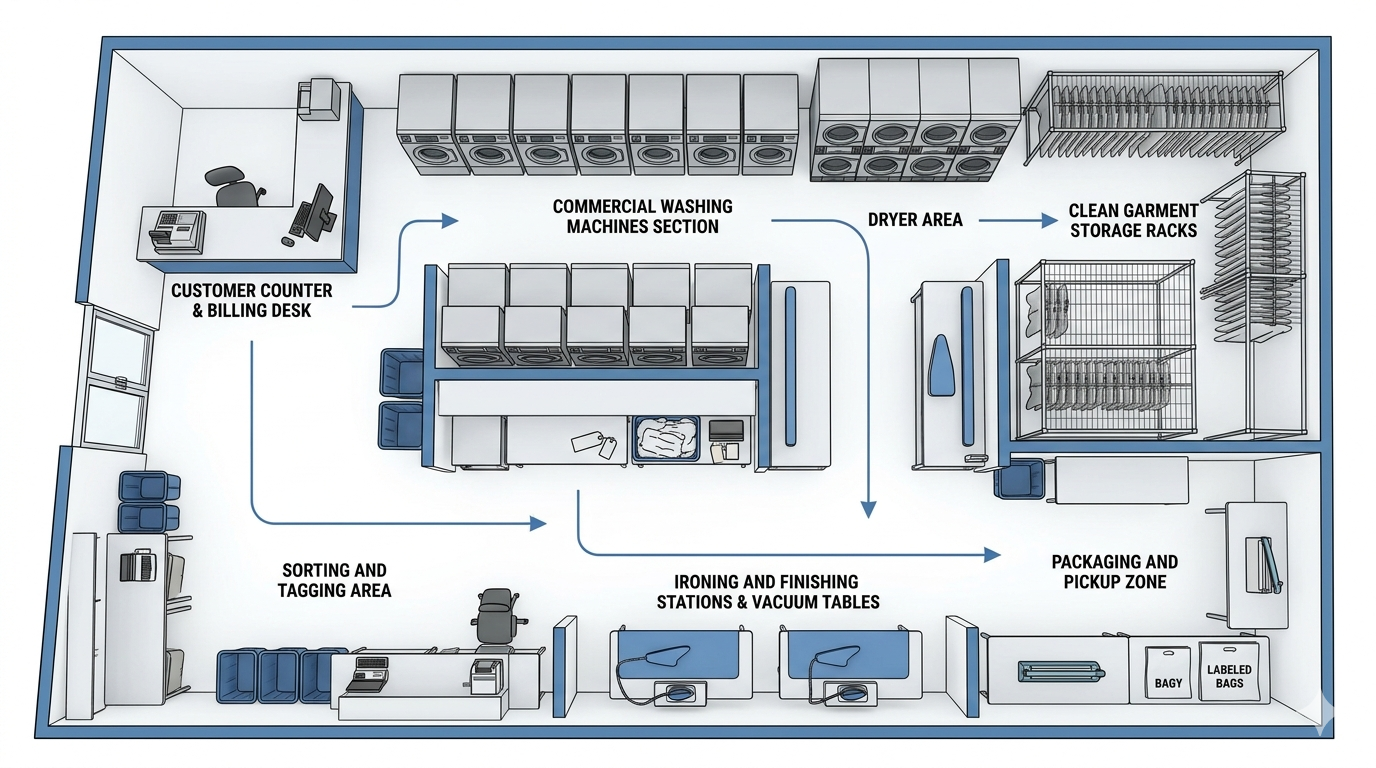
You need adequate space for equipment, sorting, ironing stations, storage, and a customer waiting area. A small shop needs 400-600 square feet minimum. Larger operations? 1000+ square feet.
Water availability is critical—and I mean consistent supply, not occasional. Check electrical load capacity for industrial machines. Make sure drainage systems work properly. Also confirm that commercial laundry is actually permitted in your chosen spot by checking municipal regulations. Trust me, you don't want to discover zoning issues after signing a lease.
Step 3: Complete Legal Registration and Licenses
Operating legally builds customer trust and saves you from headaches later.
Start by registering your business entity. Most small laundry shops begin as proprietorships or partnerships. Larger operations might go for private limited company structure. Register with your local municipal corporation for a trade license—this lets you operate a commercial establishment legally.
Get GST registration if your annual turnover crosses the threshold (currently ₹20 lakhs for services, ₹40 lakhs for goods in most states). Even below this, voluntary registration helps claim input tax credit and looks more professional to commercial clients.
Apply for necessary clearances: fire safety certificate (NOC), pollution control clearance if you're using chemical dry cleaning, shop and establishment license. Planning to hire employees? Register under your state's Shops and Establishment Act.
Consider insurance coverage—property insurance for equipment, liability insurance for customer goods, fire insurance for premises. It's one of those things that seems unnecessary until something goes wrong.
Step 4: Invest in Quality Equipment
Your equipment determines service quality, efficiency, and customer satisfaction. Don't cut corners here, but also don't overspend initially.
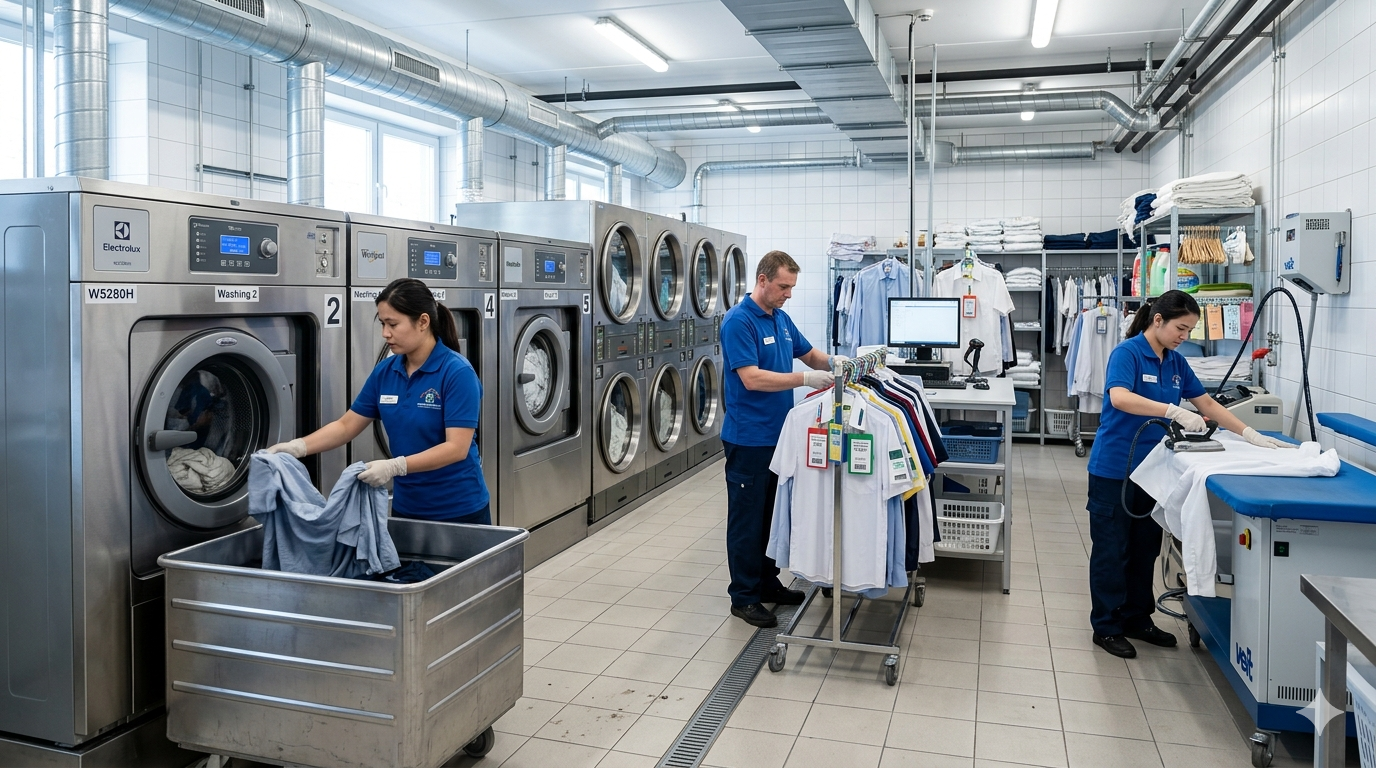
Essential equipment includes: commercial washing machines (front-loading is more efficient), industrial dryers with adequate capacity, commercial irons and ironing tables, dry cleaning machine if you're offering that service, boiler for steam pressing, garment racks and hangers, packaging materials.
For a basic shop, expect ₹3-5 lakhs in equipment. Full dry cleaning setup? ₹8-15 lakhs or more. Buy certified, energy-efficient machines. They cost more upfront but the savings on electricity and water add up significantly.
Research suppliers carefully. Go with established brands that have local service networks. Check warranty terms, spare parts availability. Some suppliers offer installation, training, after-sales support—definitely factor this in.
Maintenance is crucial. Schedule regular servicing, train staff properly on equipment handling, keep basic spare parts stocked to minimize downtime.
Step 5: Build Your Service Menu and Pricing
Create a clear service menu that covers customer needs while staying profitable.
Common services: washing and ironing (standard clothes), dry cleaning (delicate fabrics, suits, sarees), steam ironing and pressing, stain removal and spot cleaning, shoe and bag cleaning, curtain and carpet cleaning, alterations and repairs (optional add-on).
Research local pricing carefully. Visit 5-10 competitors, note their rates. Price competitively but don't undervalue your service. Factor in actual costs—water, electricity, detergent, labor, equipment depreciation, rent.
Pricing models to consider: per-piece (₹15-30 per shirt, ₹40-60 per trouser), per-kg for bulk items (₹60-100 per kg), or subscription packages for regular customers (monthly washing at discounted rates). Many businesses use a combination.
Display pricing prominently in-store and online. Transparency builds trust. Seasonal discounts or referral bonuses can attract customers, but avoid excessive discounting that kills profitability.
Step 6: Hire and Train Reliable Staff
Your staff directly impacts service quality and customer experience. Hire carefully, invest in training.
For a small operation, start with 2-3 people—washers, ironers, delivery personnel. As you grow, add supervisors, customer service staff, more processing help. Look for previous laundry experience, though attitude and willingness to learn often matter more.
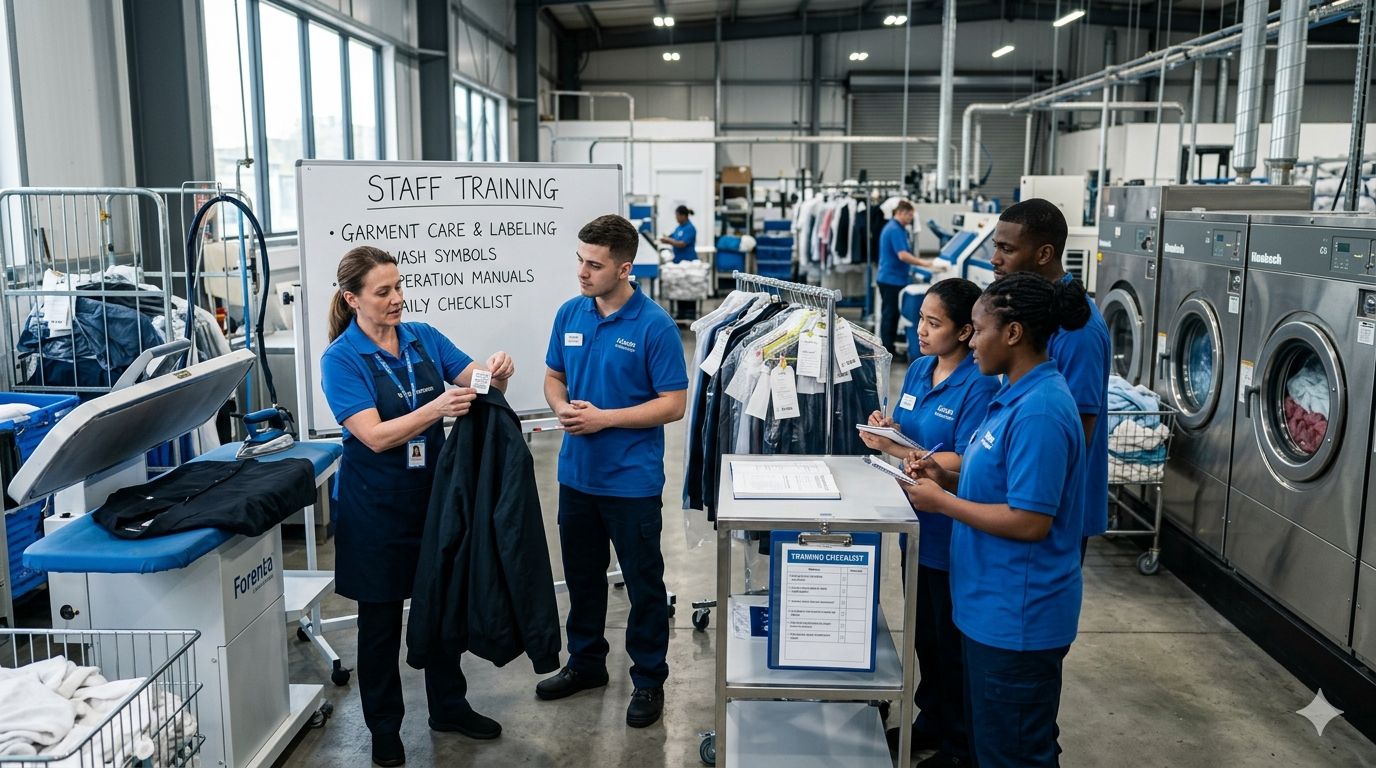
Provide proper training on: equipment operation and safety, fabric identification and care instructions, stain removal techniques, customer service and communication, hygiene and cleanliness standards, order tracking and delivery processes.
Establish clear SOPs for every task. This ensures consistency even when staff changes. Create inspection checkpoints before garments go back to customers—quality control prevents complaints.
Pay fair wages to retain good employees. Laundry work is physically demanding. Fair compensation, recognition, and decent working conditions reduce turnover and maintain service quality.
Step 7: Set Up Efficient Operations and Workflow
Streamlined operations maximize productivity, reduce errors, improve customer satisfaction.
Establish a clear workflow: customer drop-off and tagging, sorting by color/fabric/service type, washing and drying, ironing and finishing, quality check, packaging, customer pickup or delivery.
Implement a robust tagging system. Each item needs unique identifiers linked to customer orders. This prevents mix-ups and lost items—the most common customer complaints.
Create zones in your shop for different activities. Separate dirty and clean areas for hygiene. Organize ironing stations efficiently. Designate storage for pending orders and ready-for-delivery items.
Track key metrics: daily order volume, average processing time, revenue per day/week/month, customer complaints and resolutions. These numbers reveal bottlenecks and improvement opportunities.
Implement Modern Laundry Software for Smooth Management
Running a laundry business in 2026 without proper technology? You're putting yourself at a disadvantage. Modern laundry software transforms how you manage operations, serve customers, and grow.
A good laundry management system handles: order creation and tracking, customer database and history, automated billing with GST compliance, pickup and delivery scheduling, payment collection (cash and digital), inventory management for supplies, staff task assignment, business reports and analytics.
Cloud-based laundry software offers particular advantages for growing businesses. Access data from anywhere, manage multiple branches from one dashboard, enable customers to place orders through mobile apps. Urban customers increasingly expect this level of convenience.
Modern systems also support WhatsApp integration for order updates, SMS notifications for ready items, digital payment integration (UPI, cards, wallets), customer loyalty programs. These features improve customer experience and encourage repeat business.
When evaluating software, look for: ease of use (staff should learn quickly), mobile accessibility for delivery staff, robust reporting features, reliable customer support, reasonable pricing that fits your budget. Many providers offer free trials—definitely test before committing.
Ezer Laundry POS System
Streamline your laundry business with our comprehensive POS system. Features include smart billing, garment tracking, WhatsApp notifications, and cloud backup.
Market Your Laundry Business Effectively
Even the best service needs customers. Strategic marketing attracts initial clients and builds long-term growth.
Start with local tactics that actually work: distribute pamphlets in residential areas, put up signboards and banners near your shop, partner with apartment complexes for bulk deals, offer opening discounts to attract first-timers.
Digital marketing is essential in 2026. Create a Google My Business listing so customers find you in local searches. Build a simple website with services, pricing, contact details. Stay active on Facebook and Instagram showcasing your facility, services, customer testimonials.
Encourage reviews and referrals. Happy customers are your best marketers. Implement a referral program—give discounts to customers who bring new clients. Request Google reviews from satisfied customers to build online credibility.
Consider partnerships with hotels, hostels, gyms, salons, corporate offices for regular bulk orders. These B2B contracts provide stable revenue and help you plan capacity better.
Track which marketing channels actually bring customers. Spend more on what works, eliminate what doesn't. Marketing is ongoing, not a one-time thing.
Common Mistakes to Avoid When Starting
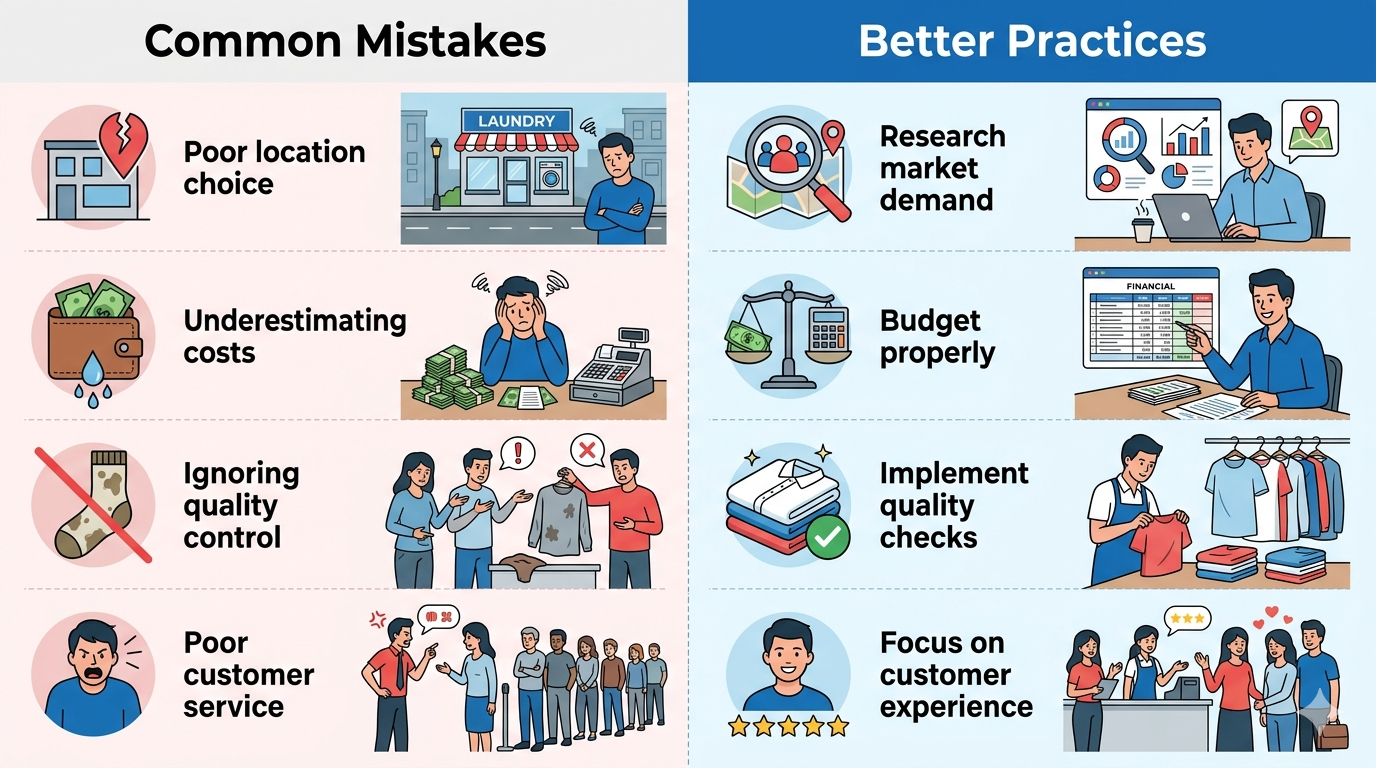
Learning from others' mistakes saves time and money. Here are pitfalls to avoid:
Underestimating startup costs leads to cash flow problems. Budget for at least 6 months of operational expenses beyond equipment costs. Compromising on location to save rent often backfires—poor visibility means fewer walk-ins.
Neglecting quality control damages reputation fast. One ruined expensive garment can lose you multiple customers through negative word-of-mouth. Implement strict quality checks before returning items.
Ignoring customer feedback is critical. Listen to complaints and suggestions. Most unhappy customers won't complain—they'll just leave. Make it easy for customers to share feedback and act on it promptly.
Poor cash flow management kills many small businesses. Track expenses meticulously, maintain emergency funds, don't mix personal and business finances. Overexpansion before stabilizing operations is risky too—perfect one location before opening multiple branches.
Financial Planning and Revenue Projections
Understanding your numbers is crucial for sustainable growth.
Initial investment for a basic laundry shop typically ranges ₹5-8 lakhs including: equipment (₹3-5 lakhs), shop deposit and advance rent (₹1-2 lakhs), initial inventory and supplies (₹50,000), licensing and registration (₹30,000), initial marketing (₹50,000).
Monthly operational costs include: rent (₹15,000-40,000 depending on location), electricity and water (₹15,000-25,000), staff salaries (₹30,000-60,000 for 2-3 staff), detergents and consumables (₹8,000-12,000), software subscription (₹1,000-3,000), miscellaneous expenses (₹5,000-10,000).
Revenue potential varies significantly by location and service quality. A small neighborhood shop processing 30-50 kg daily can generate ₹60,000-1,00,000 monthly. With good management and moderate growth, monthly revenue can reach ₹1.5-2.5 lakhs within a year.
Profit margins typically range 30-40% after stabilization. During initial months, focus on building customer base even if margins are lower. As volume increases and operations become efficient, profitability improves significantly.
Scaling Your Laundry Business for Growth
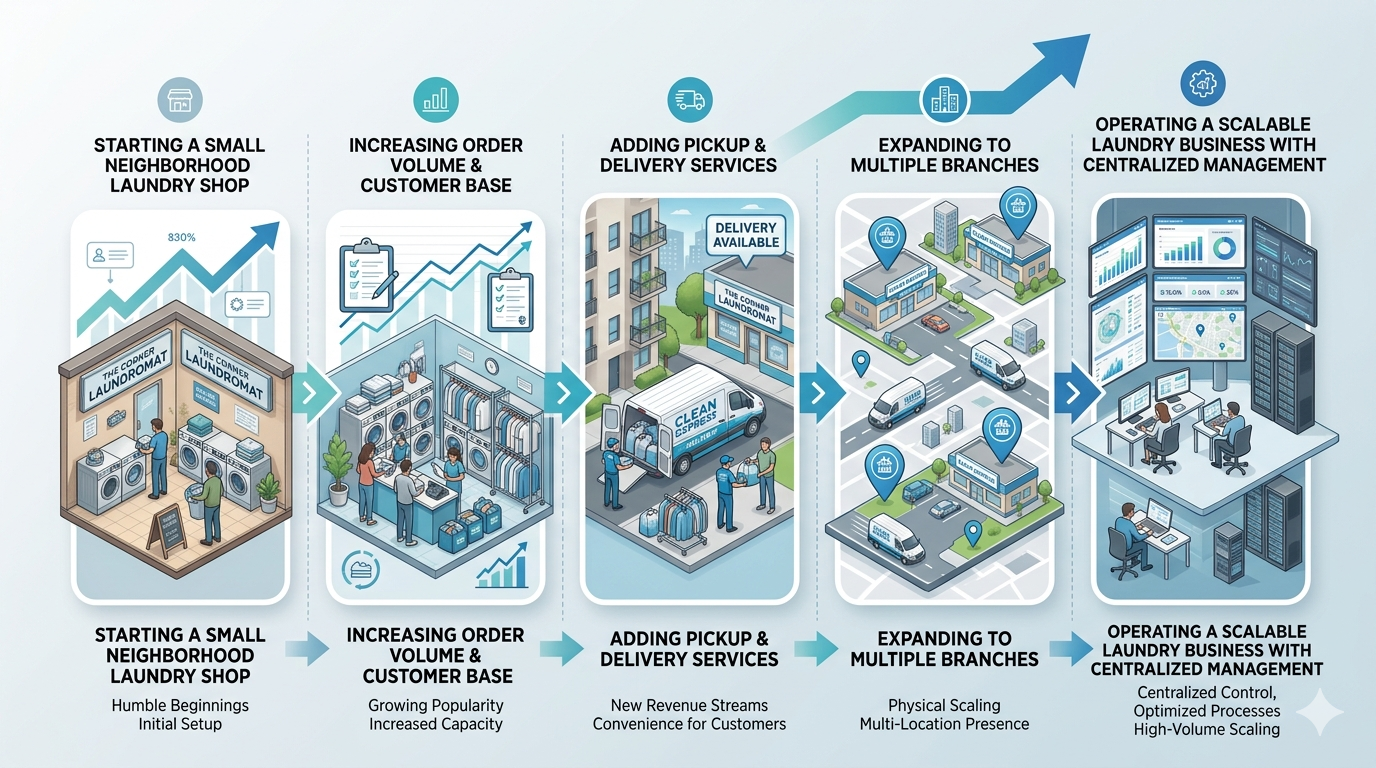
Once your first location is profitable and running smoothly, consider strategic expansion.
Add complementary services like shoe cleaning and repair, bag and luggage cleaning, home textile cleaning (carpets, curtains, sofa covers). These increase average order value from existing customers.
Explore B2B opportunities actively. Hotels, hospitals, gyms, salons need regular laundry services. Corporate tie-ups provide predictable revenue and better capacity utilization.
Consider franchising or opening multiple branches once you've perfected your operational model. Document everything—processes, training materials, supplier contacts, quality standards. This makes replication easier.
Technology becomes even more critical when scaling. Multi-branch management requires centralized software that provides visibility across locations. Cloud-based systems let you monitor operations, track performance, maintain quality standards remotely.
FAQs
How much investment is needed to start a laundry business in India?
A basic laundry shop requires ₹5-8 lakhs covering equipment, shop setup, licensing, and initial working capital. Larger dry cleaning operations may need ₹10-15 lakhs. Start small and scale as you build customer base and understand local demand.
Is laundry business profitable in India?
Yes, laundry businesses can be highly profitable with 30-40% margins after stabilization. Success depends on location, service quality, efficient operations, and effective marketing. Most businesses achieve breakeven within 12-18 months and steady profitability thereafter.
What licenses are required for a laundry business?
You need trade license from municipal corporation, GST registration (if turnover exceeds threshold), shop and establishment license, fire safety NOC, and pollution clearance if using chemical dry cleaning. Requirements vary by state—check local regulations.
Should I buy or lease laundry equipment?
Buying equipment upfront is usually more economical long-term if you have capital. Leasing reduces initial investment but increases operational costs. Choose based on your financial situation and business confidence. Quality matters more than ownership model.
How can laundry software help my business?
Laundry software streamlines order management, automates billing with GST compliance, tracks pickups and deliveries, maintains customer records, generates business reports, and improves customer experience through mobile apps and notifications. It saves time and reduces errors significantly.
What is the best location for a laundry shop?
Target residential areas with high apartment density, proximity to colleges or hostels, or commercial areas with offices. Ensure good visibility, easy accessibility, adequate water supply, and sufficient electrical capacity. Affordable rent that doesn't strain cash flow is equally important.
How do I attract customers to my new laundry business?
Use local marketing—pamphlets, signboards, partnerships with apartment complexes. Create strong online presence through Google My Business, social media, and a simple website. Offer quality service and competitive pricing. Implement referral programs and request customer reviews actively.
Conclusion
Starting your laundry business in 2026 offers genuine opportunity for entrepreneurs willing to deliver quality service with modern efficiency. Success requires careful planning, proper investment in equipment and location, legal compliance, skilled staff, and efficient operations management.
Technology, particularly cloud-based laundry software, has become essential rather than optional. The right management system streamlines operations, improves customer experience, and provides insights that drive growth. Combined with effective marketing and commitment to quality, your laundry business can build steady revenue and long-term sustainability.
Start with thorough market research, create a solid business plan, execute methodically. Focus on delivering excellent service—satisfied customers become your best marketing channel through referrals and positive reviews.
Ready to launch your laundry business with professional management from day one? Explore modern laundry software solutions that help you manage orders, customers, billing, and deliveries efficiently. Book a demo to see how the right technology can accelerate your business success.