
Custom Laundry Software vs SaaS: Which One Fits Your Business?
Running a laundry business in 2026 means dealing with more than just washing clothes. You're managing billing, tracking orders, handling deliveries, and keeping customers happy. The software you choose directly impacts how smoothly your business runs. But here's the real question: should you invest in custom-built software or go with a ready-made SaaS solution? Both have their place, but the right choice depends on your business size, budget, and growth plans. This guide breaks down what actually matters.
What Is Custom Laundry Software?
Custom software means hiring developers to build a system specifically for your business. Every feature, every screen, every workflow is designed around how you operate.
Sounds perfect, right? It can be. But it comes with trade-offs.
When you build custom, you control everything. Need a specific billing format? Done. Want integration with your existing CRM? Possible. Running a unique pricing model that no off-the-shelf software supports? Custom development handles it.
The problem is cost. A basic custom laundry management system starts around ₹5-8 lakhs for development alone. That doesn't include ongoing maintenance, bug fixes, or updates. You're also dependent on the development team. If they're unavailable or the project scope expands, costs balloon quickly.
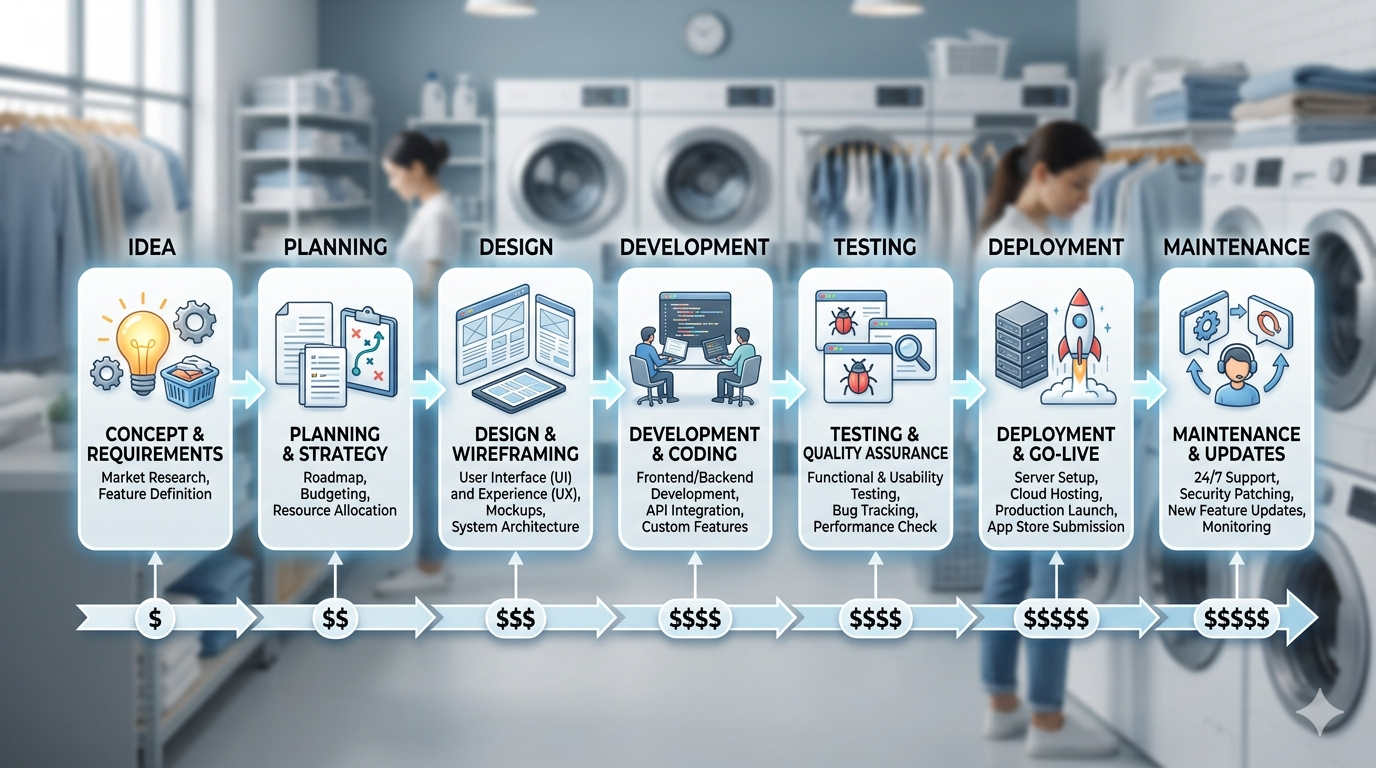
I've seen laundry chains in Mumbai spend over ₹15 lakhs on custom systems, only to realize they needed changes six months later. Each modification meant another round of quotes and waiting periods.
Custom works best for larger operations with very specific needs that SaaS can't meet. Think 10+ outlets, complex pricing tiers, or integration requirements with legacy systems. For most single or small multi-branch businesses, it's overkill.
Understanding SaaS for Laundry Businesses
SaaS (Software as a Service) means you subscribe to ready-made software. You pay monthly or yearly, log in, and start using it. No development costs, no technical headaches.
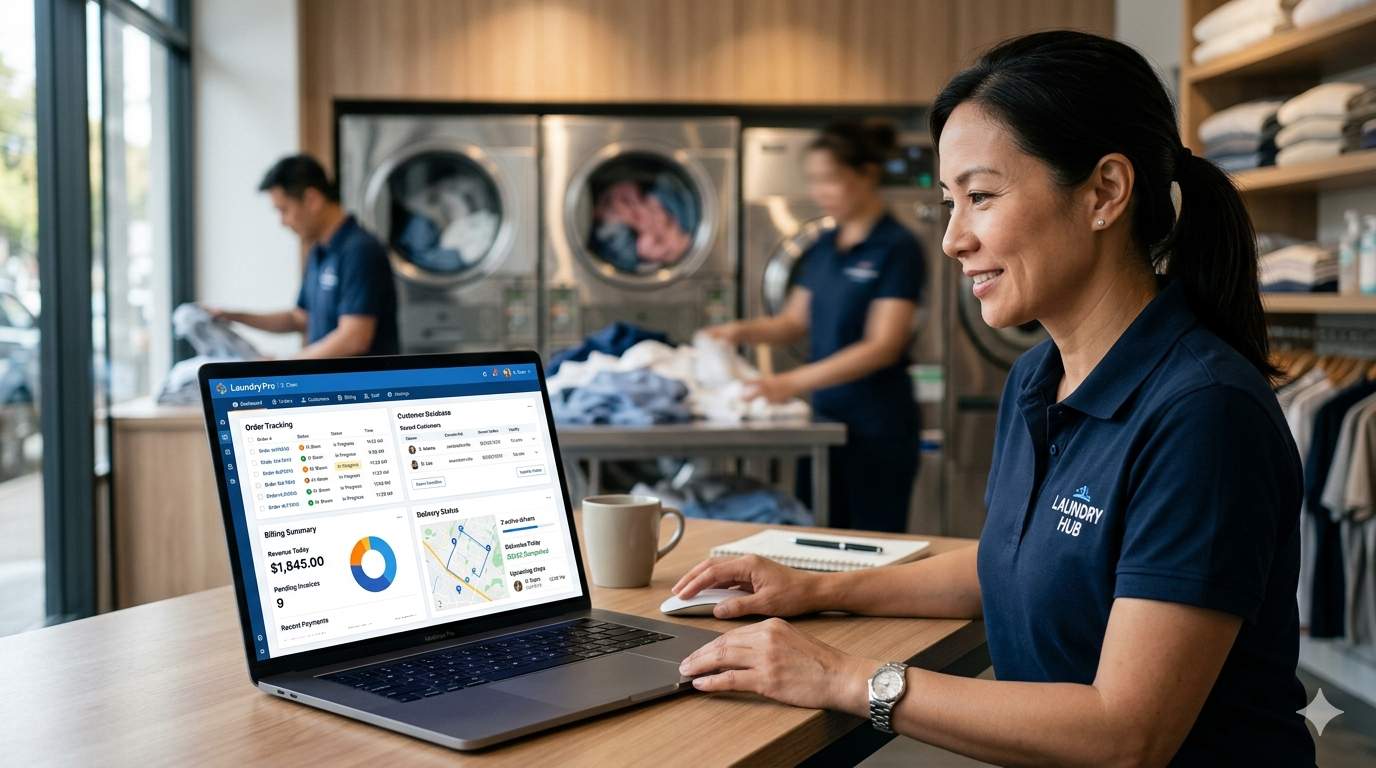
Modern laundry SaaS platforms handle everything from order entry to delivery tracking. They come with mobile apps, SMS notifications, customer databases, and GST-compliant billing built in.
The advantage? Speed. You can set up a SaaS system in days, sometimes hours. Compare that to 3-6 months for custom development.
Cost predictability is another big plus. Instead of a ₹10 lakh upfront investment, you might pay ₹2,000-5,000 monthly depending on features and scale. Updates happen automatically. Security patches get applied without you lifting a finger.
But SaaS isn't perfect either. You're limited to the features the platform offers. If you need something very specific, you might have to adjust your workflow to fit the software instead of the other way around.
Some businesses worry about data control. With SaaS, your customer information sits on someone else's servers. Reputable providers use encryption and regular backups, but you're trusting them with your business data.
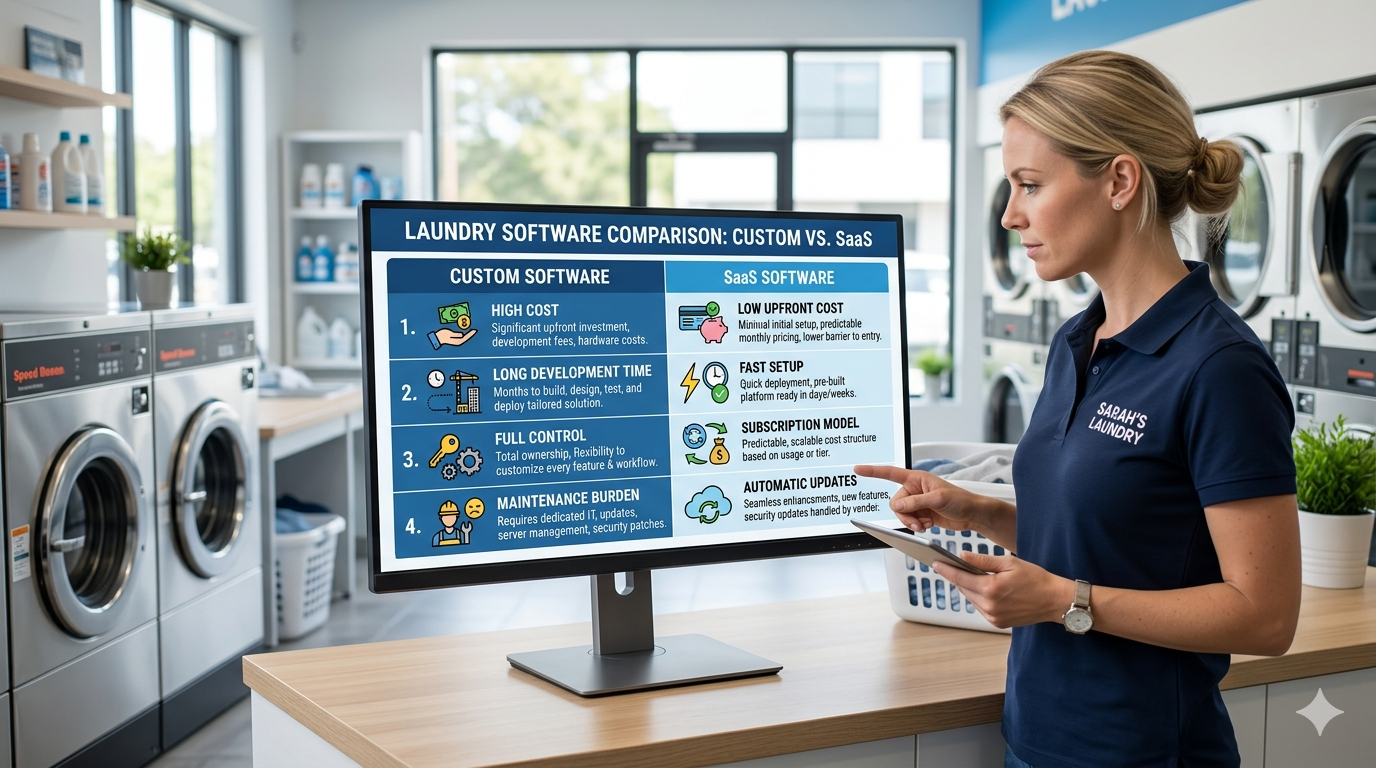
Pros of Custom Laundry Software
Complete Control Over Features
You decide what gets built and how it works. If your business has unusual requirements—maybe you offer specialized fabric treatments or run a subscription model with complex discounts—custom software molds to your needs perfectly.
Unlimited Scalability on Your Terms
As you grow, the system grows with you. No per-user fees, no feature restrictions. You own the code, so expansion doesn't mean negotiating new contracts.
Competitive Advantage
A well-designed custom system can become a business differentiator. If your software enables faster turnaround times or better customer communication than competitors, that's a real edge.
One-Time Investment (Eventually)
After the initial build and stabilization period, costs drop to maintenance only. Over 5-7 years, this might be cheaper than ongoing SaaS subscriptions for very large operations.
How to Start Your Laundry Business in 2026: Complete Guide
Cons of Custom Laundry Software
High Upfront Costs
Development isn't cheap. Beyond the initial build, expect to spend on testing, deployment, and training. Budget creep is common when requirements change mid-project.
Long Development Time
From planning to launch, you're looking at minimum 3-4 months, often 6-8 months for comprehensive systems. During this time, you're either running without proper software or using temporary solutions.
Ongoing Maintenance Burden
Software needs updates. Operating systems change. Security vulnerabilities emerge. You'll need a maintenance contract or in-house technical staff. This is an often-overlooked ongoing cost.
Technical Dependency
If the original development team disbands or becomes unavailable, you're stuck. Finding new developers to work on someone else's code is expensive and time-consuming.
I know a dry cleaning business in Pune that spent ₹12 lakhs on custom software in 2023. The development company shut down last year. Now they're spending another ₹4 lakhs just to get someone to understand the existing system and make basic updates.
Pros of SaaS Laundry Solutions
Quick Setup and Launch
Most SaaS platforms get you operational within a week. Sign up, configure your services and pricing, add staff logins, and you're running. This speed matters when you need to solve problems now, not six months from now.
Predictable Monthly Costs
Budgeting becomes simple. ₹3,000 per month means ₹36,000 yearly. No surprise invoices for bug fixes or emergency support. You know exactly what you're spending.
Regular Updates and New Features
Good SaaS providers constantly improve their platforms. You benefit from features developed in response to the entire user base's needs. Security updates happen automatically without service interruptions.
Professional Support Teams
When something breaks or you need help, there's a support team available. No waiting for your developer to return from vacation. Most SaaS companies offer phone, email, and chat support.
Lower Technical Risk
The SaaS provider handles servers, backups, security, and compliance. Your job is running your laundry business, not managing IT infrastructure.
Cons of SaaS Laundry Solutions
Monthly Recurring Costs
Subscriptions never end. Over 10 years, you might spend ₹4-6 lakhs on a SaaS solution. For some businesses, that feels like renting instead of owning.
Limited Customization
You work within the platform's framework. If you need a feature they don't offer, you either adjust your process or hope they add it in a future update.
Data Dependency
Your business information lives on their servers. If the SaaS company shuts down or raises prices dramatically, migration becomes necessary and painful.
Internet Dependency
Most SaaS platforms need internet connectivity to function. In areas with unreliable connections, this can cause operational issues. Some offer offline modes, but with reduced functionality.
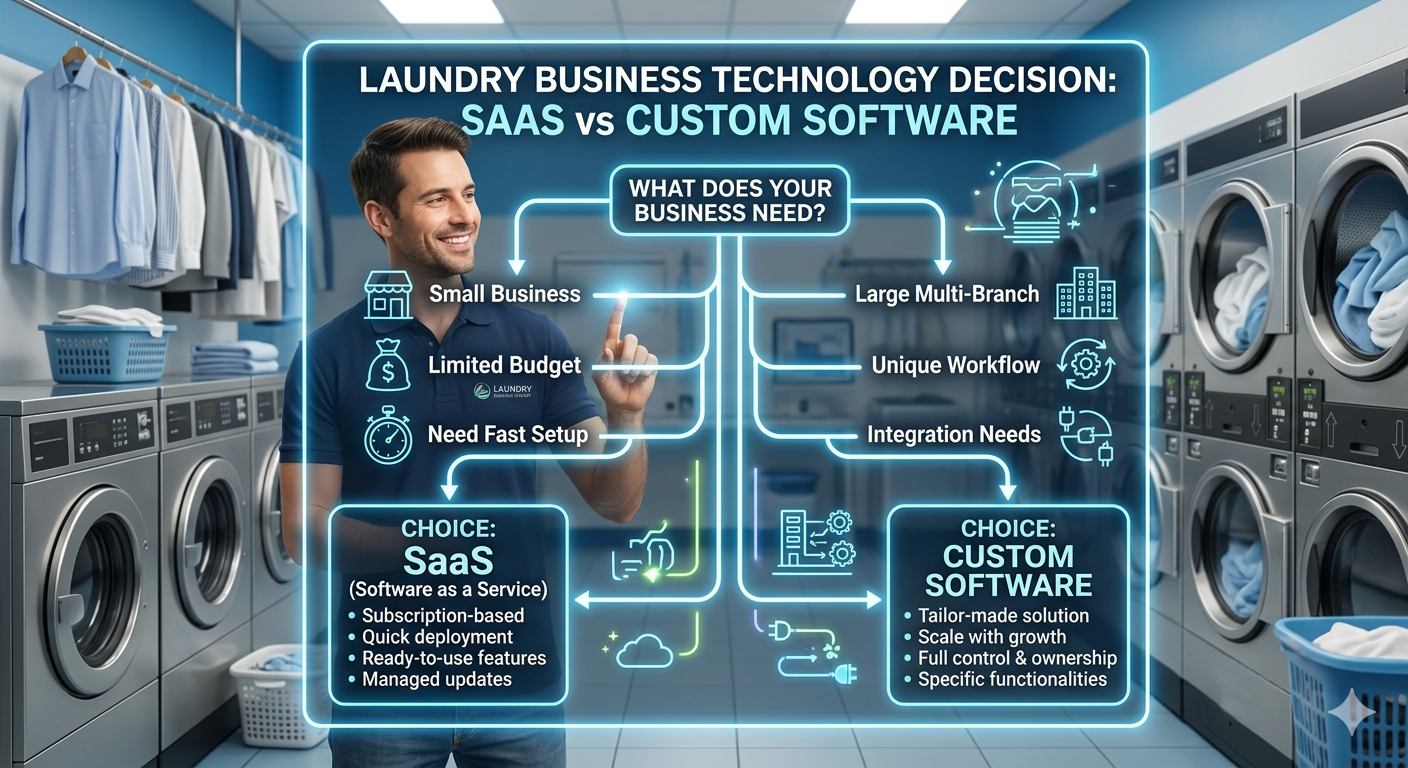
When Custom Software Makes Sense
Large Multi-Location Chains
If you're operating 15+ branches with complex inter-branch transfers, centralized inventory, and unified reporting needs, custom might justify the investment.
Highly Specialized Operations
Industrial laundry serving hospitals, hotels, or manufacturing units often has unique compliance and tracking requirements that generic SaaS can't handle.
Existing System Integration
When you need deep integration with legacy accounting systems, custom development might be the only viable path.
Long-Term Cost Efficiency for Scale
For very large operations processing thousands of orders daily, the per-transaction cost of SaaS might eventually exceed custom development ROI.
When SaaS Is the Better Choice
Small to Medium Businesses
Single shops or businesses with 2-5 branches benefit enormously from SaaS. The speed of deployment and feature completeness at low entry cost is unbeatable.
Budget-Conscious Startups
When capital is limited, spending ₹3,000 monthly instead of ₹8 lakhs upfront lets you invest in marketing, equipment, or working capital instead.
Need for Speed
Launching quickly matters more than perfect customization for most businesses. Get operational fast, learn what you actually need, then decide if custom makes sense later.
Standard Business Models
If your pricing, services, and workflows align with typical laundry operations, SaaS platforms already have everything built and tested.
Ezer Laundry POS System
Streamline your laundry business with our comprehensive POS system. Features include smart billing, garment tracking, WhatsApp notifications, and cloud backup.
The Middle Ground: Whitelabel Solutions
There's actually a third option worth considering. Whitelabel solutions sit between pure SaaS and fully custom development.
Platforms like Ezer POS Laundry Management offer whitelabel options where you get a proven system that can be branded as your own. You get the stability and features of established software with customization capabilities.
For bigger businesses wanting their own branded app and some custom workflows without full development costs, this approach works well. You're looking at maybe ₹1-2 lakhs for setup instead of ₹8-10 lakhs for pure custom, while still maintaining brand identity and getting specific modifications done.
The limitation? You're still working within the base platform's architecture. Deep technical changes aren't possible like they would be with fully custom development.
How to Start Your Laundry Business in 2026: Complete Guide
Making the Decision: A Practical Framework
Evaluate Your Actual Needs
List your must-have features. Then separate them from nice-to-have features. Be honest. Most businesses discover that 90% of their needs fit standard SaaS offerings.
Calculate Real Costs
For custom: Development + maintenance + updates + contingency (add 30% buffer). For SaaS: Monthly fee × 36 months for a realistic 3-year view.
Consider Your Technical Capacity
Do you have someone on staff who can manage custom software? If not, add those costs or acknowledge the risk.
Think About Growth Plans
Where will you be in 3 years? If expansion is planned, will your chosen solution scale accordingly?
Test Before Committing
Most SaaS platforms offer free trials. Actually use them with real orders for a week. You'll learn more from 5 days of real usage than 5 hours of demos.
Common Mistakes to Avoid
Many business owners choose custom because it feels like "owning" the software. But ownership means responsibility. Make sure you're ready for that.
Others pick the cheapest SaaS option without considering features they'll need as they grow. Switching platforms later is painful—migrating customer data, retraining staff, learning new workflows.
Some businesses underestimate training time. Whether custom or SaaS, your team needs to learn the system properly. Budget time for this.
Don't skip the contract details. For SaaS, understand the terms around data export, price increases, and cancellation. For custom, clarify ownership of code and ongoing support terms upfront.
FAQs
What is the main difference between custom laundry software and SaaS?
Custom software is built specifically for your business with unique features, while SaaS is ready-made software you subscribe to monthly. Custom offers complete control but costs more upfront (₹5-15 lakhs). SaaS gets you running quickly with predictable monthly costs (₹2,000-5,000) but less customization.
How much does custom laundry software typically cost?
Basic custom laundry management systems start around ₹5-8 lakhs for development alone. Complex systems for multi-branch operations can exceed ₹15 lakhs. This doesn't include ongoing maintenance, updates, or support contracts, which add 15-20% annually.
Is SaaS laundry software secure for customer data?
Reputable SaaS providers use bank-level encryption, regular security audits, and automated backups. Your data is often more secure on professional cloud servers than on local computers. However, verify that your provider complies with Indian data protection standards and offers data export options.
Can I switch from SaaS to custom software later?
Yes, but it's complex. You'll need to export all customer data, order history, and billing information from your SaaS platform, then import it into the new custom system. This process typically takes 2-4 weeks and requires technical expertise. Plan for potential downtime during migration.
Which option is better for a startup laundry business?
SaaS is almost always better for startups. Low upfront costs preserve capital, quick setup means faster revenue generation, and you can test business models without massive software investment. Once you're processing 500+ orders daily across multiple branches, then evaluate if custom makes financial sense.
What is whitelabel laundry software?
Whitelabel software is a middle ground where you get established SaaS functionality branded as your own. Systems like Ezer POS Laundry Management offer whitelabel options that cost less than fully custom development (₹1-2 lakhs) while still providing brand identity and moderate customization for bigger businesses.
How long does it take to implement each option?
SaaS platforms typically launch within 3-7 days including setup and basic training. Custom software development takes 3-8 months depending on complexity, plus additional time for testing and staff training. If you need to be operational quickly, SaaS is the clear winner.
Conclusion
The choice between custom laundry software and SaaS isn't about which is objectively better—it's about what fits your specific situation.
For most laundry businesses, especially those just starting or operating a few branches, SaaS delivers better value. You get comprehensive features immediately, predictable costs, and can focus on growing your business instead of managing software development.
Custom software makes sense when you've scaled to the point where standard solutions genuinely limit your operations, or when your business model is so unique that off-the-shelf tools can't accommodate it.
The real question isn't which option is best in theory. It's which one lets you serve customers better, operate more efficiently, and grow sustainably.
Ready to see how modern laundry management software can transform your operations? Explore solutions designed specifically for Indian laundry businesses and find the right fit for your growth plans.