
How to Get Customers for Your New Laundry Business: 12 Proven Strategies
Starting a laundry business is one thing. Getting people to actually use it? That's the real challenge. Most new laundry shop owners assume customers will walk in just because they opened. They don't. You're competing with established players, home washing machines, and the local dhobi who's been serving the area for years. This guide breaks down exactly how to attract your first 100 customers and build a steady flow after that. Whether you're running a small neighborhood shop or planning a pickup-and-delivery service, these strategies work.
Start with Your Immediate Network
Your first customers won't come from Facebook ads. They'll come from people who already know you.
Tell everyone in your circle—friends, family, neighbors, previous colleagues. Offer them a free trial or heavy discount for the first month. The goal isn't profit here. It's proof. Once you have 10-15 people using your service regularly, you have testimonials, reviews, and word-of-mouth starting to build. These early customers also become your quality control. They'll tell you if your pressing isn't good enough or if delivery is late. Fix issues now before you scale.
Don't feel awkward about asking. Most people are happy to support a new business, especially if the service is convenient.
Focus on One Hyperlocal Area First
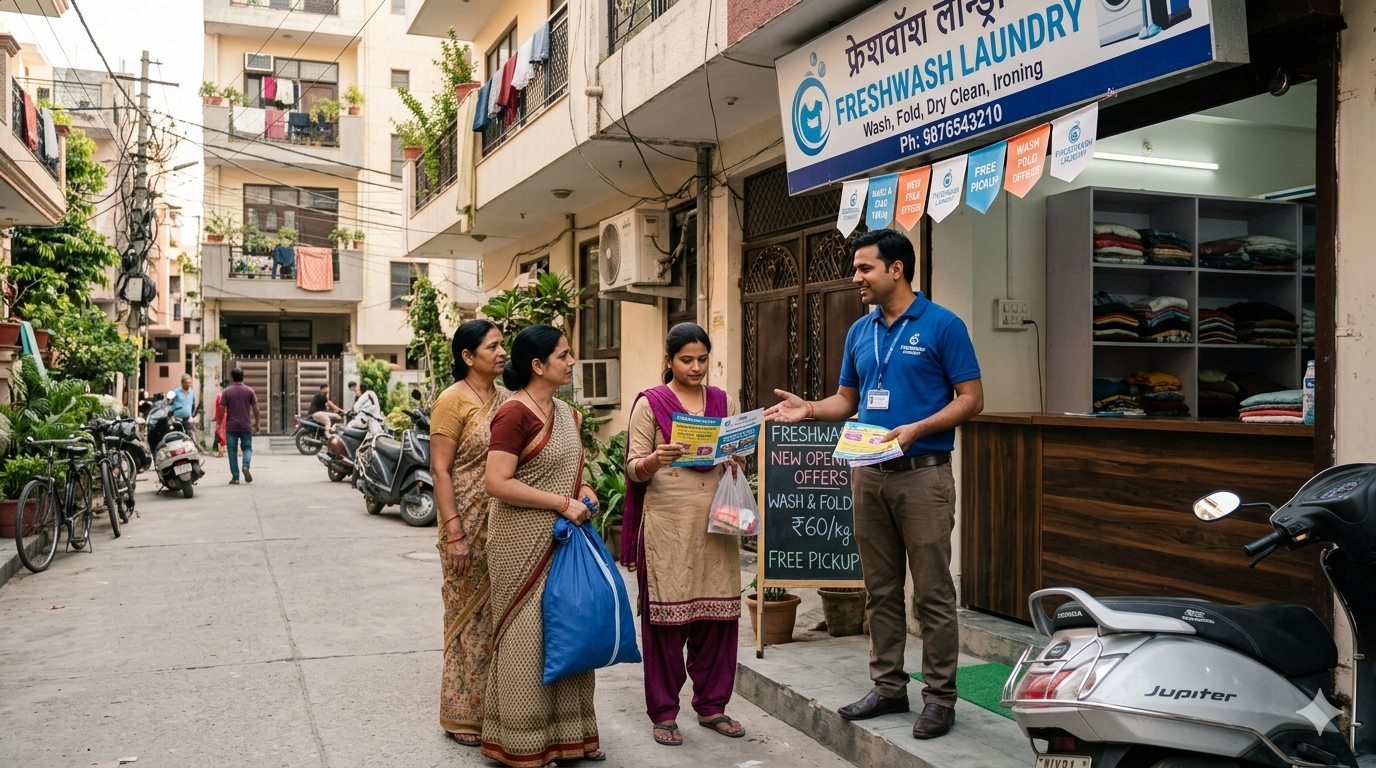
Trying to serve an entire city from day one is expensive and messy. Pick one colony, one apartment complex, or one commercial area. Own it completely.
Go door-to-door if you have to. Leave pamphlets, introduce yourself, offer first-wash-free deals. Buildings with working professionals, bachelors, and young families convert best. They don't have time or space for laundry. Commercial areas work well too—salons, gyms, restaurants need regular linen cleaning.
Once you dominate one area, delivery becomes cheaper, turnaround gets faster, and people start recommending you locally. Then expand to the next zone.
Use Google My Business Properly
Most laundry businesses set up Google My Business and forget about it. That's a waste.
Claim your listing, fill every section, add real photos of your shop, your team, your equipment. Enable messaging so people can reach you directly. Post weekly updates—discount offers, customer testimonials, same-day service announcements. Respond to every review, even the bad ones. When someone searches "laundry service near me," you want to appear with 4+ stars and recent activity.
Ask happy customers to leave reviews. Don't buy fake ones. Google catches that and it damages your ranking. A shop with 30 real reviews beats one with 200 fake reviews every time.
How to Start Your Laundry Business in 2026: Complete Guide
Partner with Apartment Complexes and Hostels
This is where volume comes from. One tie-up with a hostel or PG can give you 50+ recurring customers.
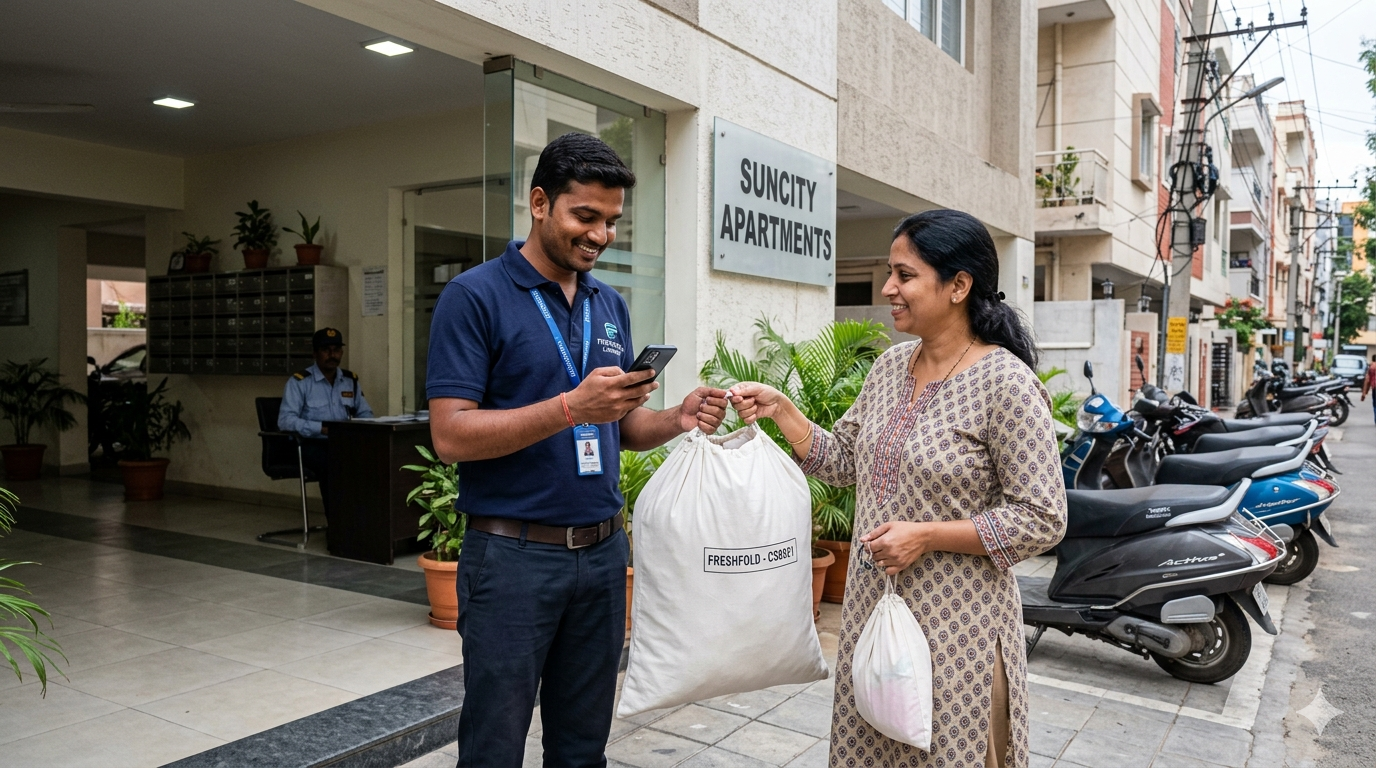
Approach the property manager or owner. Offer residents a discount code, free pickup-and-delivery, or a commission to the manager for every order. Some laundries set up drop-off boxes in apartment lobbies. Residents drop clothes in the morning, you collect at noon, return by evening. Make it frictionless.
Hostels and bachelor accommodations are gold. Students and working professionals hate doing laundry. If you price it reasonably and deliver on time, they'll use you every week.
Offer Pickup and Delivery—It's Not Optional Anymore
Home delivery used to be a premium feature. Now it's expected.
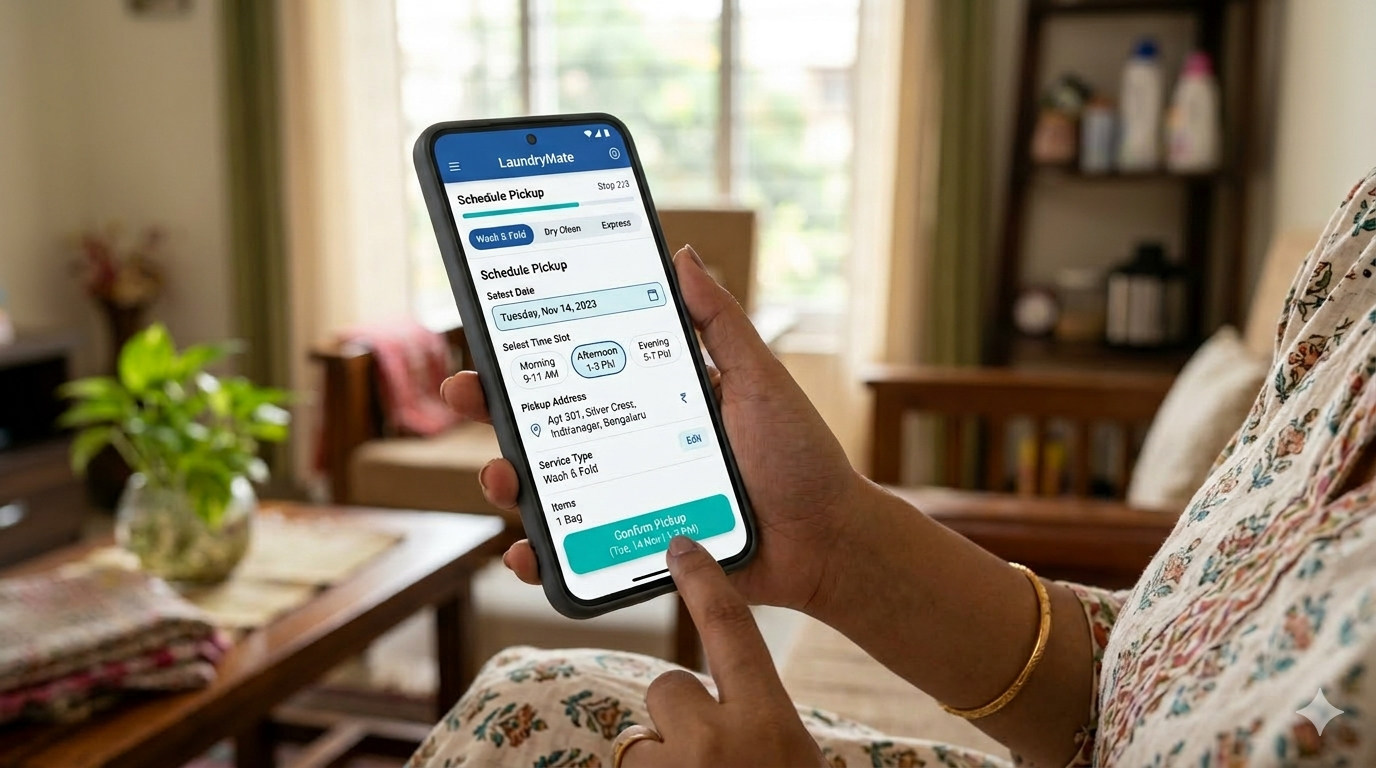
You don't need a fleet of vehicles. Start with one person on a scooter or bicycle. Define delivery windows—morning pickup, evening drop. Use WhatsApp or a simple app to confirm orders and share updates. Customers want to know when you're coming and when clothes will be ready. Uncertainty kills retention.
If you're operating in a compact area, delivery costs stay low. As you grow, a proper system helps—route optimization, delivery tracking, automated SMS. That's where a dedicated POS or management software starts making sense, but we'll get to that.
Create a Referral Program That Actually Works
Most referral programs fail because the reward isn't worth the effort.
Don't offer ₹50 off on the next wash. Offer a free wash for every 3 successful referrals, or a flat ₹200 credit. Make it simple to track—give each customer a unique code they can share. When their friend uses it, both get a reward. Use WhatsApp or SMS to remind people about their referral status.
Track this properly. If you're still using a notebook or Excel, you'll lose track and customers will complain. A basic POS system can automate referral credits and keep everything transparent.
Run Hyper-Targeted Facebook and Instagram Ads
Facebook ads work for local services if you target correctly. Blanket campaigns waste money.
Set your radius to 2-3 km around your shop. Target working professionals aged 25-45, apartment residents, people interested in home services. Run ads with clear offers—"First Wash Free" or "₹99 Wash & Fold This Week Only." Use real photos of your shop, not stock images. Video ads showing your process build trust.
Budget ₹3,000-5,000 per month to start. Track which ads bring actual orders, not just clicks. If an ad gets 100 clicks but zero orders, the messaging or offer is wrong. Test different creatives and offers every two weeks.
List on Aggregator Apps (Carefully)
Platforms like UrbanClap, Dunzo, and others can bring customers. But they take a cut—sometimes 20-30%.
Use them to fill idle capacity, not as your primary channel. If you're running at 50% utilization, aggregator orders make sense. But if you're already busy, direct customers are more profitable. Also, these platforms control the customer relationship. You want people to come back to you, not the app.
List your service, maintain good ratings, and slowly convert app customers into direct ones by offering them a discount for ordering via your WhatsApp or website next time.
Build a Simple WhatsApp Business Presence
WhatsApp is where Indian customers live. Use it properly.
Set up WhatsApp Business, create a catalog with services and prices. Use automated greetings and away messages. Customers can place orders, check status, and make payments—all in one chat. It's personal, fast, and familiar.
Create a broadcast list for offers and updates. Don't spam. One message per week is enough. Share tips like "How to remove tough stains" or "Best fabrics for monsoon." Build trust and stay top of mind.
Price Smartly, Not Cheaply
Competing only on price is a race to the bottom. Somebody will always undercut you.
Instead, compete on speed, quality, and convenience. Charge fairly but highlight what makes you different—same-day service, eco-friendly detergents, express ironing, stain removal expertise. Premium customers will pay ₹10-20 more per kg if they trust you.
Offer tiered pricing: basic wash-and-fold, premium wash with fabric softener, express same-day service. Different customers have different needs. Let them choose.
Handle Complaints Fast and Transparently
You will mess up. A shirt will get damaged, an order will be late, colors might bleed. How you handle it defines whether that customer stays.
Respond immediately. Apologize. Compensate fairly—free service, refund, replacement. Don't argue or blame the fabric. Most customers just want to feel heard. If you fix it quickly, they'll forgive and often become more loyal.
Track complaints in a system. If the same issue repeats—say, colors bleeding—it's an operational problem, not a customer problem. Fix the root cause.
How to Start Your Laundry Business in 2026: Complete Guide
Use Technology to Scale Without Chaos
Once you cross 20-30 orders per day, managing everything on paper or Excel becomes impossible. You'll forget pickups, lose track of payments, mess up delivery schedules. Customers will complain and leave.
This is where a proper laundry POS and management system helps. You get automated billing, order tracking, customer databases, delivery route planning, SMS notifications, and staff task assignments—all in one place. It doesn't replace good service. It lets you deliver good service consistently at scale.
Modern systems are cloud-based, work on mobile, and integrate with payment gateways. You can check orders from anywhere, customers can track their laundry, and staff get clear task lists. Look for software that's India-specific—supports GST billing, integrates with UPI, and works offline if internet drops.
Don't overbuy. Start with basic features and scale as you grow. The right software should feel like it's removing headaches, not adding them.
Ezer Laundry POS System
Streamline your laundry business with our comprehensive POS system. Features include smart billing, garment tracking, WhatsApp notifications, and cloud backup.
FAQs
How much does it cost to start a laundry business in India?
A basic setup with washing machines, dryer, ironing equipment, and initial inventory costs ₹3-6 lakhs. Add ₹1-2 lakhs for rent, licenses, and initial marketing. Home-based or small shop setups can start under ₹2 lakhs if you buy used equipment. Pickup-delivery models need less infrastructure but require investment in delivery logistics.
How long does it take to get the first 50 customers?
With aggressive local marketing, door-to-door outreach, and a good offer, you can get 50 customers in 4-8 weeks. Referrals and word-of-mouth kick in after the first month if service quality is strong. Apartment tie-ups and corporate partnerships accelerate this significantly.
Is free pickup and delivery necessary for a new laundry business?
In urban India, yes. Customers expect convenience. You don't need a fancy fleet—one delivery person covering a small radius is enough to start. As volume grows, optimize routes and add more delivery capacity. Without pickup-delivery, you're limiting your market to walk-in customers only.
What's the best marketing channel for laundry businesses?
Google My Business and hyperlocal targeting work best. Combine this with door-to-door outreach in residential areas, apartment tie-ups, and WhatsApp-based customer engagement. Paid ads on Facebook and Instagram work if targeted within 2-3 km and paired with strong offers.
How do I compete with established laundry services in my area?
Don't compete on price alone. Focus on speed (same-day service), quality (better pressing, stain removal), convenience (flexible pickup times), or niche services (premium fabrics, eco-friendly washing). Build personal relationships with customers. Most established players have gotten complacent—use that to your advantage.
Should I invest in laundry management software from day one?
Not immediately. Start with WhatsApp and a simple notebook or Excel. Once you hit 20-30 orders daily, managing manually becomes chaotic. That's when a POS system makes sense—it automates billing, order tracking, customer management, and staff coordination. Choose software that's affordable, cloud-based, and designed for Indian laundry businesses with GST support.
How do I retain customers in a laundry business?
Consistency is everything. Deliver on time, maintain quality, communicate proactively. Send order ready notifications, offer loyalty discounts, remember customer preferences (light starch, no fabric softener). Small gestures like wrapping clothes neatly and adding a thank-you note build loyalty. Use a customer database to track preferences and order history.
Conclusion
Getting customers for a new laundry business isn't about one magic trick. It's about showing up consistently in the right places—Google, local neighborhoods, apartment complexes—and delivering a service that's convenient, reliable, and fairly priced. Start small, focus on one area, build trust through quality, and use referrals to grow.
As you scale, the right tools matter. A modern laundry management system won't find customers for you, but it will help you serve them better, reduce errors, and free up time to focus on growth instead of daily chaos.
If you're serious about building a sustainable laundry business, start with the basics—know your customers, solve their real problems, and build systems that let you deliver consistently. The rest follows.