
Laundry Business Plan for Beginners: Complete India Guide 2026
Starting a laundry business in India might seem straightforward—customers drop off clothes, you clean them, they pick them up. But I've seen too many new owners struggle because they skipped basic planning. The difference between a shop that barely survives and one that grows? A solid business plan. This guide walks you through everything: from initial costs to operations, legal requirements, and how technology actually helps (when used right). Whether you're opening your first shop or thinking about it, this is what you need to know.
Understanding the Laundry Business Landscape in India
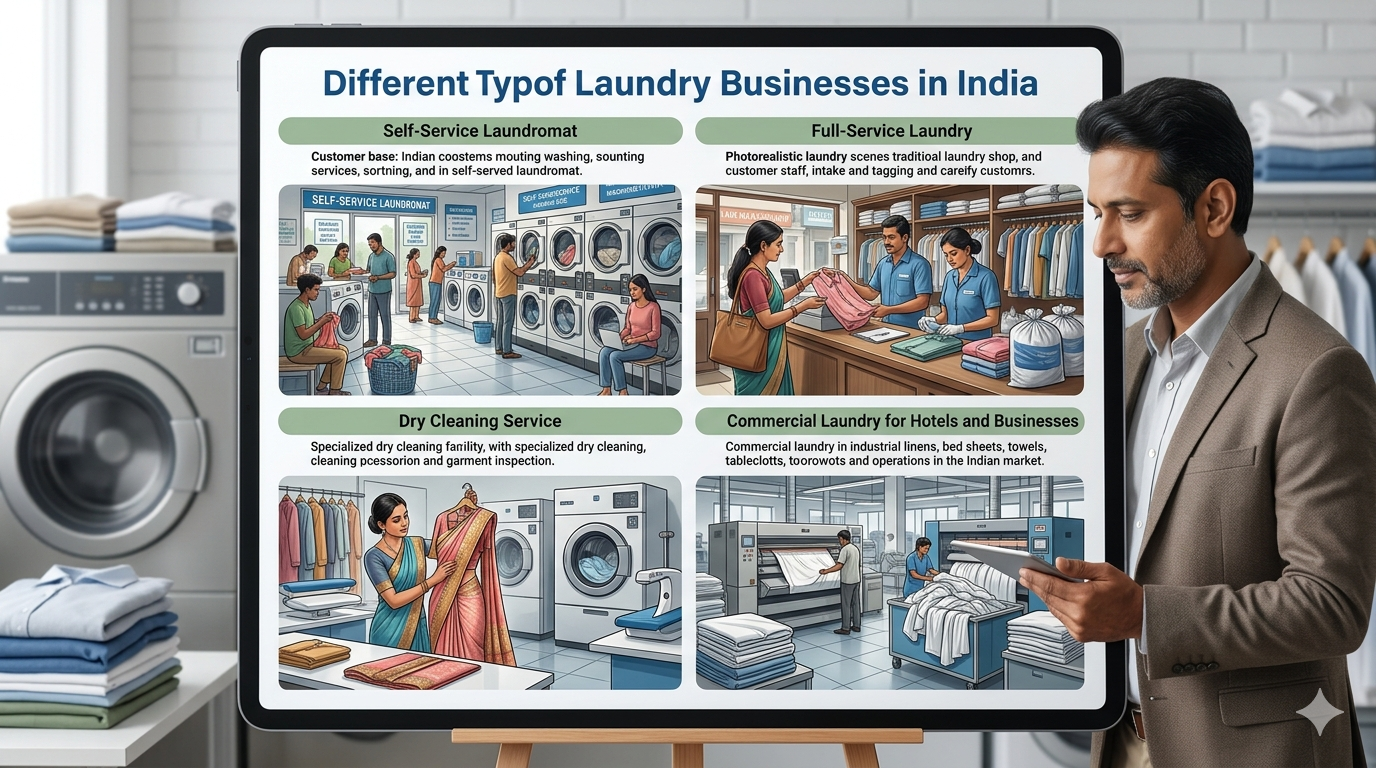
The laundry industry in India has changed. Urban families, working professionals, hostels, and hotels all need reliable cleaning services. But here's the reality: competition exists in every locality now.
What works? Specialization. Some shops focus on premium dry cleaning. Others handle bulk orders from paying guest accommodations. A few target corporate clients with pickup-delivery services. Your business plan needs to identify your niche before anything else.
Market size isn't the issue—demand is there. The challenge is operational efficiency. Most small laundry businesses fail because of poor cash flow management, not lack of customers. They underestimate working capital needs, overspend on equipment, or can't retain staff.
I've noticed successful owners focus on three things: consistent quality, reliable turnaround times, and proper systems. The third one matters more than people think.
Initial Investment and Cost Breakdown
Let's talk numbers. A small laundry shop in a tier-2 city needs roughly ₹3-5 lakhs to start. Metro cities? Double that minimum.
Essential Equipment:
- Washing machines (commercial grade): ₹80,000 - ₹1,50,000
- Dryer: ₹60,000 - ₹1,00,000
- Iron and pressing table: ₹15,000 - ₹25,000
- Dry cleaning machine (if applicable): ₹2,00,000 - ₹4,00,000
Other Costs:
- Shop rent deposit: ₹50,000 - ₹2,00,000
- Interior setup: ₹30,000 - ₹80,000
- Initial inventory (detergents, chemicals, packaging): ₹20,000 - ₹40,000
- Licensing and registration: ₹10,000 - ₹25,000
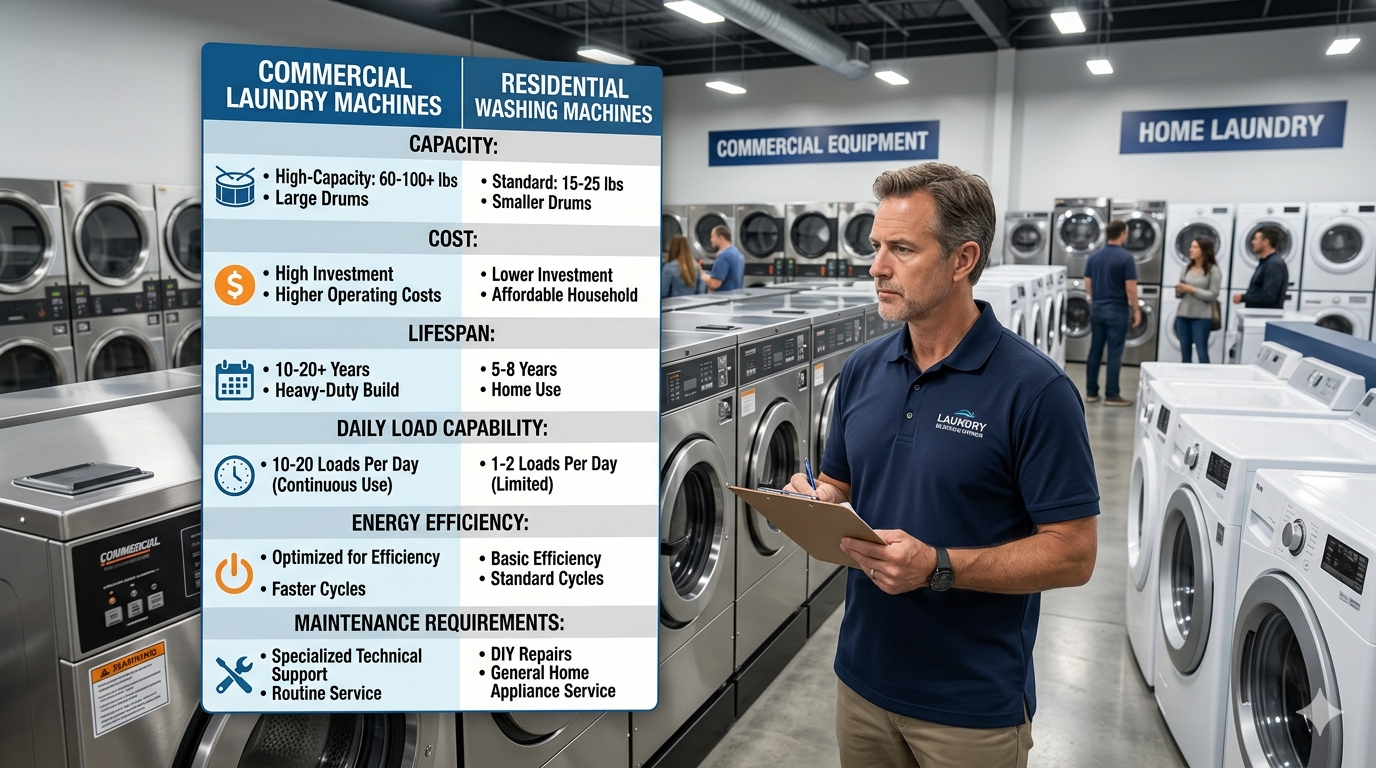
Many beginners make one critical mistake here. They buy cheap residential machines thinking they'll save money. Those machines break down within months under commercial load. Spend properly on equipment or you'll spend more on repairs and replacements.
Working capital for the first three months is non-negotiable. You'll have staff salaries, rent, utilities, and supplies before revenue stabilizes. Keep at least ₹1,00,000 liquid.
Legal Requirements and Business Registration
This part stops many people, but it's simpler than it looks.
Mandatory registrations:
- GST registration (if turnover exceeds ₹20 lakhs, ₹10 lakhs for special category states)
- Shop and Establishment Act license from local municipal authority
- Trade license
- Fire safety certificate (depending on shop size)
Recommended:
- MSME/Udyam registration for benefits and easier loans
- Pollution Control Board clearance if using specific chemicals
- Professional tax registration (varies by state)
The GST part confuses people. Here's what I tell everyone: if you're planning to grow beyond a neighborhood shop, register from day one even if turnover is low. It builds credibility with commercial clients and hotels who prefer GST-compliant vendors.
Get a CA for the first year. The cost (₹10,000-15,000 annually) saves you from mistakes that cost much more.

Location Selection and Shop Setup
Location isn't just about foot traffic. I've seen shops in residential areas do better than those on main roads because their target customers were right there.
Ideal locations:
- Near hostels, PG accommodations, and student areas
- Residential colonies with working families
- Commercial areas with offices (for corporate contracts)
- Near hotels (if targeting B2B)
Shop size: 300-500 sq ft works for a basic setup. You need separate areas for receiving, washing, drying, ironing, and storage. Cramped spaces slow down operations.
Water supply matters more than most realize. You need consistent, adequate water. Check this before signing any lease. Power backup is equally important in areas with frequent cuts.
Ventilation is critical. Laundry shops get hot and humid. Poor ventilation leads to staff discomfort and longer drying times.
One practical tip: negotiate rent with a clear escalation clause. Don't agree to yearly 15-20% increases blindly.
Equipment Selection: What Actually Matters
Commercial-grade machines are your biggest investment. Here's what to prioritize:
Washing capacity: Start with 8-10 kg capacity machines. Too small and you'll struggle with bulk orders. Too large and you waste water and electricity on small loads.
Energy efficiency: Check star ratings. Higher electricity bills eat into already thin margins. Calculate monthly operating costs before buying.
Brand vs. Local: Known brands (IFB, LG, Bosch commercial range) cost more but service networks exist. Local commercial machines are cheaper but parts availability can be an issue.
I've seen owners delay buying dryers to save money. Bad decision. Hand-drying or sun-drying creates delays, especially during monsoons. Dryers pay for themselves through faster turnaround.
For dry cleaning, only invest if you have confirmed demand. That ₹3-4 lakh machine sits idle in many shops because the volume doesn't justify it.
Leasing equipment is an option worth considering if upfront capital is limited. Monthly payments hurt less than depleting all working capital.
Pricing Strategy and Revenue Modeling
Pricing is where many beginners lose money. They either undercut competition without understanding costs or price too high without providing value.
Standard pricing structure:
- Washing and ironing per kg: ₹40-80 (varies by city)
- Dry cleaning per piece: ₹80-300 (depends on garment type)
- Premium services (stain removal, express delivery): 30-50% premium
Calculate your cost per kg first. Include detergent, electricity, water, staff time, and machine depreciation. Add your desired margin. That's your minimum price.
Don't compete on price alone. You'll attract customers who leave the moment someone opens cheaper. Compete on reliability, quality, and convenience.
Revenue streams to consider:
- Retail customers (walk-ins)
- Subscription plans for regular customers
- Corporate contracts (hotels, salons, clinics)
- Pickup and delivery services (charge separately)
A shop doing 100 kg daily at ₹50/kg generates ₹1,50,000 monthly. After costs (typically 50-60%), you're looking at ₹60,000-75,000 margin. That's before rent and salaries.
The math improves with scale. Getting to 200-250 kg daily should be your 6-month target.
Staffing and Daily Operations
Staff quality determines customer experience more than equipment does.
Typical team:
- 1 manager/supervisor (can be the owner initially)
- 2-3 washing and ironing staff
- 1 delivery person (if offering pickup-delivery)
Salary range varies wildly by location. Tier-2 cities: ₹8,000-12,000 per person. Metros: ₹12,000-18,000.
Training matters. Teach proper washing techniques for different fabrics. Explain stain treatment. Train on customer handling.
Retention is hard in this industry. People leave for marginally better pay. Focus on creating decent working conditions—proper breaks, ventilation, treating them with respect. It costs nothing and reduces turnover.
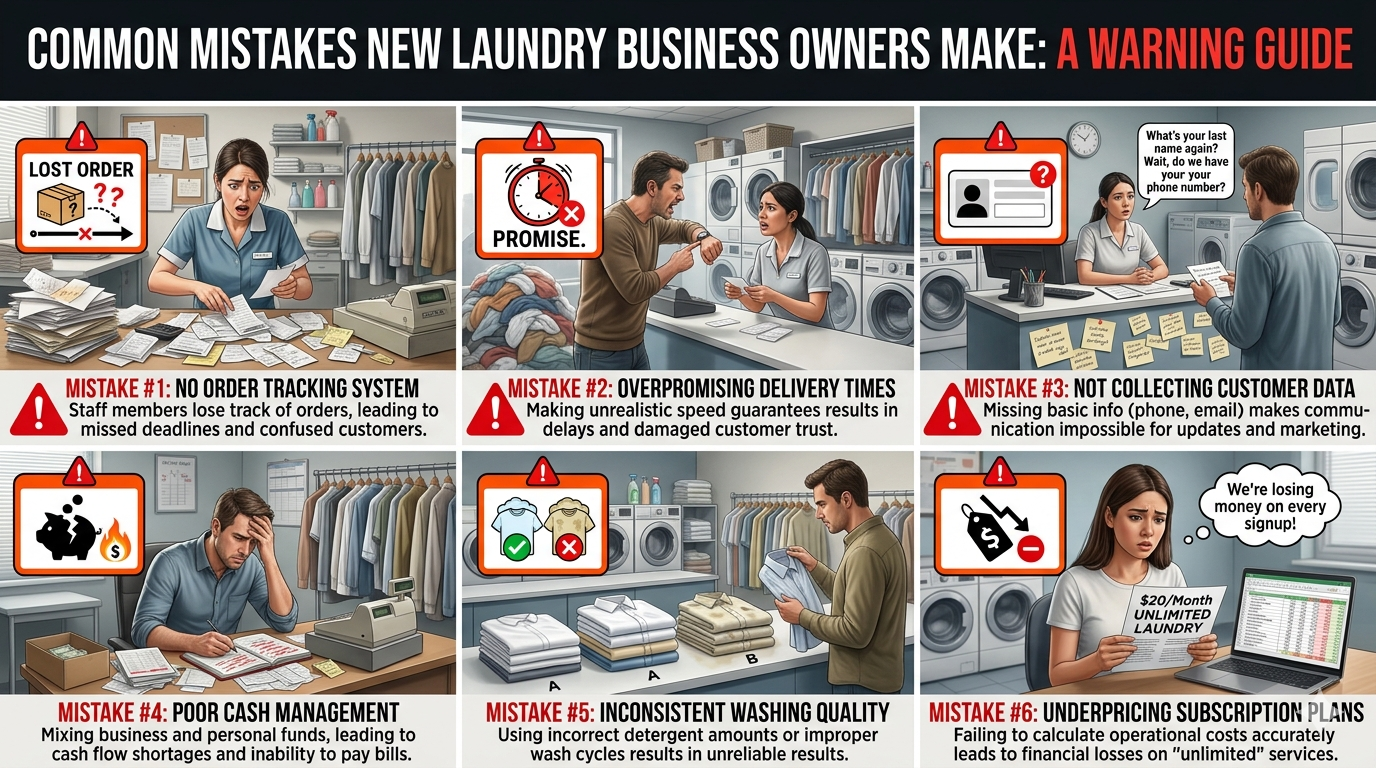
Daily workflow:
- Morning: Receive orders, sort by fabric type and washing requirements
- Washing cycle: Process based on priority and turnaround commitments
- Drying and ironing: Quality checks at this stage
- Packaging and tagging
- Delivery or customer notification
Track every order properly. Lost clothes or delivery delays damage reputation fast.
Common Mistakes New Laundry Business Owners Make
I've watched enough shops struggle to spot these patterns:
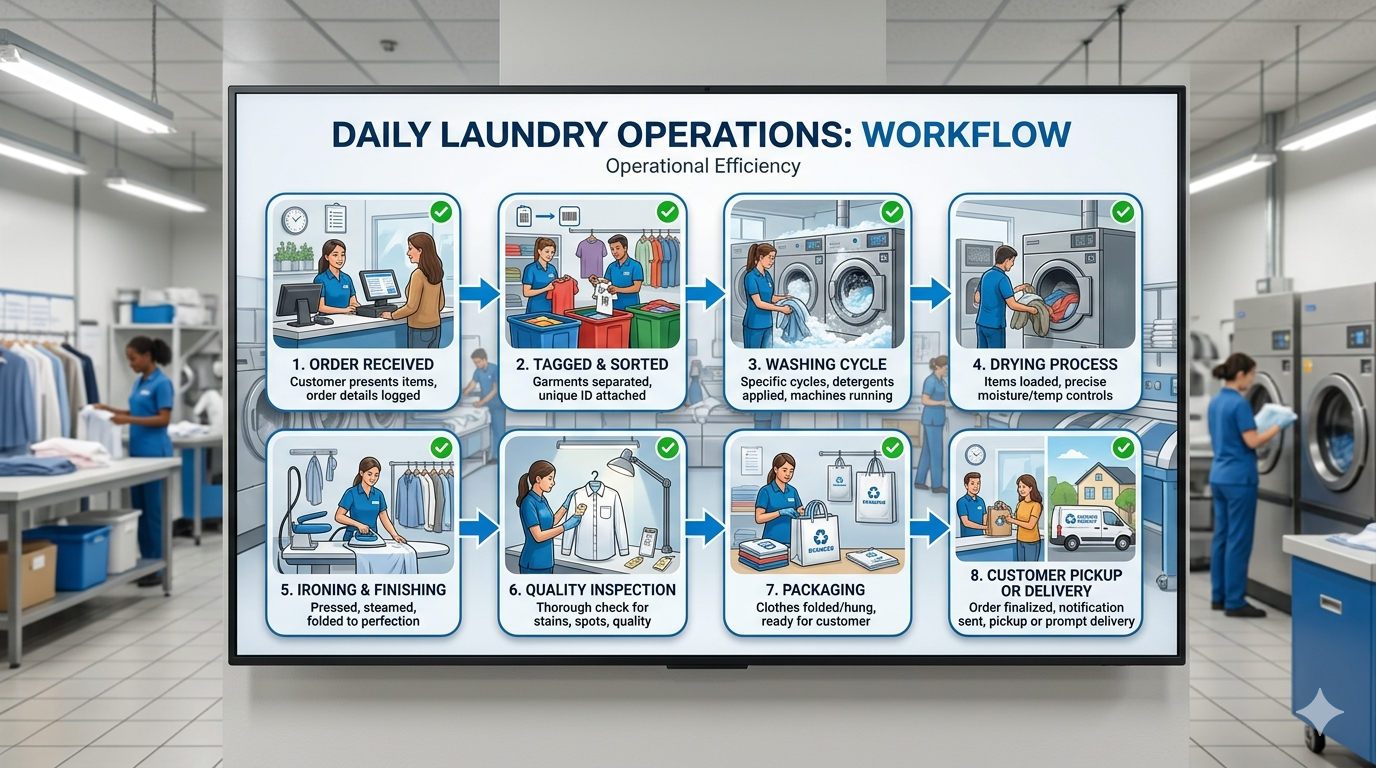
Mistake 1: No order tracking system. Relying on registers and memory works until it doesn't. Orders get mixed up, forgotten, or delivered to wrong customers. This kills trust immediately.
Mistake 2: Promising what you can't deliver. Saying "ready in 24 hours" when you know it takes 36-48 hours sets you up for complaints. Be realistic.
Mistake 3: Ignoring customer data. Not collecting phone numbers, order history, or preferences. You're losing repeat business opportunities.
Mistake 4: Poor cash management. Spending revenue on personal expenses or new equipment before covering operational costs. Many shops close not because of losses but cash crunches.
Mistake 5: No defined quality standards. Every staff member follows their own process. Results vary. Customers notice inconsistency.
Mistake 6: Underpricing subscriptions. Monthly packages seem attractive but calculate carefully. A customer who brings 20 kg monthly at ₹800 costs you more than they pay if your per-kg cost is ₹45.
The good news? All of these are fixable with basic systems.
How Technology Helps (Without Overpaying)
Here's where laundry POS and management software actually makes sense.
Manual billing works when you have 5-10 orders daily. Beyond that, you need systems. Not because technology is trendy—because errors cost money and customers.
Real problems software solves:
- Order tracking: Know exactly where each order is in the process
- Billing accuracy: Generate GST-compliant invoices automatically
- Customer database: Track preferences, order history, payment dues
- Pickup-delivery management: Schedule and track deliveries via mobile apps
- Inventory alerts: Know when you're running low on supplies
- Multi-branch operations: Manage multiple locations from one dashboard
A modern laundry POS and management software typically costs ₹10,000-20,000 annually for small setups. The ROI comes from reduced errors, faster billing, and better customer experience.
What to look for:
- Cloud-based system (access from anywhere)
- Mobile app for delivery staff
- SMS/WhatsApp notifications for customers
- Simple interface (your staff should learn it in hours, not weeks)
- Reasonable pricing without hidden costs
Don't buy systems designed for 50-store chains when you have one shop. Start simple. Most platforms let you scale up as you grow.
The right software doesn't replace good operations. It supports them. If your processes are messy, software just digitizes the mess.
Ezer Laundry POS System
Streamline your laundry business with our comprehensive POS system. Features include smart billing, garment tracking, WhatsApp notifications, and cloud backup.
Marketing Your Laundry Business
Digital marketing matters, but local presence matters more initially.
Offline tactics:
- Distribute pamphlets in nearby societies and PG accommodations
- Tie up with apartment RWAs for bulk orders
- Visit nearby hotels and salons personally
- Offer first-wash discounts to build initial customer base
Online presence:
- Google My Business listing (non-negotiable)
- WhatsApp Business number for order bookings
- Simple Facebook page with contact details and services
- Google Maps optimization for local searches
Reviews drive decisions in this business. Request satisfied customers to leave Google reviews. Just five 4-star reviews make you look more credible than competitors with none.
Referral programs work well. Offer ₹50-100 discount when existing customers bring new ones.
Don't waste money on random Facebook ads. Target is local, so geo-specific campaigns only. Better yet, invest that money in excellent service and let word-of-mouth work.
Scaling Beyond the First Shop
Growth is possible but don't rush it.
Get your first location profitable and systemized before thinking about a second shop. That typically takes 12-18 months.
Expansion options:
- Second location in different area of same city
- Converting to franchise model
- Adding premium services (specialized cleaning, alterations)
- B2B focus with hotel and hospital contracts
Multi-branch success depends heavily on systems. You can't be physically present everywhere. This is where laundry POS and management software becomes essential—centralized control with location-wise tracking.
Some owners grow by acquiring struggling shops at low valuations, fixing operations, and making them profitable. Requires capital and operational expertise.
Partnerships with apartment complexes for exclusive service rights can guarantee volume without opening new shops.

FAQs
How much investment is needed to start a laundry business in India?
Initial investment ranges from ₹3-5 lakhs for a small shop in tier-2 cities to ₹8-12 lakhs in metro areas. This covers equipment, shop setup, licenses, and 3-month working capital. Dry cleaning setups cost more due to specialized machinery. Start lean and expand as revenue grows.
Is laundry business profitable in India?
Yes, with proper planning and operations. A well-run shop can achieve 40-50% gross margins. Net profit typically ranges from ₹30,000-75,000 monthly for small setups after all expenses. Profitability improves significantly with scale and efficiency. Commercial contracts provide more stable revenue than retail.
What licenses are required for a laundry business?
Essential licenses include Shop and Establishment License, Trade License, and GST registration (if applicable). You'll also need Fire Safety Certificate depending on shop size. MSME registration is optional but beneficial. Requirements vary slightly by state, so consult local municipal authorities.
How do I get customers for my laundry business?
Start with local marketing—distribute pamphlets in nearby societies, apartments, and PG areas. Create Google My Business listing for local searches. Offer first-time discounts to build initial base. Focus on quality and reliability—word-of-mouth remains the strongest driver. Build partnerships with local hotels and offices for bulk orders.
Should I invest in laundry management software from day one?
Not necessarily. If you're starting with fewer than 10 orders daily, manual tracking works initially. Once you cross 20-30 orders or start pickup-delivery services, software becomes valuable. It prevents errors, improves customer experience, and makes scaling easier. Choose simple, affordable systems designed for small businesses.
What is the biggest challenge in running a laundry business?
Staff retention and maintaining consistent quality are the toughest parts. Close second is managing cash flow during initial months. Many owners also struggle with order tracking as volume grows, leading to mix-ups and customer complaints. Proper systems and treating staff well solve most of these issues.
How long does it take for a laundry business to break even?
Most laundry businesses break even within 6-12 months if located properly and managed well. Initial months are slow as you build customer base. Revenue typically stabilizes by month 3-4. Full investment recovery takes 18-24 months on average. Corporate contracts can accelerate this timeline significantly.
Conclusion
A laundry business plan for beginners in India isn't complicated, but it needs thought. Know your costs, choose location wisely, invest in proper equipment, and build systems early. The shops that succeed aren't necessarily the ones with the most capital—they're the ones that track orders properly, deliver on time, and treat customers fairly.
Technology like laundry POS and management software helps once you've got the basics right. It won't fix poor service or bad location, but it makes good operations even better.
Start small, focus on quality, and scale when you're profitable and systemized. That's the realistic path.
How to Start Your Laundry Business in 2026: Complete Guide
Want to see how modern software can streamline your laundry operations? Explore cloud-based solutions designed specifically for Indian laundry businesses.