
Laundry Franchise vs Independent Laundry: Which Is Better in 2026?
Starting a laundry business? You're probably weighing two options: buying into a franchise or going independent. Both have real trade-offs. Franchises promise brand recognition and support, but they cost more upfront and eat into your margins with royalty fees. Independent setups give you full control, but you're building everything from scratch—branding, operations, customer trust. This guide walks you through what actually matters when making this decision, based on real operational challenges laundry owners face in India.
Understanding the Core Differences
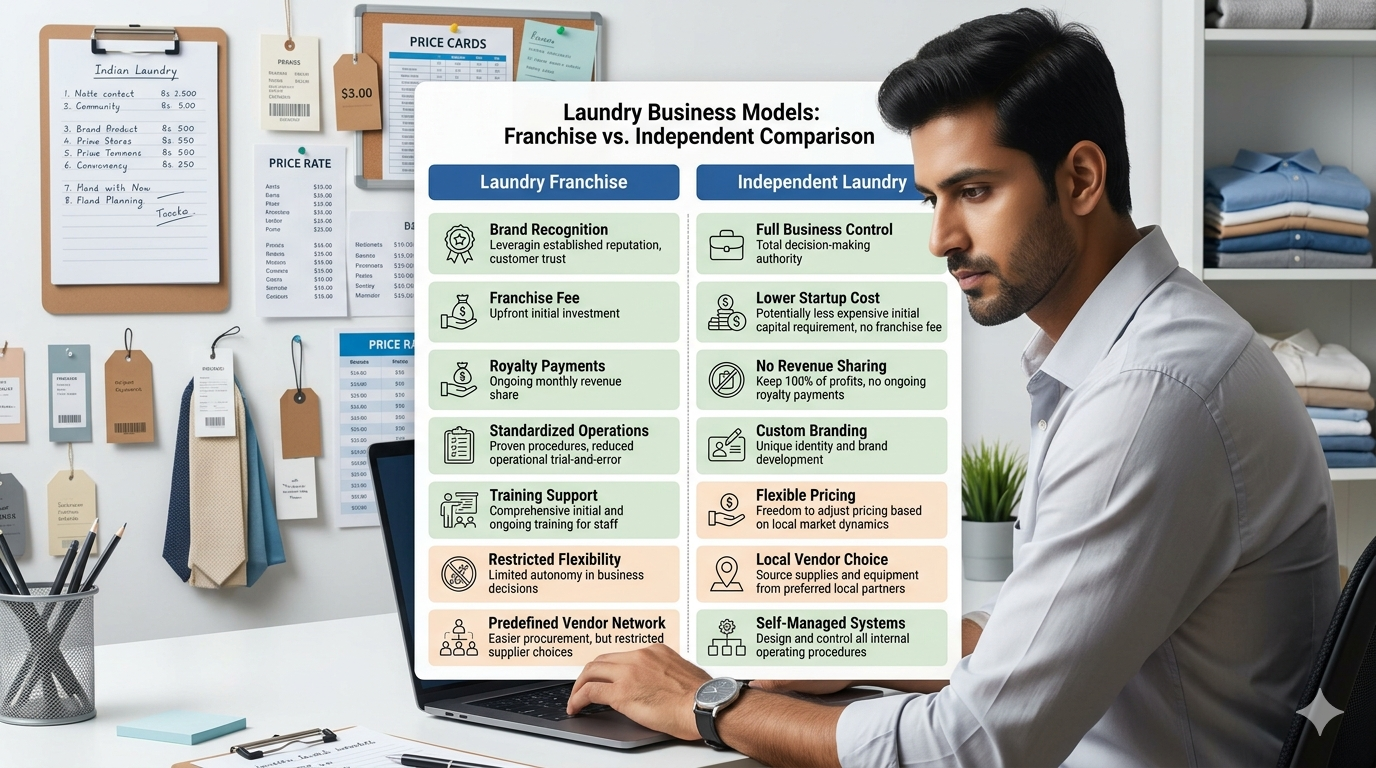
A laundry franchise means you're paying for a proven business model. You get their brand name, training manuals, marketing templates, and sometimes vendor tie-ups for equipment and chemicals. The franchise handles the heavy lifting on brand positioning.
An independent laundry is your own setup. You choose your branding, pricing, service menu, and operational workflow. There's no one telling you how to run things, but there's also no safety net.
The real question isn't which sounds better on paper. It's which fits your budget, your market, and how much risk you're willing to carry.
Initial Investment: What You're Actually Paying For
Franchise costs are front-loaded. Expect to pay ₹8–25 lakhs just for the franchise fee, depending on the brand. Then there's the store setup, equipment, initial inventory, and working capital. Total investment? Often ₹25–50 lakhs or more.
Independent laundry setups are cheaper to start. You might spend ₹10–20 lakhs if you're strategic about equipment purchases and location. No franchise fees. No royalty structure.
But here's what franchise owners will tell you: the initial cost includes training, vendor discounts, and marketing collateral. Those aren't free if you go independent. You'll pay for branding, signage, website development, and trial-and-error on pricing and service quality.
Budget matters, but so does speed to market. Franchises can get you operational faster because the playbook already exists.
Brand Recognition vs Building From Scratch
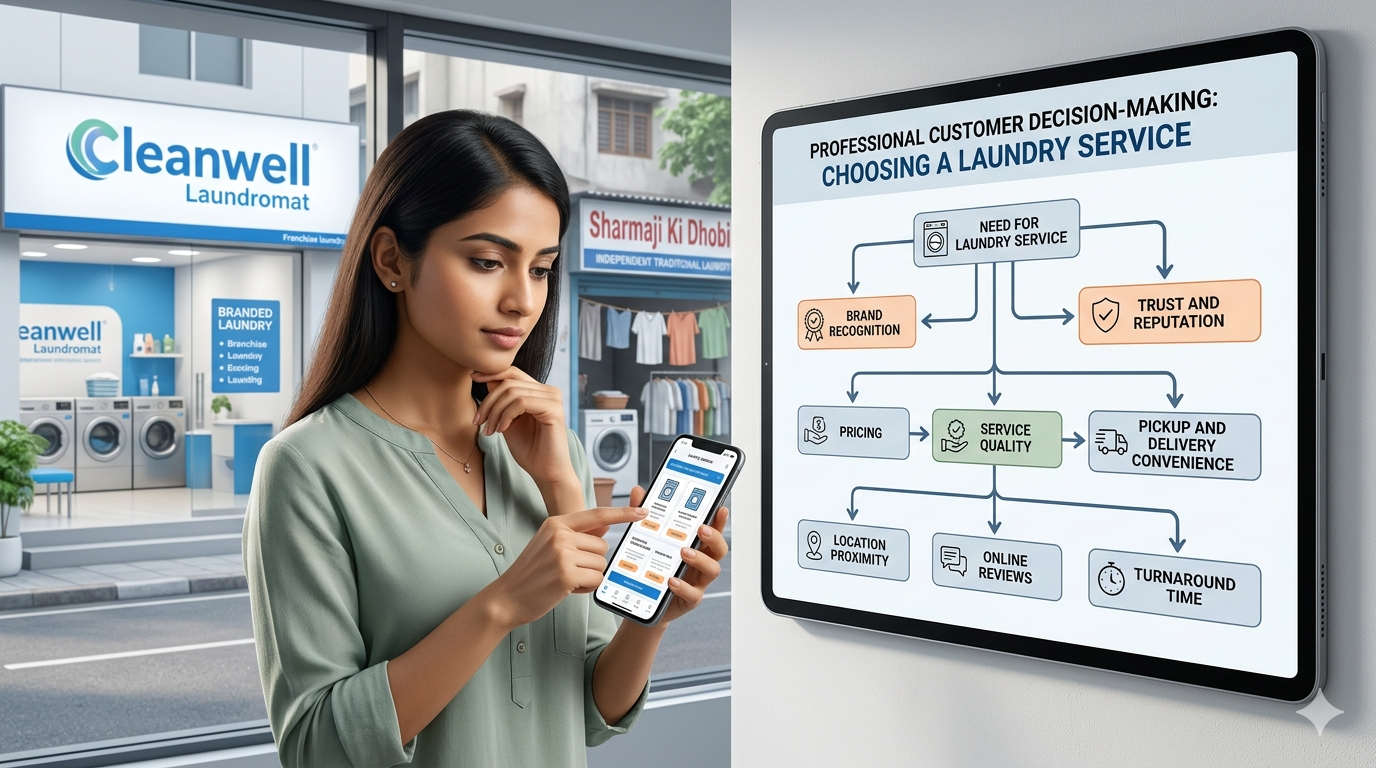
Franchise brands have done the marketing. Customers recognize the logo. There's existing trust, especially in tier-1 and tier-2 cities where branded laundry services are becoming common.
Independent laundries start at zero. You're convincing people to trust a brand they've never heard of. In neighborhoods where word-of-mouth is strong, this works fine. But in competitive markets, lack of brand visibility hurts.
Here's the reality: most local laundry businesses succeed through repeat customers, not walk-ins. If your service is reliable and you're good with customer relationships, brand recognition becomes less critical over time.
Operational Control and Flexibility
Franchises come with rules. Pricing is often fixed or restricted. Service offerings follow a standard menu. You can't just decide to add alterations or shoe cleaning without approval. Even your store layout and uniform design are predetermined.
Independent owners have full control. Want to offer subscription plans? Done. Want to adjust pricing based on local competition? Your call. Need to pivot your service mix based on customer demand? No approvals needed.
This flexibility matters more than people think. I've seen independent laundry owners in Pune and Bangalore adjust pricing during monsoon season or offer corporate bulk discounts to nearby offices. Franchise owners can't do that without head office sign-off.
Vendor and Equipment Freedom
Franchises often mandate equipment suppliers. You're locked into their vendor network, which might not always offer the best prices or service in your area.
Independent setups let you shop around. You can negotiate with local suppliers, buy second-hand equipment if budget is tight, or switch vendors if service quality drops.
Revenue Sharing and Profit Margins
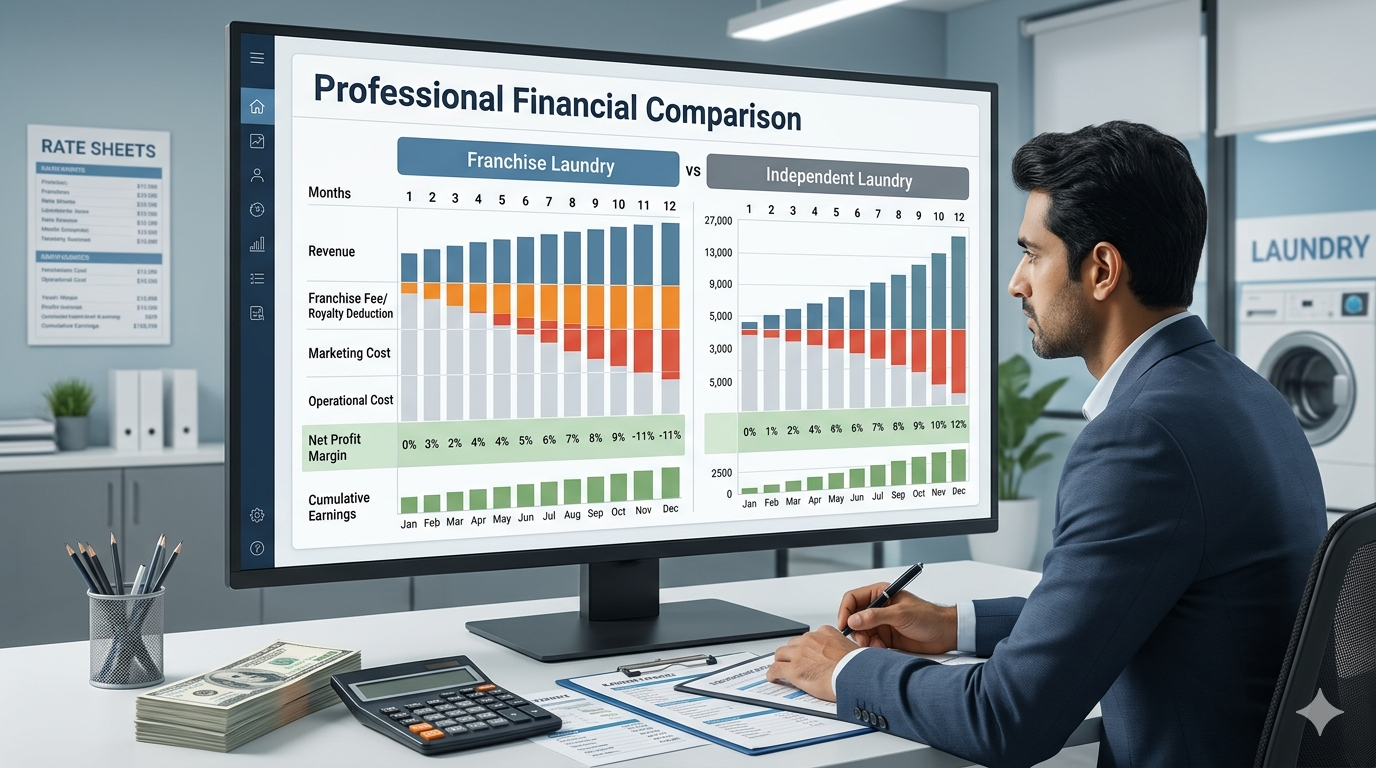
Franchise royalties typically range from 5–10% of monthly revenue. Some also charge marketing fees on top. That's money leaving your pocket every month, regardless of whether you're profitable.
Let's say you generate ₹3 lakhs in monthly revenue. At 8% royalty, you're paying ₹24,000 to the franchisor. Over a year, that's ₹2.88 lakhs—just in royalties.
Independent businesses keep all revenue. Your profit margin depends entirely on your operational efficiency and cost control.
But franchises argue they earn you more revenue through brand trust and centralized marketing. Whether that premium justifies the royalty depends on your location and market maturity.
Support Systems: Training and Troubleshooting
Franchises provide structured training. Staff onboarding, customer handling, stain removal techniques, machinery operation—it's all documented. When something breaks or you face an operational issue, you have a support team to call.
Independent owners learn by doing. You're training your own staff, often through trial and error. When equipment fails or a customer complaint escalates, you handle it yourself or find local help.
The trade-off? Franchise support is standardized, which is great until your local issue doesn't fit their manual. Independent owners build their own networks—local technicians, chemical suppliers, experienced staff—and that knowledge stays with them.
Marketing and Customer Acquisition
Franchises run national or regional marketing campaigns. Your brand gets visibility through their digital presence, ads, and partnerships. Some provide ready-made social media content and promotional templates.
Independent laundries rely on local marketing. Google My Business, neighborhood flyers, WhatsApp groups, referral programs. It's grassroots, but it works if you're consistent.
The reality in India: most laundry customers come from within 2–3 km of your location. National brand recognition helps, but local reputation drives repeat business. An independent owner who's active in their community can build strong customer loyalty without franchise backing.
Digital Presence and Online Orders
Modern customers expect online booking, order tracking, and delivery updates. Franchises usually provide a mobile app and backend system as part of the package.
Independent businesses need to invest in these tools separately. This is where technology becomes critical.
7 Critical Mistakes to Avoid When Starting a Laundry Business in 2026
Technology and Management Systems
Franchises often bundle a POS system and management software into their package. You get billing, order tracking, customer database, and inventory management from day one.
Independent owners need to find their own solution. Many still operate on paper registers and manual billing, which creates problems as they scale. Others invest in laundry management software early.
This is where Ezer Laundry POS Software becomes relevant. It's designed specifically for independent laundry and dry-cleaning businesses that want franchise-level operational efficiency without the franchise cost.
The system handles:
- Automated billing with GST compliance
- Customer order tracking via mobile app
- Pickup and delivery scheduling
- Staff management and performance tracking
- Multi-branch operations if you expand
What makes this important for independent owners is the control. You're not locked into a franchise's system or paying monthly fees tied to revenue. You choose a tool that fits your business size and can scale with you.
Ezer Laundry POS System
Streamline your laundry business with our comprehensive POS system. Features include smart billing, garment tracking, WhatsApp notifications, and cloud backup.
Franchise systems work fine until you want to customize something or integrate with local payment gateways. Independent setups with flexible software like Ezer give you the operational structure of a franchise without losing decision-making power.
Scaling and Multi-Location Expansion
Franchises make it easier to open multiple locations. The brand is established, operational processes are documented, and you can replicate the model. Some franchises even help with location selection and setup.
Independent owners face more complexity when scaling. Each new location needs branding, staff training, and operational oversight. Without centralized systems, managing multiple branches becomes chaotic.
This is where cloud-based management software matters. Ezer Laundry POS supports multi-branch operations, so you can monitor all locations from one dashboard. Revenue tracking, inventory management, staff performance—it's all centralized even if your stores aren't.
Scaling independently is harder, but the profit margins are better because you're not paying royalties on every new branch.
Exit Strategy and Resale Value
Franchise businesses often have easier resale potential. The brand name holds value, and buyers feel more comfortable taking over a known entity.
Independent laundries depend heavily on the owner's reputation and customer relationships. If those are strong, the business has value. If operations are chaotic and customer retention is weak, resale becomes difficult.
Building systems and documentation from day one makes a difference. An independent laundry with clear SOPs, loyal customers, and good financial records can command a solid resale price.
Common Mistakes in Both Models
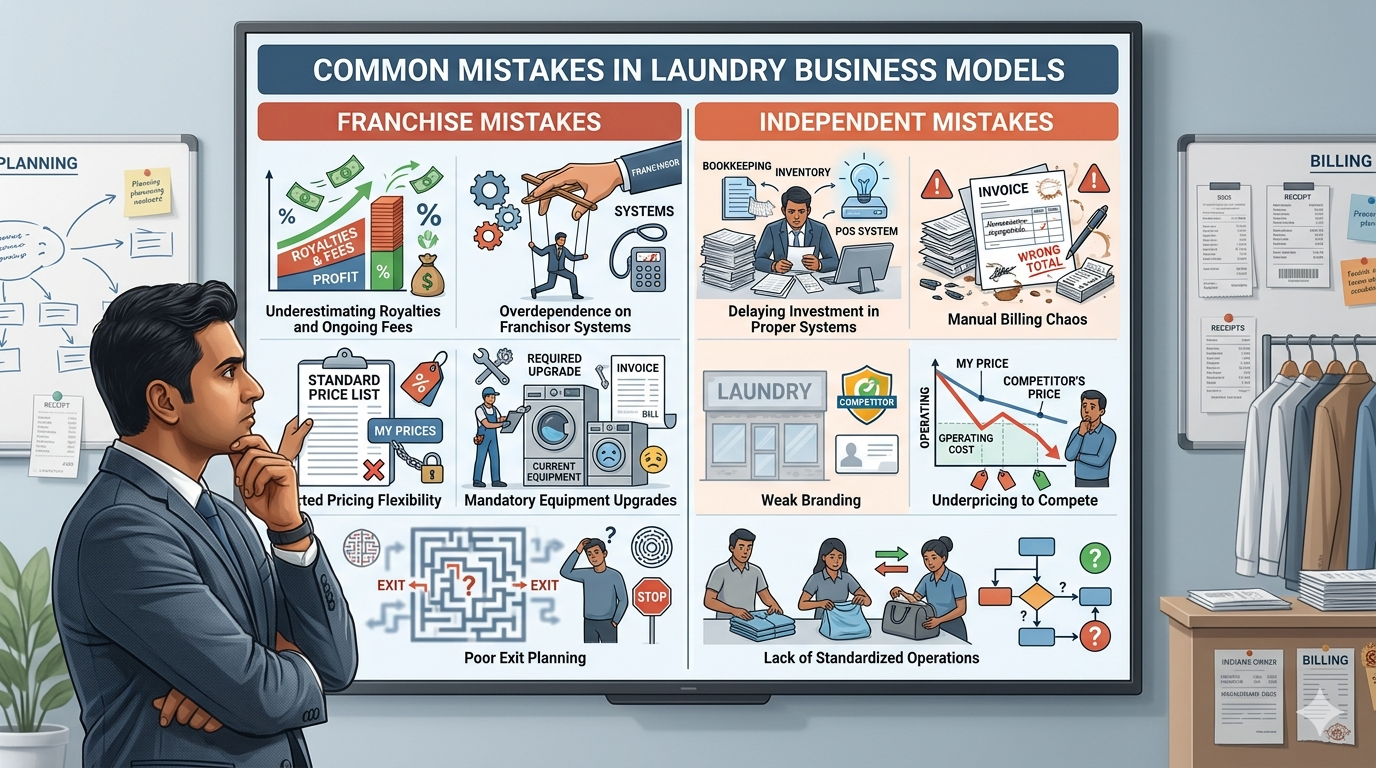
Franchise buyers often underestimate ongoing costs. Royalties, marketing fees, mandatory equipment upgrades—they add up. Some franchise agreements also restrict you from exiting or selling the business easily.
Independent owners sometimes skip investing in proper systems early. They rely on manual processes too long, which limits growth and creates customer service issues. Others underprice services trying to compete on cost alone, which hurts profitability.
Both models fail when owners don't focus on customer experience. Timely delivery, quality cleaning, and responsiveness matter more than whether you have a franchise logo on the wall.
Which Model Fits Your Situation?
Choose a franchise if:
- You have ₹30+ lakhs to invest upfront
- You want proven processes and brand recognition immediately
- You're entering a competitive urban market where brand trust matters
- You prefer structured support and don't mind royalty payments
Go independent if:
- Budget is tight and you want to reinvest profits into growth
- You value flexibility in pricing, services, and operations
- You're willing to build brand reputation through service quality
- You want full control without ongoing revenue sharing
There's no universally better option. It depends on your capital, risk tolerance, market, and how hands-on you want to be.
FAQs
Is a laundry franchise more profitable than an independent business?
Not necessarily. Franchises may generate higher revenue due to brand recognition, but royalties and fees reduce net profit. Independent laundries keep all revenue but need to invest more in local marketing and operations. Profitability depends on your cost structure, pricing strategy, and customer retention.
How much does it cost to start a laundry franchise in India?
Franchise fees typically range from ₹8–25 lakhs, with total investment (including setup, equipment, and working capital) reaching ₹25–50 lakhs or more. Costs vary by brand and location. Always factor in ongoing royalty payments of 5–10% of monthly revenue.
Can I use my own software with a laundry franchise?
Most franchises require you to use their proprietary POS and management systems. This ensures standardization but limits flexibility. Independent businesses can choose software like Ezer Laundry POS that fits their specific needs and integrates with local payment and delivery systems.
What are the biggest challenges of running an independent laundry?
Building brand awareness from scratch, managing operations without structured support, and investing in technology and marketing independently. Many owners also struggle with staff training and customer retention in the early months. Having strong local relationships and reliable systems helps overcome these challenges.
Do I need prior experience to start a laundry business?
Franchises often provide training even if you lack experience, making them accessible to first-time entrepreneurs. Independent setups require more self-learning or hiring experienced staff initially. Either way, understanding basic operations—cleaning techniques, customer service, and financial management—is essential for success.
How long does it take to break even in a laundry business?
Franchise owners typically break even in 18–30 months depending on location and foot traffic. Independent laundries with lower initial investment may break even sooner (12–24 months) if they manage costs well and build a steady customer base quickly. Market conditions and operational efficiency are key factors.
Can I switch from franchise to independent or vice versa?
Franchise agreements usually include non-compete clauses and exit restrictions. Switching mid-contract can be costly or legally complex. Starting independent and later franchising is possible but rare. Most owners stick with their initial choice or exit the business entirely if it doesn't work out.
Conclusion
Choosing between a laundry franchise and an independent setup isn't about which is objectively better. It's about what aligns with your financial situation, market conditions, and long-term business goals.
Franchises offer speed, structure, and brand trust but require higher investment and ongoing revenue sharing. Independent businesses give you control, flexibility, and better margins, but you're building everything yourself.
What matters most is operational excellence. Whether you have a franchise logo or your own brand, customers care about clean clothes, timely delivery, and fair pricing. Focus on those fundamentals, invest in the right technology to manage operations efficiently, and the business model becomes secondary.
If you're going independent and want the operational efficiency of a franchise without the costs, explore how Ezer Laundry POS Software can streamline your billing, order tracking, and customer management. Book a free demo to see how it works for your business.