
How to Reduce Garment Loss in Laundry Business: 7 Proven Methods
Lost garments are one of the biggest operational nightmares for laundry shop owners. A single misplaced shirt can cost you a loyal customer. Multiply that across hundreds of orders each month, and you're looking at serious revenue loss and reputation damage.
Whether you run a small neighborhood dry cleaner or manage multiple branches, garment loss happens. The question is: how much is it costing your business, and what can you actually do about it?
This guide walks you through practical, tested methods to reduce garment loss in your laundry business. We'll cover everything from basic tracking systems to modern technology solutions that Indian laundry owners are using right now.
Why Garment Loss Happens in the First Place
Most laundry owners blame staff. But the real issue usually sits deeper in your process.
Garments get lost during intake, washing, sorting after drying, or delivery. Sometimes a customer's red kurta ends up in someone else's bag. Other times, a shirt goes missing between the washing machine and the folding table. The reasons vary, but the pattern is always the same: lack of proper tracking.
Think about your current system. If a customer walks in today asking about their missing shirt from last week, how quickly can you locate it? If the answer is "we'll check and call you back," you already have a tracking problem.
Manual register books don't cut it anymore. Neither do loose paper bills that fade or get misplaced. You need a system that follows each garment from entry to exit.
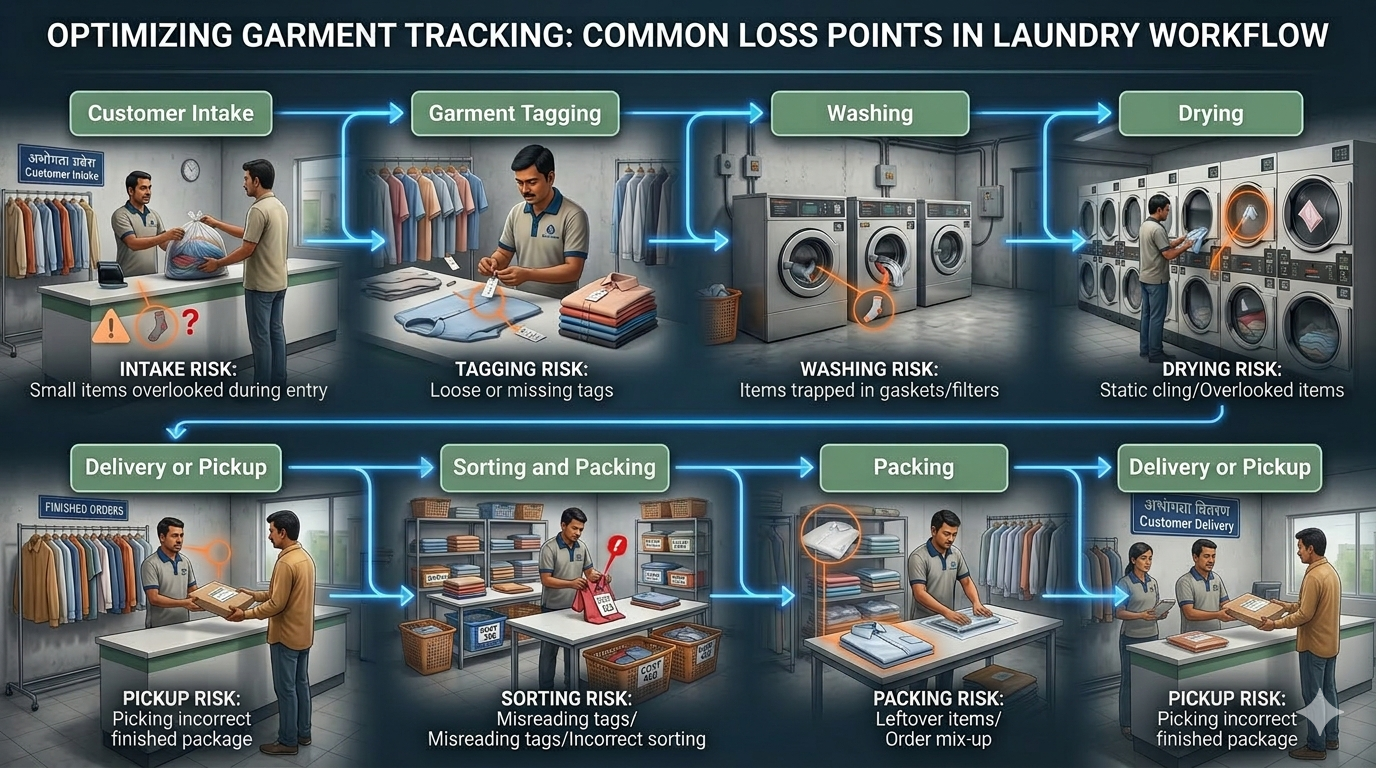
The Real Cost of Lost Garments
Let's talk numbers. A lost garment doesn't just mean compensating the customer. It creates a chain reaction.
First, there's the direct replacement cost. If you lose a ₹2,000 shirt, you pay ₹2,000. But that customer probably spends ₹800–₹1,200 monthly with you. Over a year, that's ₹10,000–₹15,000 in lifetime value, gone.
Then comes the reputation hit. That unhappy customer tells friends, posts online, leaves a bad review. Suddenly, five potential customers never walk through your door.
I've seen shops lose 2–3% of all garments monthly. For a shop processing 1,000 items, that's 20–30 lost pieces. Even at ₹500 average value, you're burning ₹10,000–₹15,000 every month. Plus the stress of dealing with angry customers.
Method 1: Implement Proper Garment Tagging
This is non-negotiable. Every single garment that enters your shop needs a unique identifier.
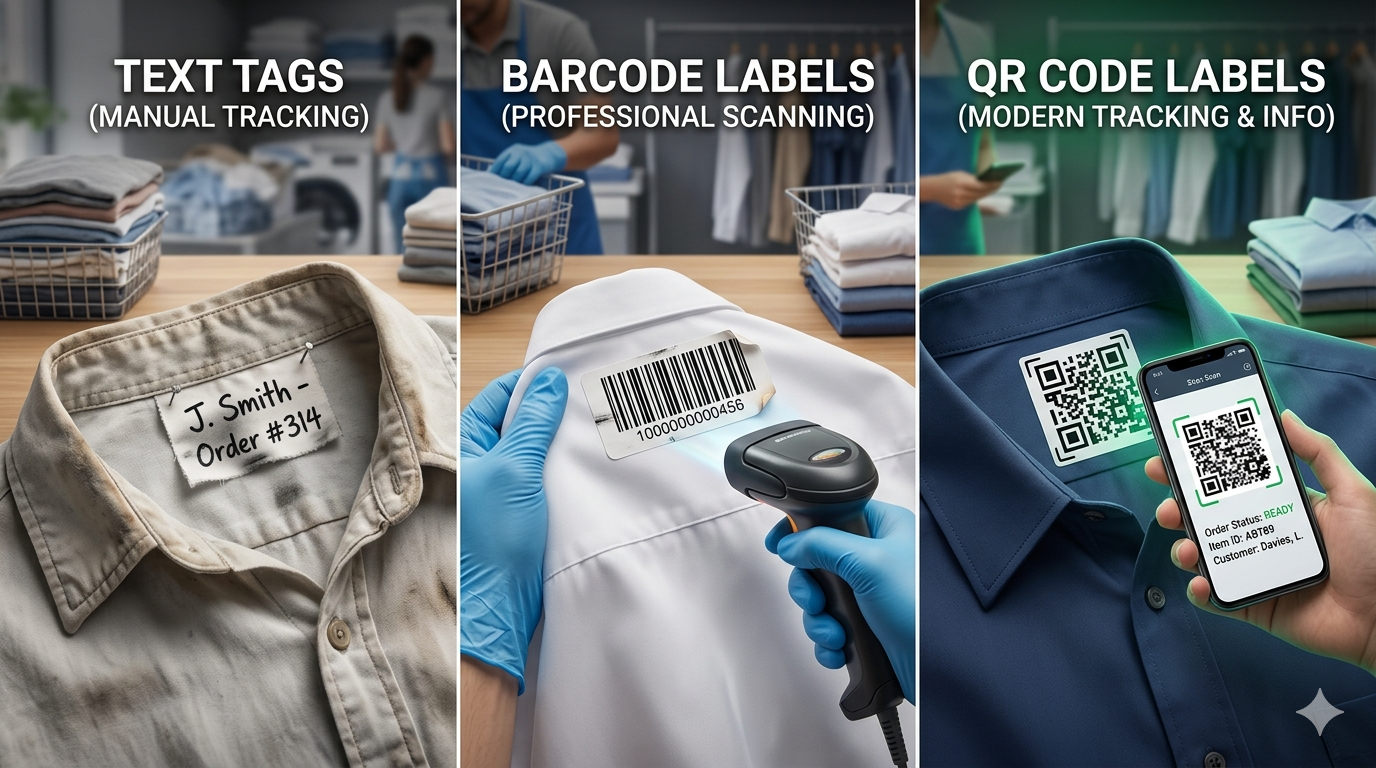
You have three main options: text tags, barcode labels, or QR codes. Text tags are cheap but error-prone. Someone writes "R-145" in messy handwriting, and suddenly no one knows if it's R-145 or R-175.
Barcode labels work better. You print a barcode sticker, attach it to the garment, and scan it at every stage. The problem? Barcodes can smudge or peel off during washing, especially in high-heat processes.
QR codes are becoming the standard. They're scannable with smartphones, harder to damage, and can store more information. Modern laundry POS software generates unique QR codes for each order. Your staff scans it during intake, washing, and delivery. If something goes missing, you know exactly where.
The key is consistency. Every garment, every time. No shortcuts when you're busy.
Method 2: Digital Order Tracking from Day One
Paper bills create chaos. A customer loses their receipt, and now you're manually searching through hundreds of items to find their order.
Digital order tracking solves this. When a customer drops off clothes, you enter their details into a system. Each garment gets tagged and linked to their order number. The system tracks everything: what came in, what stage it's at, when it'll be ready.
Here's what changes: If Mrs. Sharma calls asking about her sarees, you type her phone number and instantly see her order. You know her five sarees are currently in the drying stage and will be ready by tomorrow evening.
This isn't luxury anymore. It's basic business hygiene. Customers expect real-time updates. WhatsApp notifications when their order is ready. SMS alerts for pickup. These things reduce confusion and prevent garments from sitting unclaimed for weeks.
Method 3: Create Clear Sorting and Storage Zones
Walk into any disorganized laundry shop and you'll see the same mess: washed clothes piled everywhere, no clear system for what belongs where.
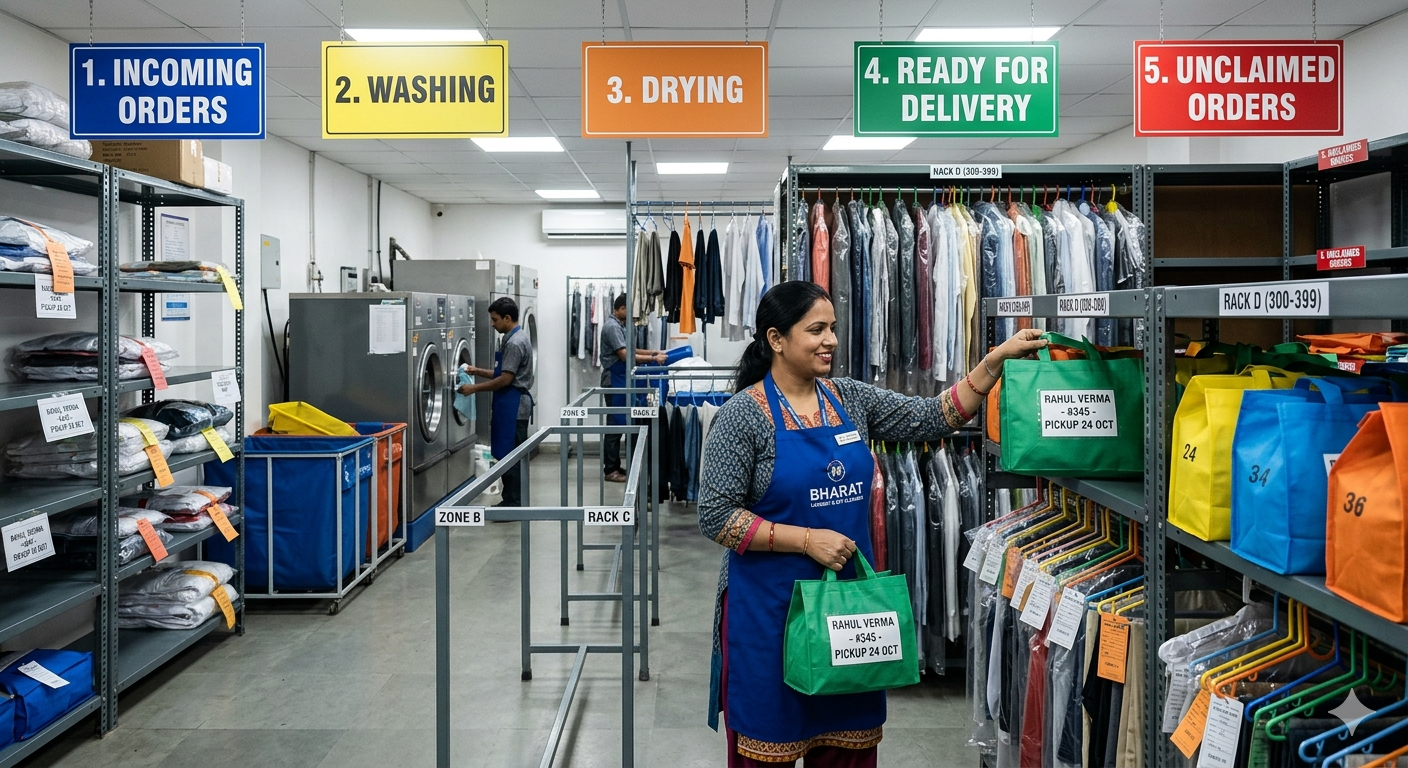
Fix this by creating distinct zones. One area for incoming orders. Another for items in washing. A separate space for drying. And a clearly marked section for ready-for-delivery items.
Within the ready-for-delivery zone, use racks or shelves organized by order number or customer name. Some shops use alphabetical sorting, others prefer date-based organization. Pick what works for your volume, but stick to it religiously.
Color-coded bags help too. All items for one customer go in one bag with their order tag visible. When delivery time comes, your staff grabs the bag, scans the tag, and hands it over. Simple.
The goal is this: anyone on your team should be able to locate any order within 30 seconds. If it takes longer, your system needs work.
Method 4: Staff Training and Accountability
Your system is only as good as the people running it. And here's the uncomfortable truth: some garment loss happens because staff aren't careful or aren't following procedures.
Train your team on the importance of proper tagging. Show them what happens when a garment gets lost. Make them understand that one mistake affects the entire business.
Create accountability checkpoints. When garments move from washing to drying, have staff sign off. When an order is packed for delivery, someone verifies all items are present. This isn't about distrust—it's about creating a culture where everyone takes ownership.
Some shops implement a penalty system for lost items, others prefer incentives for zero-loss months. Both work, but incentives usually create better morale.
Also, reduce staff dependency on memory. No one should rely on remembering which shirt belongs to which customer. Everything must be documented in the system.
Method 5: Regular Inventory Audits
You can't manage what you don't measure. Set aside time weekly or bi-weekly to audit your inventory.
Count items in each stage: how many in washing, how many in drying, how many awaiting pickup. Cross-check with your system records. If the numbers don't match, investigate immediately.
This sounds tedious, but it catches problems early. Maybe garments are piling up in the "ready" section because customers aren't picking them up. That's a reminder call issue, not a loss issue. Or maybe items are stuck in washing longer than they should be. That points to a workflow bottleneck.
Monthly reports help too. Track your loss percentage. If it's increasing, dig into what changed. New staff member? Higher order volume? Equipment malfunction? Find the root cause.

Method 6: Customer Communication and Verification
Sometimes garments aren't lost—customers just forget what they dropped off.
During intake, be thorough. Count items with the customer present. List everything clearly on the receipt or in the system. If someone brings five shirts, two trousers, and three sarees, document exactly that.
Take photos if needed, especially for expensive items or clothes with specific stains or damage. This protects you from false claims later.
At delivery, have customers verify everything before they leave. A quick count takes 30 seconds but prevents disputes. Some customers rush and later claim something was missing when they simply miscounted at home.
WhatsApp has become essential for this. Send customers a photo of their tagged garments when they drop off. Send updates when orders are ready. This transparency builds trust and reduces confusion.
How Modern Laundry POS Software Prevents Garment Loss
Technology doesn't replace good processes—it enforces them.
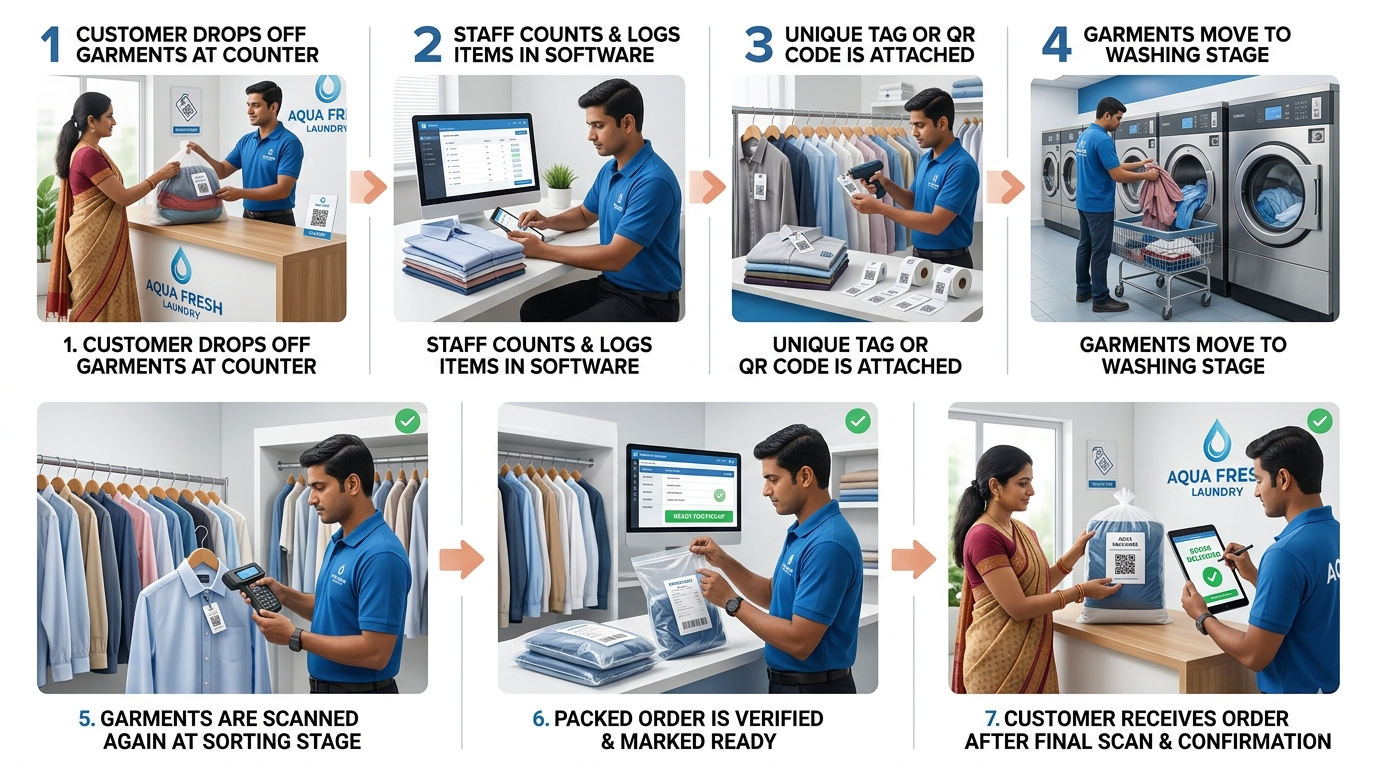
Modern laundry management systems like Ezer Laundry POS handle the heavy lifting. When a customer walks in, you create their order digitally. The system generates unique tags (text, barcode, or QR code) for each item. These tags link directly to the customer's profile.
Every time someone scans a tag, the system logs it. You can see exactly where each garment is: received, in washing, in drying, ready for delivery, or picked up. If something goes missing, you know at which stage.
The software also sends automated notifications. Customers get SMS or WhatsApp alerts when their order is ready. This reduces unclaimed items sitting in your shop for weeks, taking up space and creating confusion.
For multi-branch operations, this becomes even more critical. Items sometimes get transferred between locations. Cloud-based systems track these movements automatically. No more calling other branches to locate an order.
The best part? These systems also handle billing, GST compliance, customer data, and delivery management. Everything in one place. Less chaos, fewer errors, almost zero garment loss.
Ezer Laundry POS System
Streamline your laundry business with our comprehensive POS system. Features include smart billing, garment tracking, WhatsApp notifications, and cloud backup.
Common Mistakes That Increase Garment Loss
Even with good intentions, shops make predictable mistakes.
Skipping tags during rush hours is the biggest one. When 20 customers show up at once, staff start taking shortcuts. They plan to "tag everything later" and then forget. Those untagged items are as good as lost.
Using poor-quality tags is another issue. Cheap stickers peel off in hot water. Faded ink becomes unreadable. Invest in durable, waterproof tags that survive your washing process.
Ignoring customer pickup delays creates clutter. Items sitting unclaimed for 30+ days pile up, get mixed with new orders, and eventually disappear into the chaos. Set a clear policy: customers must pick up within 15–30 days, or you'll contact them.
Finally, not maintaining your tracking system. If you have software but only use it half the time, you've essentially created two systems—digital and manual. That's worse than just one system. Commit fully or don't bother.
Setting Up Your Garment Loss Prevention System
Start simple. If you're currently using paper registers, don't jump straight to advanced software. Begin with proper tagging—even manual tags are better than nothing.
Next, organize your physical space. Create those sorting zones we discussed. Make sure everyone knows where things belong.
Then look at digital solutions. Most modern laundry POS systems offer free trials. Test them with real orders. See if they actually reduce your workload or just add complexity.
Training comes next. Your staff needs to understand why this matters and how to use the new system. Give them time to adjust. Expect some resistance—change is uncomfortable.
Track your progress. Measure garment loss before implementing changes, then monthly afterward. If you go from 3% loss to 0.5% loss, you're saving serious money.
FAQs
What is the best tagging method for laundry businesses?
QR codes currently offer the best balance of durability, scanability, and information storage. They work with smartphones, survive most washing processes when properly applied, and integrate seamlessly with modern POS systems. Barcode labels are a close second, while text tags should only be used for very small operations.
How much does garment loss typically cost a laundry business?
Most shops lose 1–3% of garments monthly. For a shop processing 1,000 items at ₹500 average value, that's ₹5,000–₹15,000 in direct costs monthly. Factor in lost customer lifetime value and reputation damage, and the real cost can be 3–5 times higher.
Can small laundry shops afford digital tracking systems?
Yes. Basic laundry POS software starts around ₹3,000–₹5,000 monthly for small shops. Considering most shops lose ₹5,000+ monthly to garment loss, the system pays for itself quickly. Many providers offer flexible pricing based on order volume.
How do I handle customers who claim missing items?
Always verify against your digital records. If you have proper tagging and tracking, you can show exactly what was received and what was delivered. Take photos during intake for expensive items. This documentation protects you from false claims while helping resolve genuine mistakes.
What should I do with unclaimed garments?
Set a clear pickup policy—typically 30–45 days. Send multiple reminders via SMS and WhatsApp. After the deadline, you can donate items or dispose of them per local regulations. Document everything to avoid future disputes.
How long does it take to implement a garment tracking system?
A basic tagging system can start same day. Full digital integration with POS software typically takes 1–2 weeks, including staff training and workflow adjustments. The initial effort pays off within the first month through reduced losses.
Is garment loss covered by business insurance?
Standard business insurance rarely covers routine garment loss from operational issues. Some policies cover catastrophic losses (fire, theft) but not day-to-day misplacement. Prevention through proper systems is more effective than insurance.
Conclusion
Reducing garment loss isn't about one magic solution. It's about building a system where every piece of clothing is tracked, every team member follows the process, and technology removes human error.
Start with proper tagging. Organize your workspace. Train your staff. Implement digital tracking. Audit regularly. Communicate clearly with customers.
The shops that get this right see garment loss drop below 0.5%. That's more money in your pocket, happier customers, and far less stress dealing with complaints.
Modern laundry management software makes this easier than ever. If you're still managing everything manually, you're working harder than necessary. See how systems like Ezer Laundry POS can automate tracking, reduce losses, and help your business grow without the constant chaos.
How to Manage Laundry Orders Digitally in 2026: A Complete Guide