
How to Standardize Pricing Across Multiple Laundry Branches (2026 Guide)
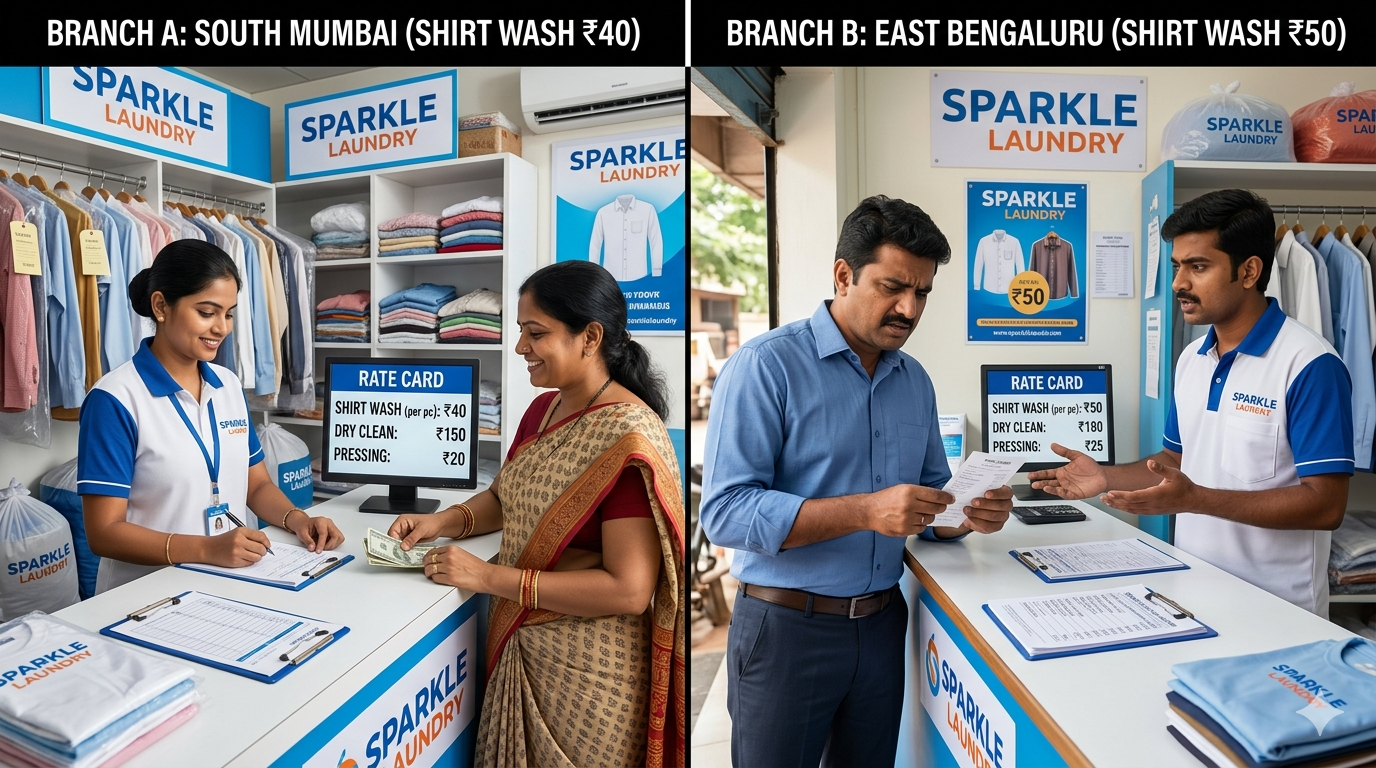
Running multiple laundry outlets sounds like a growth milestone. It is—until you realize each branch is charging different rates for the same shirt wash, or one location offers a discount the others don't know about. Customers notice. They compare. And when Branch A charges ₹40 while Branch B charges ₹50 for identical service, trust breaks down fast. This guide walks you through fixing that chaos, whether you run two outlets or ten.
Why Pricing Inconsistency Kills Multi-Branch Laundry Businesses
Price variations across branches don't happen overnight. They creep in. A manager at one location gives a bulk discount to retain a corporate client. Another branch raises dry cleaning rates to cover rising utility costs. Nobody updates the central team. Within months, you're running what looks like different businesses under one brand name.
The damage goes beyond confused customers. Your staff can't answer basic questions about pricing when customers call the wrong branch. Billing errors multiply because there's no single source of truth. Financial reporting becomes guesswork when each location maintains separate rate cards in notebooks or outdated Excel sheets.
I've seen laundry owners lose high-value contracts because corporate clients discovered inconsistent invoicing across pickup locations. One hotel chain cancelled an annual agreement when they received different quotes from two branches of the same company. That's ₹15-20 lakhs in annual revenue gone.
The Real Cost of Running Inconsistent Operations
Beyond pricing, operational inconsistencies drain profits silently. One branch uses premium detergent while another cuts costs with cheaper alternatives. Service timelines vary—express delivery means 12 hours at one outlet, 24 hours at another. Quality standards drift when each manager interprets "dry clean" differently.
These aren't small issues. When a customer gets excellent service at Branch A but mediocre results at Branch B, they assume you don't care. They won't complain. They'll just switch to a competitor who delivers consistent quality everywhere.
Staff training becomes nearly impossible. New employees can't transfer between branches because processes differ completely. You end up with knowledge silos where only one person knows how things work at each location. The day that person quits, operations stumble.
Building a Centralized Pricing Structure That Actually Works
Start by auditing what each branch currently charges. Don't just collect rate cards—watch actual billing for a week. You'll discover unofficial discounts, forgotten service categories, and pricing decisions made months ago that nobody remembers authorizing.
Create a master price list based on your actual costs plus desired margins. Factor in location-specific expenses like rent and electricity, but keep service pricing uniform. If Branch X has higher overhead, adjust your operational efficiency there rather than passing random costs to customers through inconsistent pricing.
Document everything. Not in someone's notebook—in a system everyone accesses. Include service definitions (what exactly is "premium dry cleaning"), standard timelines, and approved discount structures. When a manager asks whether corporate clients get 10% or 15% off, there should be one clear answer.
Roll out changes gradually. Announce new pricing 15-20 days ahead. Train every staff member on the new structure. Put up updated rate cards. Send SMS notifications to regular customers about any changes. Handle the transition professionally and you'll keep most customers through the shift.
How Laundry POS Software Manages Pricing Across Branches
Manual systems fail at scale. One manager forgets to update their printed rate card. Another applies an expired promotion code. Within days, you're back to chaos. This is where laundry POS software becomes essential, not optional.
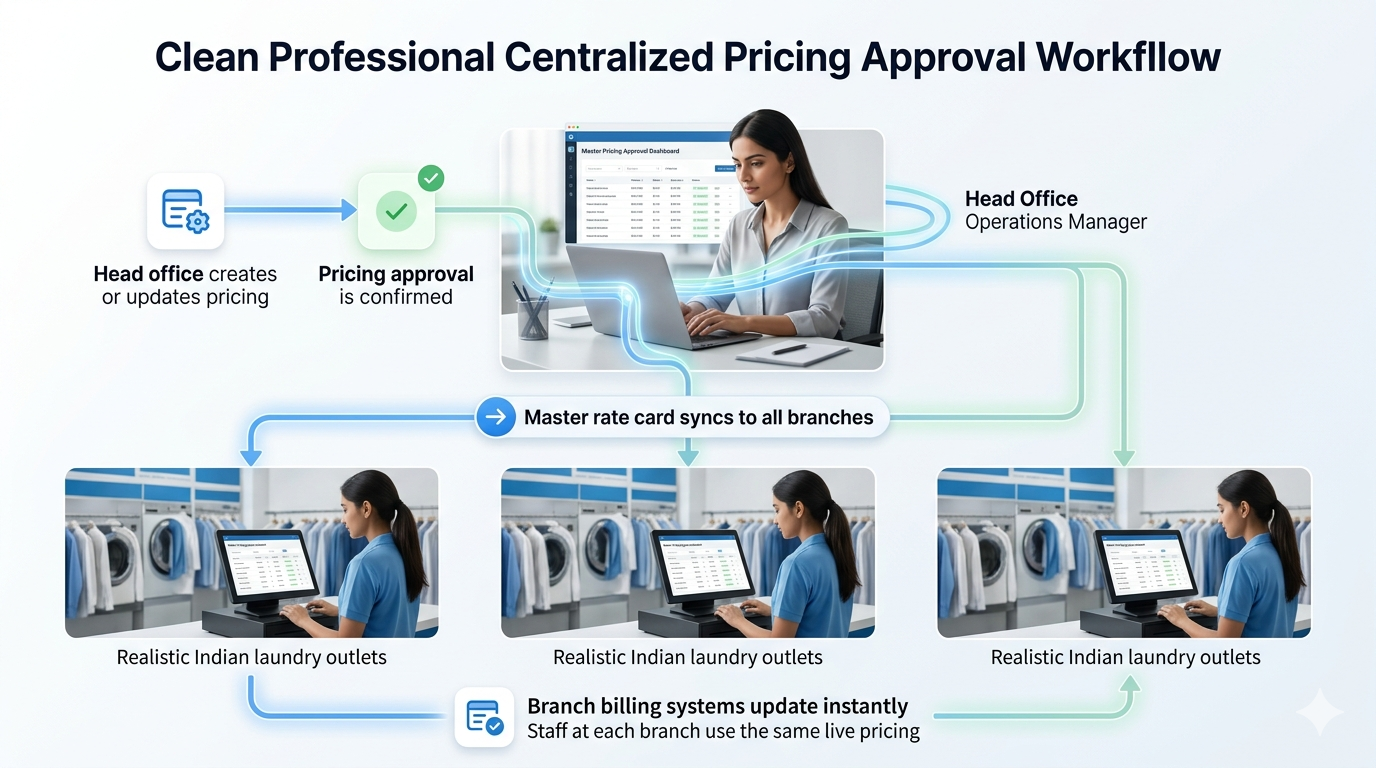
Modern systems sync pricing across all locations in real-time. When you update a rate at head office, every branch sees the change instantly. No phone calls, no WhatsApp groups, no confusion. The software won't let staff charge anything outside approved parameters.
But pricing is just the start. These systems standardize your entire operation. Order processing follows identical steps everywhere. Billing generates uniform invoices with proper GST calculations. Customer data stays centralized—someone who drops clothes at Branch A can pick them up from Branch B without repeating their details.
Reporting becomes actually useful. You see which services drive revenue at each location, which branches underperform, where costs spiral. You can spot a pricing error or unauthorized discount within minutes, not months. Financial year-end stops being a nightmare of reconciling mismatched records.
How to Start Your Laundry Business in 2026: Complete Guide
Ezer Laundry POS System
Streamline your laundry business with our comprehensive POS system. Features include smart billing, garment tracking, WhatsApp notifications, and cloud backup.
Setting Up Service Categories and Rate Cards
Break your services into clear categories: regular wash, dry clean, premium services, express delivery, alterations. Each category needs specific pricing and defined quality standards. Don't create 50 different service types—customers get confused and staff makes errors. Keep it simple.
Within each category, set item-level pricing. Shirts, trousers, sarees, blankets—every item gets a fixed rate. Include both piece-wise and per-kilo options where relevant. Some customers prefer knowing exactly what one shirt costs; bulk clients care about per-kilo rates.
Build in your discount structure from day one. Corporate accounts, subscription customers, bulk orders—define these tiers clearly. Set minimum order values for each discount level. Make it automatic through your system so staff doesn't need to remember or calculate anything.
Express services should cost more, but price them consistently. If same-day delivery is ₹30 extra per item, that applies everywhere. Don't let one branch charge ₹50 because "customers here can afford it." That's how you create the exact problem you're trying to solve.
Training Staff on Standardized Pricing and Billing
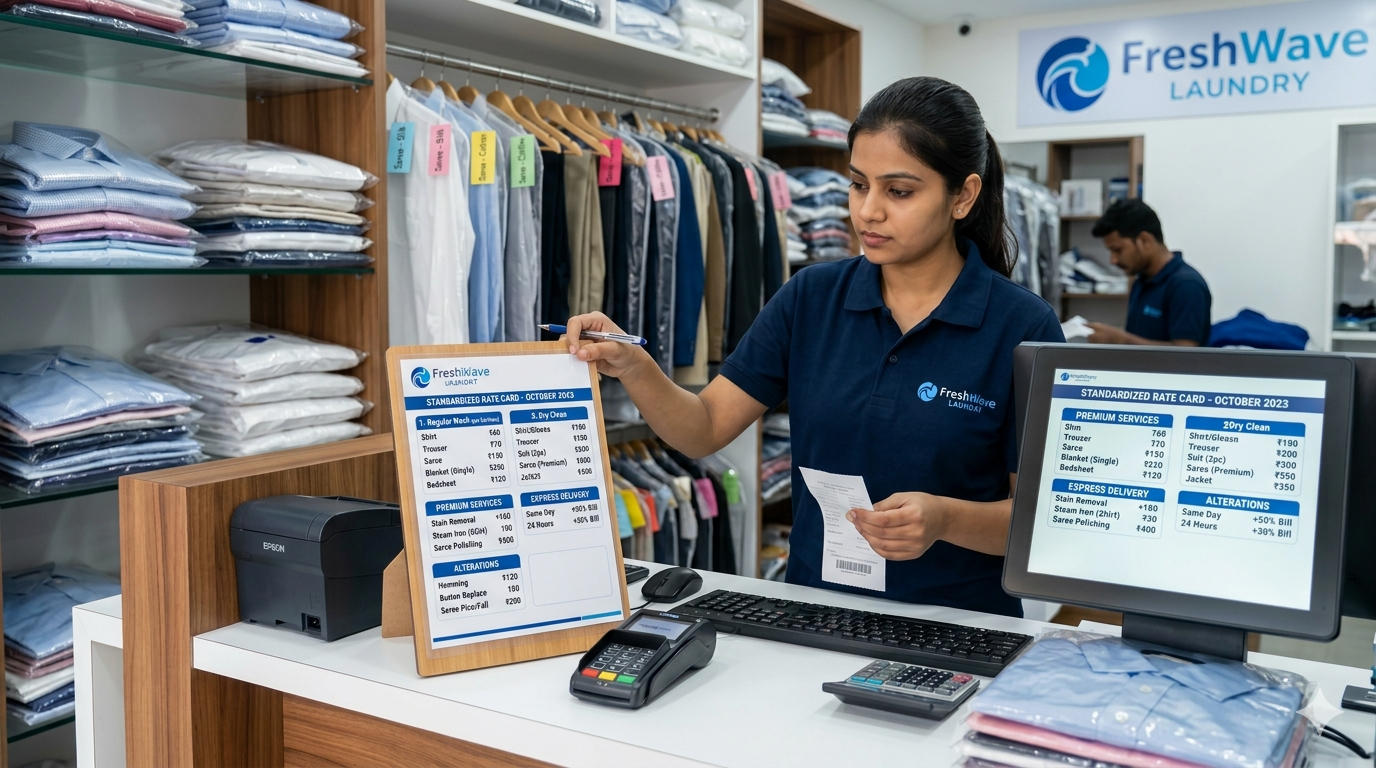
Your staff needs to understand why pricing consistency matters, not just what the prices are. Explain how it builds customer trust and protects the brand. When they see the bigger picture, they're less likely to make unauthorized changes "just this once" for a demanding customer.
Conduct hands-on training sessions. Don't just send a PDF. Have staff practice billing common scenarios using your actual system. Test them on applying discounts correctly, handling GST billing, managing express charges. Catch their confusion during training, not when they're facing a customer.
Create quick-reference guides for complex situations. What if a customer claims they got a different price last week? How do you handle damaged items? When can staff escalate for pricing decisions? These scenarios will happen. Your team should know the response before they panic.
Schedule refresher training quarterly. Pricing might change, new services launch, promotional periods start and end. Keep everyone updated. A 30-minute training session saves countless billing errors and customer disputes.
Managing Promotions and Seasonal Pricing
Promotions need central control. If you let each branch run independent discounts, you're back to pricing chaos. All seasonal offers, festival discounts, new customer promotions—these come from head office with clear start and end dates.
Use your POS system to automate promotion application. The system should know which customers qualify, which services are discounted, and when the offer expires. This prevents staff from accidentally applying expired discounts or forgetting current ones.
Track promotion performance by branch. Which locations see higher uptake? Where do customers respond better to percentage discounts versus fixed-price offers? This data helps you design better promotions and allocate marketing budgets effectively.
End promotions cleanly. Send customer notifications before promotional rates expire. Update all systems simultaneously. Train staff to explain why pricing returns to standard rates without sounding defensive. Handle it professionally and most customers accept the change.
Handling Location-Specific Challenges
Some branches face higher operational costs. That's reality. But the solution isn't charging customers more—it's optimizing operations or accepting slightly lower margins at those locations. Your brand promise should be the same everywhere.
If one location absolutely cannot sustain centralized pricing, you might be in the wrong market or paying too much rent. Run the numbers honestly. Sometimes the right decision is closing an unprofitable branch rather than damaging your brand with inconsistent pricing.
For delivery-heavy areas, you can adjust delivery charges based on distance while keeping service pricing uniform. Customers understand paying more for 10km delivery versus 2km. But the dry cleaning rate itself shouldn't change by location.
Document any approved variations clearly. If Branch Y charges extra for specific services due to unique local factors, make it visible and justified. Don't hide it. Transparency prevents accusations of unfair pricing.
Monitoring Compliance and Catching Pricing Errors
Set up automated alerts for unusual transactions. If a bill is 40% below expected value or contains manual discounts above threshold levels, the system should flag it immediately. This catches honest mistakes and prevents intentional discount abuse.
Conduct regular audits, but keep them constructive not punitive. Review a sample of bills from each branch weekly. Look for patterns—is one location consistently under-charging for express services? Address it through additional training, not blame.
Customer complaints often reveal pricing issues before internal audits do. If someone says they were charged differently than last time or compared to another branch, investigate immediately. One complaint might indicate a broader system failure.
Financial reconciliation should happen daily at each branch and weekly at head office level. Revenue should match services delivered based on standard pricing. Large variances need explanation. This discipline prevents both errors and fraud.
Choosing the Right Laundry POS Software for Multi-Branch Operations
Not all POS systems handle multiple branches equally well. Look for cloud-based solutions where all locations access the same live database. Avoid systems that sync periodically—you want real-time updates, not overnight batch processing.
The software needs role-based access controls. Branch managers see their location's data plus centralized pricing. Head office sees everything. Staff can bill but can't change rates. This prevents unauthorized modifications while keeping operations smooth.
Mobile apps matter significantly. When your delivery staff can update order status from customer locations, everyone stays informed. Customers can track their orders without calling. This transparency reduces workload and improves satisfaction.
Integration capabilities determine long-term value. Can it connect with your accounting software? Does it support SMS notifications? Will it work with RFID tagging if you scale up? Choose systems that grow with your business rather than ones you'll outgrow in two years.
GST compliance is non-negotiable. Your system should generate proper invoices, maintain required records, and help with return filing. Tax authorities don't accept "my software couldn't do it" as an excuse.
How to Start Your Laundry Business in 2026: Complete Guide
Measuring Success: KPIs for Standardized Operations
Track average transaction value by branch. In a properly standardized system, these should be similar (accounting for demographic differences). Large variations indicate inconsistent pricing or service recommendations.
Monitor customer complaints about pricing. These should drop significantly within 2-3 months of standardization. If they don't, your staff needs more training or your pricing structure has actual problems.
Check staff query frequency. How often do employees escalate pricing questions to management? This should decline as standardization takes hold. If it stays high, your documentation or training is insufficient.
Revenue per branch should become more predictable. Wild month-to-month swings often indicate pricing chaos or promotion mismanagement. Steadier revenue suggests you've created reliable, sustainable operations.
Common Mistakes to Avoid
Don't standardize pricing without standardizing quality. Charging the same everywhere while delivering different service levels frustrates customers more than price variations would.
Avoid setting prices too low to match your cheapest branch. This erodes margins everywhere. Set pricing based on sustainable economics, then improve efficiency at high-cost locations.
Don't implement changes without clear communication. Staff learns about new pricing from confused customers—that's a failure. Train your team first, always.
Never ignore location managers who raise concerns about centralized pricing. They see daily realities you might miss. Listen, analyze their feedback, and make data-driven decisions. Sometimes they're right about needed adjustments.
FAQs
What's the biggest challenge in standardizing laundry pricing across branches?
Getting all managers to actually follow the new pricing structure. Even with good systems, some managers resist change or make "exceptions" that undermine standardization. Strong leadership and clear communication solve this, but it takes consistent effort beyond just setting up software.
How long does it take to implement standardized pricing?
Planning and system setup typically take 2-3 weeks. Staff training needs another 1-2 weeks. Full adoption where everyone operates smoothly takes about 2-3 months. Rush it and you'll create chaos; take longer and momentum dies. That 8-12 week window works well for most businesses.
Can small laundry businesses with 2-3 branches afford POS software?
Yes. Cloud-based laundry POS systems now start at ₹3,000-5,000 per month for small multi-branch setups. Compare that to revenue lost from billing errors, pricing inconsistencies, and operational inefficiency. The ROI usually shows within the first quarter itself.
Should delivery charges be standardized across branches too?
Service pricing should be uniform, but delivery charges can vary based on actual distance and logistics costs. Customers understand paying different delivery fees. What they don't accept is paying different amounts for the same dry cleaning service at different branches.
How do you handle customers who got better pricing before standardization?
Be honest. Explain you've standardized pricing to ensure fair treatment for everyone. Many will understand. For loyal long-term customers who genuinely lose out, consider offering a subscription plan or loyalty program that gives them equivalent value through volume benefits rather than random discounts.
What if competitors in one area charge less than my standardized pricing?
Don't panic and break your pricing structure. Instead, compete on service quality, convenience, reliability, or added value. If you truly can't compete profitably at a location, that market might not be viable. It's better to exit gracefully than corrupt your entire pricing system.
How often should centralized pricing be reviewed and updated?
Review quarterly based on cost changes, market conditions, and performance data. Update when necessary, but avoid frequent changes that confuse customers and staff. Annual major reviews with minor quarterly adjustments usually work well for laundry businesses.
Conclusion
Standardizing pricing across multiple laundry branches isn't just about consistency—it's about building a real business that can scale without falling apart. When every branch operates from the same playbook, charges the same rates, and delivers the same quality, you stop fighting daily fires and start actually growing.
The right technology makes this achievable. Modern laundry POS software doesn't just sync pricing; it creates operational uniformity that manual systems simply cannot maintain. Combined with proper training and clear processes, you build something sustainable.
If you're struggling with pricing chaos across your branches or planning to expand beyond your first location, consider how a centralized management system could change your operations. Learn more about how laundry POS software manages multi-branch operations or see it in action with a quick demo.