
Best Laundry Management Software in India (2026 Guide)
Running a laundry business in India means juggling customer orders, tracking deliveries, managing staff, and keeping your billing accurate—all while trying to grow. Most shop owners I've spoken with struggle with the same issues: lost orders, billing mistakes, and customers asking "where's my delivery?" If you're still using registers or basic spreadsheets, you're probably losing money without realizing it. This guide walks you through what laundry management software actually does, why it matters for your business, and how to choose the right system without overspending.
Why Indian Laundry Businesses Need Management Software
The laundry industry in India has changed. Customers now expect doorstep pickup, real-time tracking, and digital payments. Your competitors are already offering these services.
Traditional methods create problems that software solves instantly. When you write orders in a notebook, you can't search them quickly. When staff members leave, they take customer knowledge with them. When you expand to a second location, managing both becomes nearly impossible.
Here's what typically breaks down:
- Order tracking gets messy after 20-30 daily orders
- Pricing errors happen when you have 50+ service combinations
- Customer phone numbers get lost or duplicated
- Delivery coordination relies entirely on one person's memory
- You can't see which customers haven't returned in months
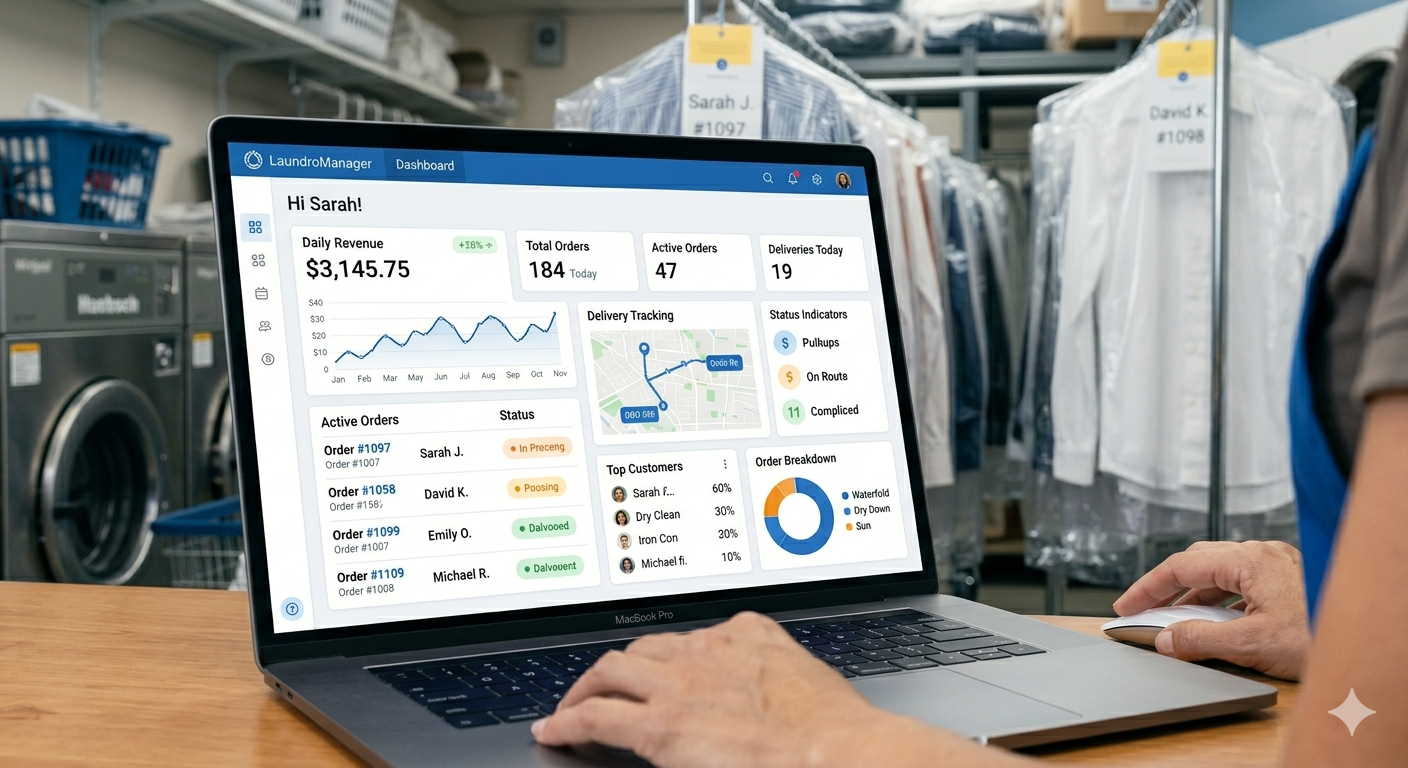
Software doesn't just digitize your records. It gives you control back. You can see everything happening in your business from your phone, even when you're not at the shop.
Key Features That Actually Matter
Most laundry software comes loaded with features. But only a handful make a real difference to your daily operations.
Order Management and Billing
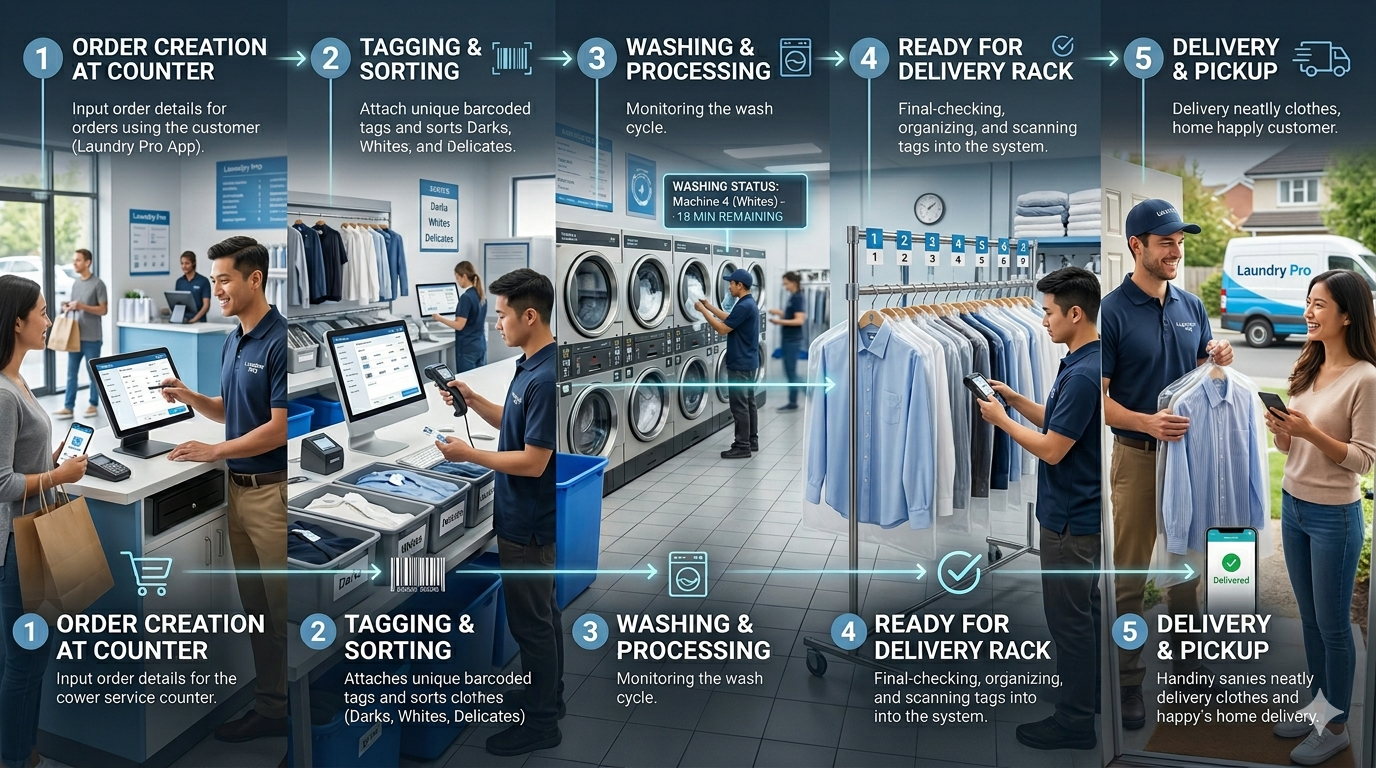
This is the foundation. Good software lets you create orders in under 30 seconds. You select the customer, add items (shirt, trouser, bedsheet), choose services (wash, iron, dry clean), and generate a bill. The system automatically applies your pricing, calculates GST, and prints a receipt.
The best part? You can pull up any old order instantly. Customer calls asking about their October delivery? You find it in 5 seconds instead of flipping through registers.
Customer Database
Every customer's history should be in one place. Phone number, address, past orders, pending payments, special instructions ("use less starch" or "remove gently").
This sounds basic, but it transforms how you operate. You can send bulk WhatsApp messages to customers who haven't visited in 60 days. You can identify your top 20 customers and offer them loyalty discounts. You stop asking repeat customers for their address every single time.
Pickup and Delivery Scheduling
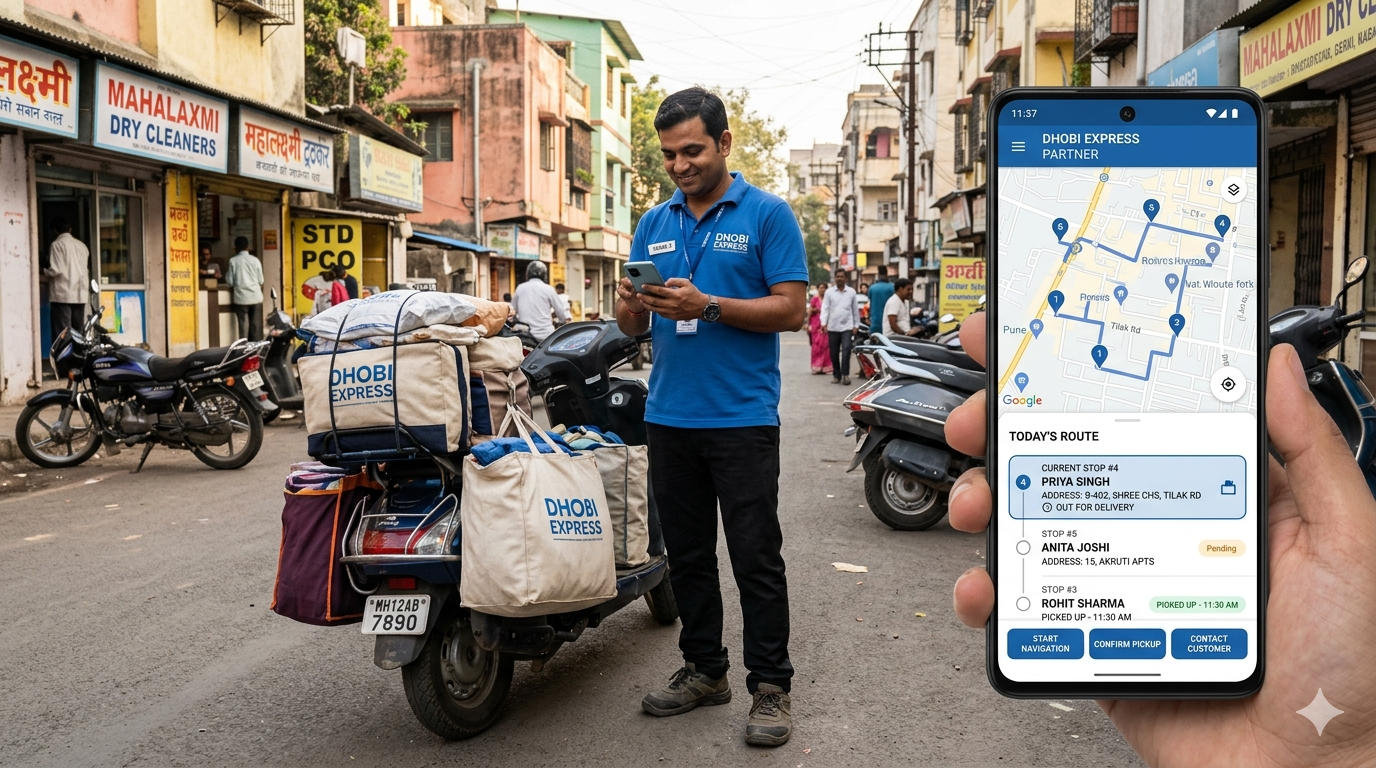
If you offer home pickup, this feature becomes essential. Your delivery person gets a route for the day. Customers receive SMS updates when you're on the way. You track which orders are out for delivery versus which are ready but waiting.
Without this, coordination happens through phone calls and handwritten notes. With software, everyone—you, your staff, and your customers—knows exactly what's happening.
GST-Compliant Invoicing
GST compliance isn't optional. Your software should automatically calculate tax, generate proper invoices with HSN codes, and create monthly reports for your accountant.
I've seen owners get notices because their manual billing had errors. Software eliminates that risk. Everything is timestamped, recorded, and exportable.
Multi-Branch Support
Planning to open a second location? You need software that handles multiple branches from day one. You should see combined revenue, transfer orders between locations, and manage inventory separately for each shop.
Most businesses outgrow their first software within two years because it can't scale. Choose something built for growth.
How Laundry Management Software Improves Profitability
Software isn't an expense—it's an investment that pays back quickly. Here's how.
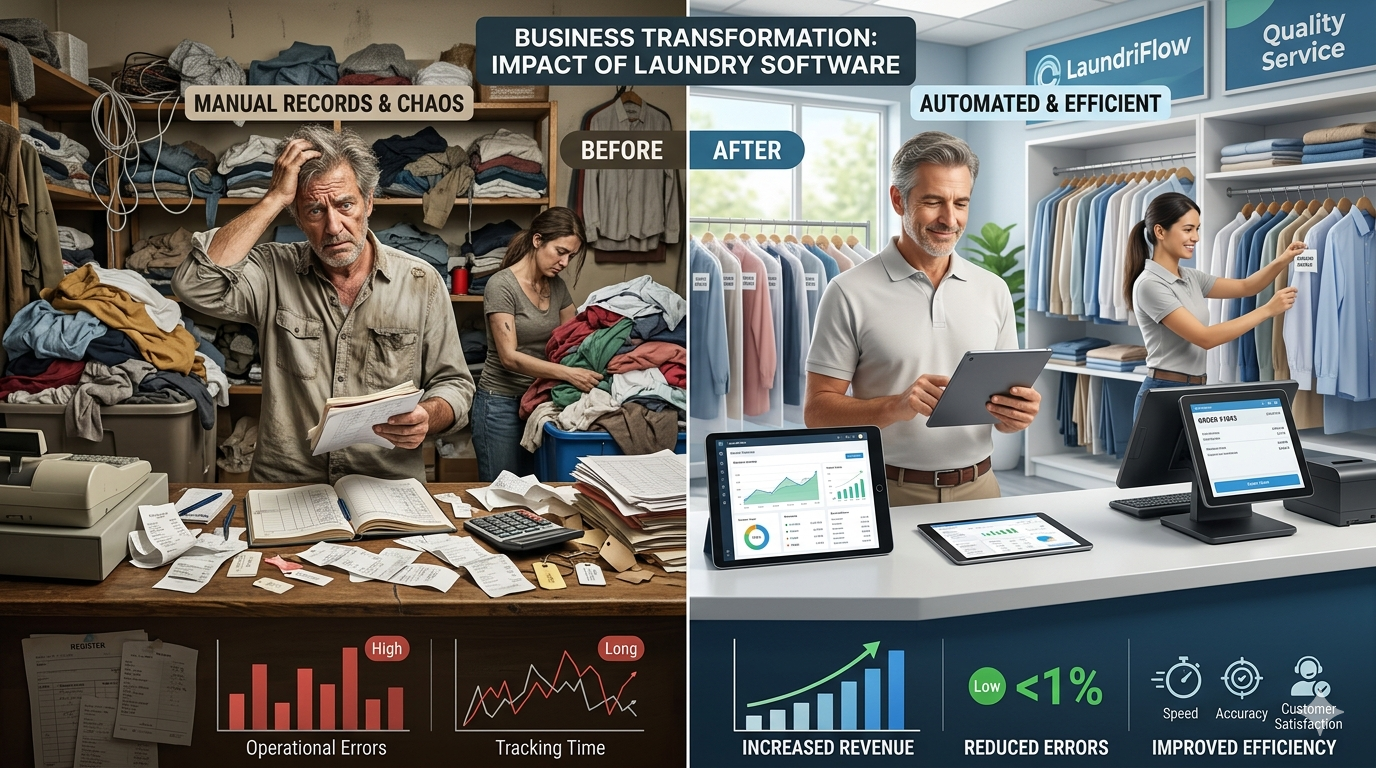
Fewer billing errors: Manual billing leads to undercharging or overcharging. Even a 2% error rate on 50 daily orders means you lose ₹5,000-10,000 monthly. Software ensures consistent, accurate pricing.
Better customer retention: Customers leave when service feels disorganized. When you remember their preferences, deliver on time, and send order updates, they stick around. Retaining one customer is cheaper than acquiring ten new ones.
Staff efficiency: Your employees spend less time searching for information and more time serving customers. One person can now handle what previously required two.
Reduced theft and fraud: Every transaction gets recorded. You can cross-check cash collected versus bills generated. This alone has helped shop owners identify discrepancies they never knew existed.
Data-driven decisions: You can see which services are most profitable, which days are busiest, and which marketing efforts bring customers. You stop guessing and start planning.
Common Mistakes When Choosing Software
Business owners make predictable mistakes when selecting laundry software. Avoid these.
Choosing the cheapest option: Free or very cheap software often lacks critical features. You end up paying more later to switch or hire someone to manage workarounds.
Ignoring mobile access: If you can't manage your business from your phone, you're tied to your shop. Look for cloud-based solutions with mobile apps.
Overlooking training and support: Software is useless if your staff can't use it. Choose vendors who provide training in your language and respond quickly when you have issues.
Not testing first: Always take a demo or free trial. Enter 20-30 real orders. See if the workflow makes sense. Some software looks good in presentations but feels clunky in actual use.
Buying features you don't need: Franchises need different features than single-location shops. Don't pay for inventory management if you only do wash-and-iron. Match the software to your actual operations.
Understanding Pricing Models
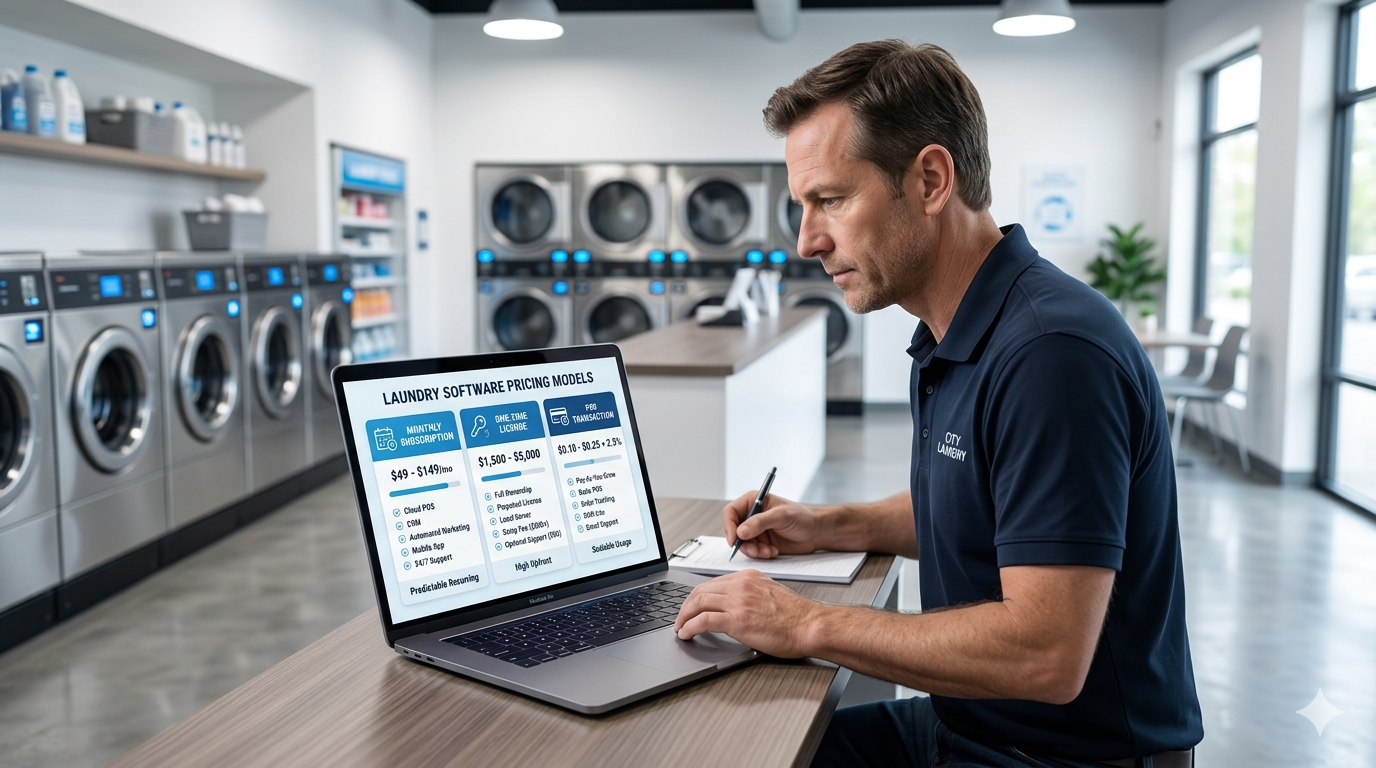
Laundry software in India typically follows one of three pricing structures.
Monthly subscription: You pay ₹1,500-5,000 per month depending on features and number of users. This includes updates, support, and cloud storage. Best for most small to medium shops.
One-time license: You pay ₹20,000-50,000 upfront. The software is yours, but updates and support often cost extra. Works if you want to avoid recurring costs, but cloud features may be limited.
Per-transaction fees: Some platforms charge ₹2-5 per order. This scales with your business but can get expensive at high volumes.
Calculate based on your order volume. If you process 1,000 orders monthly, a ₹3,000 subscription is cheaper than ₹5 per transaction. If you're doing 200 orders, the math flips.
Hidden costs to watch for: setup fees, training charges, SMS/WhatsApp costs, payment gateway fees, and charges for additional users or branches.
Ezer POS Laundry Management Software (Best)
Among the options available in India, Ezer POS has emerged as a practical choice for laundry and dry-cleaning businesses. It's built specifically for Indian operations, which means GST is properly handled, support is available in regional languages, and pricing fits SMB budgets.
What sets it apart is the focus on real business needs rather than flashy features. You get order management, customer tracking, billing, pickup/delivery scheduling, and mobile access—everything required to run efficiently without unnecessary complexity.
The system works offline, so internet issues don't shut down your shop. Data syncs automatically when connection returns. This matters in India where connectivity can be inconsistent.
Ezer also provides analytics that actually make sense. You see daily revenue, pending orders, customer retention rates, and service-wise performance. No complicated dashboards requiring training to interpret.
For shops planning to expand, multi-branch support is included from the start. You can manage five locations from one account without jumping through hoops or paying extra per branch.
7 Critical Mistakes to Avoid When Starting a Laundry Business in 2026
Ezer Laundry POS System
Streamline your laundry business with our comprehensive POS system. Features include smart billing, garment tracking, WhatsApp notifications, and cloud backup.
Implementation Tips for Smooth Transition
Switching from manual to digital operations can feel overwhelming. Here's how to do it right.
Start with new orders: Don't try to digitize every historical record immediately. Begin entering new orders in the software while keeping your old system running parallel for a week or two.
Train one person thoroughly first: Make someone on your team the expert. They train others and become your go-to when questions arise.
Migrate important customer data gradually: Enter your top 50-100 customers first. Add the rest over time as they visit.
Use all features from day one: Don't just use the software as a billing tool. Set up customer profiles, schedule deliveries, send SMS updates. You paid for these features—use them.
Review reports weekly: Spend 30 minutes every week looking at your data. You'll spot patterns and opportunities you never noticed before.
Most software vendors offer onboarding support. Use it. Ask questions. Request customization if something doesn't fit your workflow.
Mobile Apps vs Desktop-Only Solutions
This choice significantly impacts how you work.
Desktop-only software ties you to your shop. You can't check orders from home, track deliveries on the go, or respond to customer queries when you're out. It might cost less, but the limitation becomes frustrating as your business grows.
Mobile-first or cloud-based solutions give you freedom. You manage everything from your phone. Your staff can update order status instantly. Delivery personnel mark items as delivered while in the field.
The difference shows up in emergencies. When a customer calls at 8 PM asking about their delivery, you can check immediately rather than saying "I'll check tomorrow."
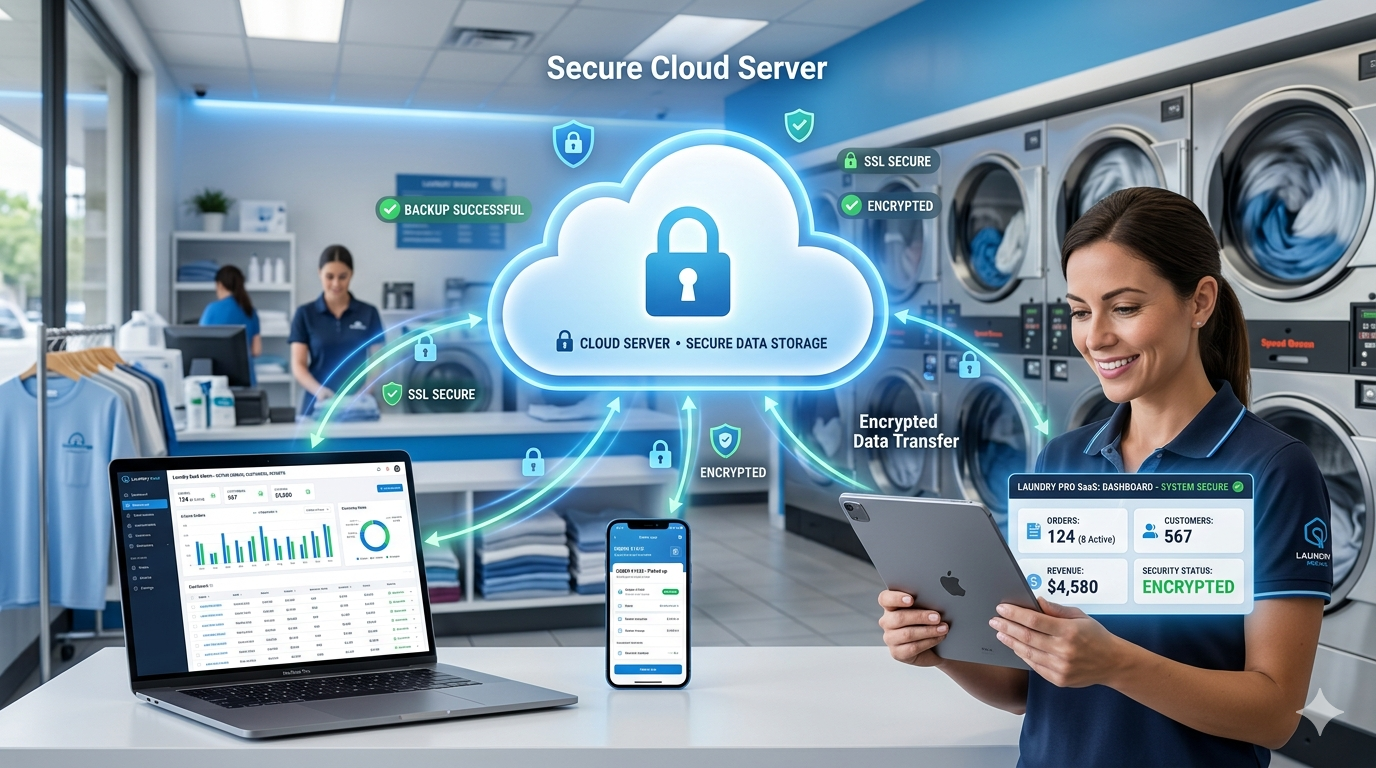
Cloud storage also means your data is backed up automatically. No risk of losing everything if your computer crashes or gets stolen.
Integration with Payment Systems
Cash is still common in Indian laundries, but digital payments are growing fast. Your software should handle both smoothly.
Look for integration with UPI, Paytm, PhonePe, and card machines. When a customer pays digitally, the transaction should automatically record against their order. No manual entry, no reconciliation headaches at day-end.
Some systems also link to WhatsApp Business API, letting you send order confirmations and delivery updates automatically. This reduces phone calls and creates a more professional experience.
Payment reports should show exactly how much came through each channel. You need this for accounting and to understand customer preferences.
Security and Data Backup
Your customer data and financial records are valuable. Losing them would devastate your business.
Cloud-based software automatically backs up data multiple times daily to secure servers. Even if your shop burns down, your records are safe.
Look for these security features:
- Role-based access (cashier sees different things than owner)
- Password protection
- Data encryption
- Regular automatic backups
- Ability to export data if you ever switch systems
Never use software that stores data only on a local computer without backups. It's not a question of if something goes wrong, but when.
Measuring ROI and Success
How do you know if the software is actually helping?
Track these metrics before and after implementation:
Order processing time: How long to create one order? Should drop from 3-4 minutes to under 1 minute.
Billing accuracy: Count errors per 100 orders. Should approach zero.
Customer retention: What percentage of customers return within 90 days? Should increase by 10-15% within six months.
Daily order capacity: How many orders can you handle without chaos? Should increase by 20-30%.
Owner time spent on admin: How many hours weekly do you spend on paperwork and coordination? Should decrease significantly.
Most shop owners see ROI within 3-6 months through reduced errors, better retention, and increased capacity. The software pays for itself, then continues adding value.
FAQs
What is laundry management software?
Laundry management software is a digital system that handles order creation, billing, customer data, pickup/delivery scheduling, and reporting for laundry and dry-cleaning businesses. It replaces manual registers and spreadsheets with automated, cloud-based tools that improve accuracy and efficiency.
How much does laundry management software cost in India?
Pricing typically ranges from ₹1,500 to ₹5,000 monthly for subscription-based models, or ₹20,000 to ₹50,000 for one-time license purchases. Costs vary based on features, number of users, and whether you need multi-branch support. Always check for hidden charges like setup fees or SMS costs.
Can small laundry shops afford management software?
Yes. Even basic plans designed for single-location shops start around ₹1,500-2,000 monthly. The software typically pays for itself through reduced billing errors and better customer retention within a few months. Many vendors also offer free trials to test before committing.
Does the software work without internet?
Good laundry software should work offline and sync data automatically when internet returns. This is crucial in India where connectivity can be unreliable. Check this feature specifically before purchasing, as not all cloud-based systems handle offline mode well.
How long does it take to set up and learn the software?
Initial setup takes 2-4 hours to configure pricing, add services, and enter key customer data. Staff can learn basic operations in 1-2 days with proper training. Full proficiency across all features typically takes 1-2 weeks of daily use. Most vendors provide onboarding support.
Is customer data safe in cloud-based software?
Reputable cloud-based systems use encryption and store data on secure servers with automatic backups. This is actually safer than keeping records on a local computer that could crash or be stolen. Always verify that the vendor has proper security measures and data privacy policies.
Can I switch from my current software to a new one?
Yes, though it requires effort. Most modern systems allow data import from Excel or CSV files. You'll need to migrate customer information and possibly reconfigure pricing. Plan for a transition period where you might run both systems briefly. Choose software that doesn't lock you in with proprietary formats.
Conclusion
Choosing the best laundry management software in India comes down to understanding your actual business needs, not just buying the most feature-rich option. Focus on core functionality—billing, customer management, delivery tracking, and mobile access. Make sure it handles GST properly, works offline, and scales as you grow.
The right software turns operational chaos into smooth workflows. You'll spend less time firefighting and more time growing your business. Start with a clear trial, involve your team in testing, and choose a vendor who provides solid support.
If you're ready to see how modern laundry management software can transform your operations, explore solutions built specifically for Indian businesses. The difference shows up in your daily operations immediately and in your profitability within months.
How to Manage Laundry Orders Digitally in 2026: A Complete Guide