
Best Laundry POS Software for Small Businesses in 2026
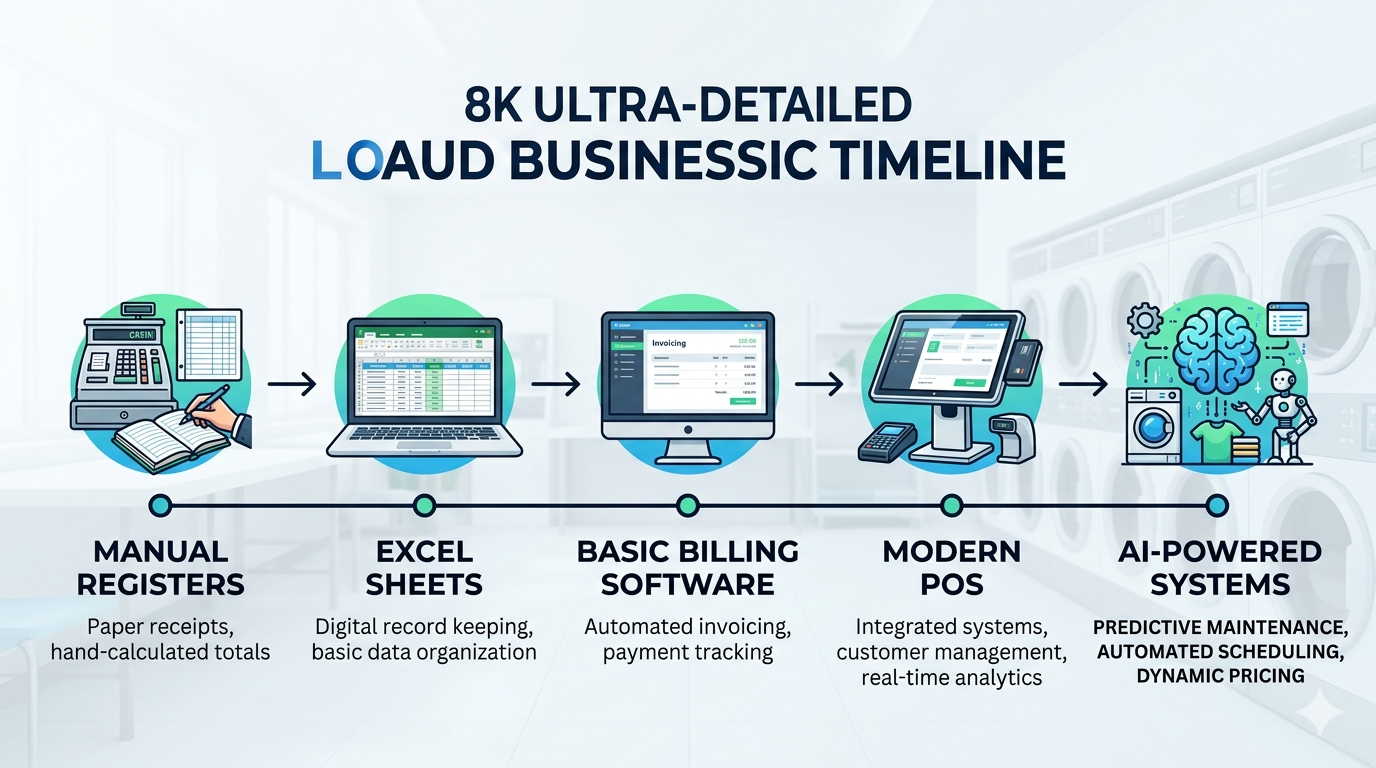
Running a laundry or dry-cleaning shop without proper software is like trying to cook without measuring ingredients. You might get by, but mistakes pile up. Missing orders, pricing confusion, GST headaches, delivery mix-ups — these aren't just annoying. They cost you customers and money. Most small laundry businesses in India still use register books or basic Excel sheets. That worked ten years ago. Not anymore. Customers expect WhatsApp updates, digital payments, and doorstep delivery tracking. This guide walks you through choosing the best laundry POS software that actually fits small business budgets and needs.
Why Laundry Businesses Need Dedicated POS Software
Generic billing software doesn't cut it for laundry operations. Here's why.
A laundry business isn't retail. You're not selling products off a shelf. Each order is different — shirt count, stain types, delivery dates, express vs regular. Then there's pricing. Per piece? Per kg? Combo offers? Membership discounts? Try managing that in a normal POS without losing your mind.
Staff dependency is another pain point. When Ramesh handles billing and he's sick, suddenly no one knows which clothes belong to which customer. Or worse, someone gives Mr. Sharma's expensive suit to Mr. Gupta. The complaint, the refund, the reputation damage — all avoidable with proper order tracking.
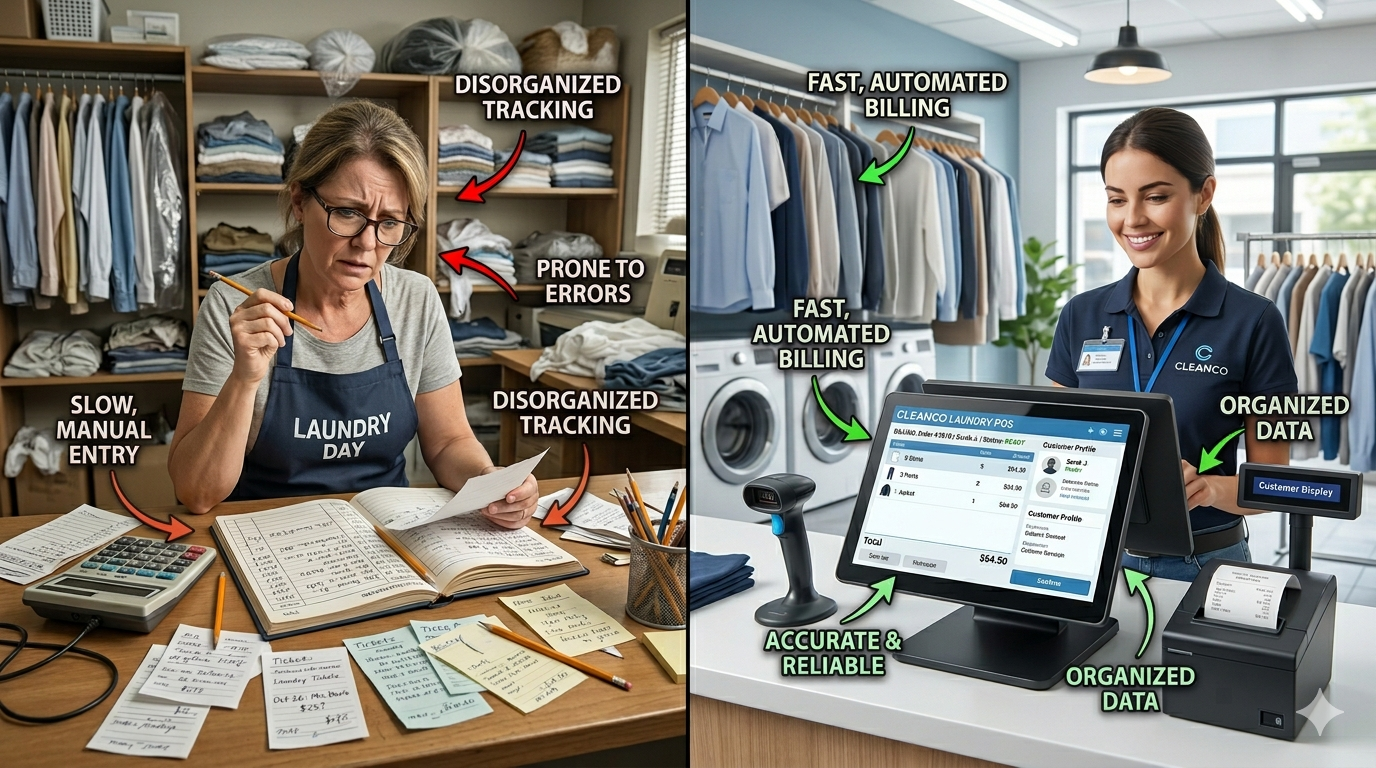
Then there's GST. Filing returns manually when you have 200+ orders monthly? That's hours of work. The right software generates reports automatically. You spend time growing your business instead of reconciling numbers at month-end.
Delivery management needs mention too. Small shops now compete with app-based laundry services. Customers want to know when their clothes will arrive. A good POS system sends automatic updates and helps you plan routes for pickup staff.
What Makes a Good Laundry POS System
Not all POS software works for laundries. Some features matter more than others.
Order management tops the list. The software should let you tag each garment, record special instructions (remove button, extra starch), set service type, and track status from received to washed to delivered. Sounds basic, but many generic systems can't do this smoothly.
Flexible pricing is non-negotiable. You need per-piece rates, bulk rates, item-specific pricing (silk shirt costs more than cotton), and the ability to apply discounts without manual calculations. If your software can't handle "₹40 per shirt but ₹200 for 6 shirts," keep looking.
Customer records need to be more than just phone numbers. Purchase history helps you spot your best customers. When Mrs. Verma calls, you should instantly see she orders dry cleaning every third Saturday. That's personalized service that builds loyalty.
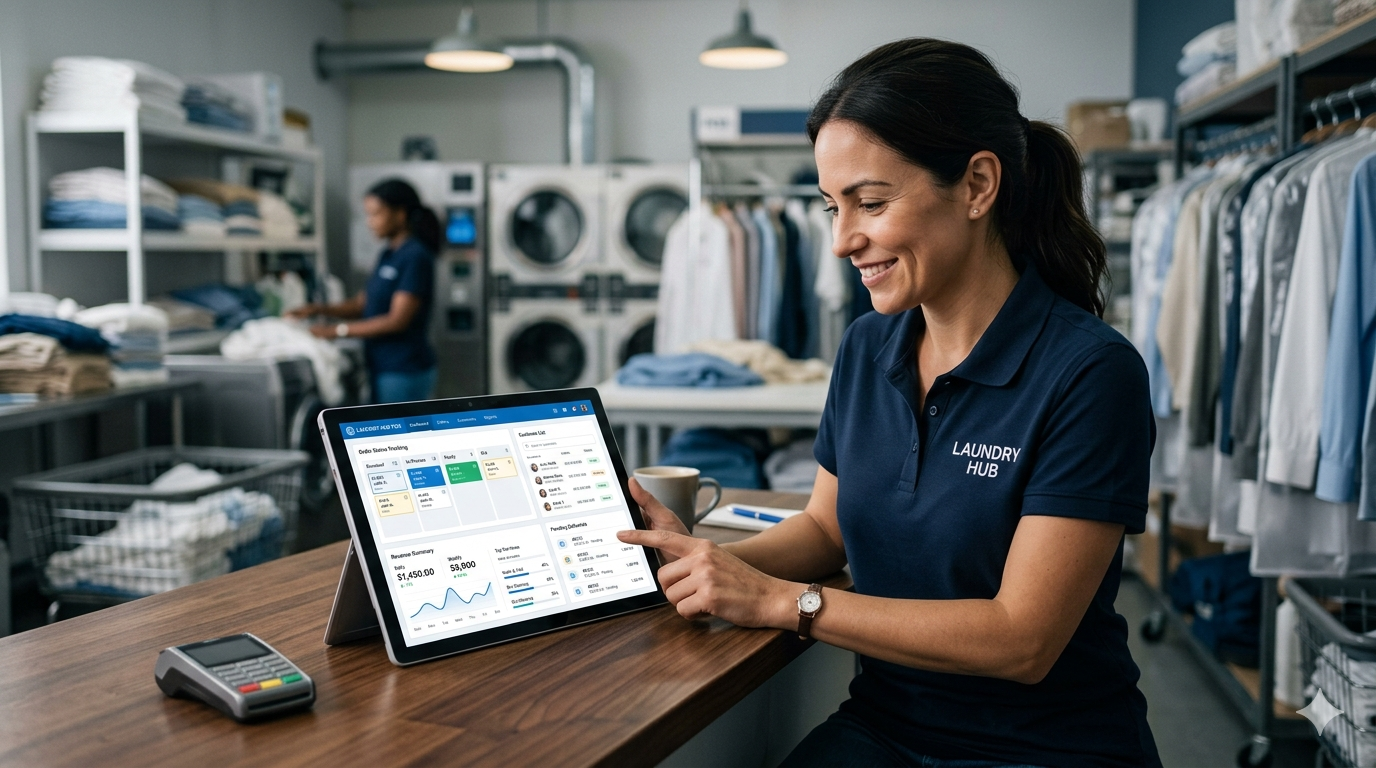
Mobile access matters now. Your delivery person shouldn't call you every 20 minutes asking for addresses. They need an app showing pickup lists, customer locations, and payment status. This isn't luxury. It's standard operation in 2026.
Integration capabilities count too. Your POS should connect with payment gateways, SMS services, and accounting tools. Manual data entry between systems wastes time and creates errors.
Key Features to Look For
Let's break down must-have features versus nice-to-have ones.
Cloud-based operation isn't optional anymore. Your data should be accessible from anywhere — home, shop, or while traveling. Server-based systems that only work on one computer? Those belong in 2015. Cloud also means automatic backups. Hard disk crashes don't wipe out your entire customer database.
GST compliance needs to be built-in. The software should generate proper tax invoices, maintain HSN codes, and create GSTR-1 ready reports. Manual GST filing from laundry bills is tedious and error-prone.
Billing speed affects customer experience. If generating one bill takes 3 minutes, your customers wait. Good software lets you create bills in under 30 seconds. Barcode scanning for items speeds this up further.
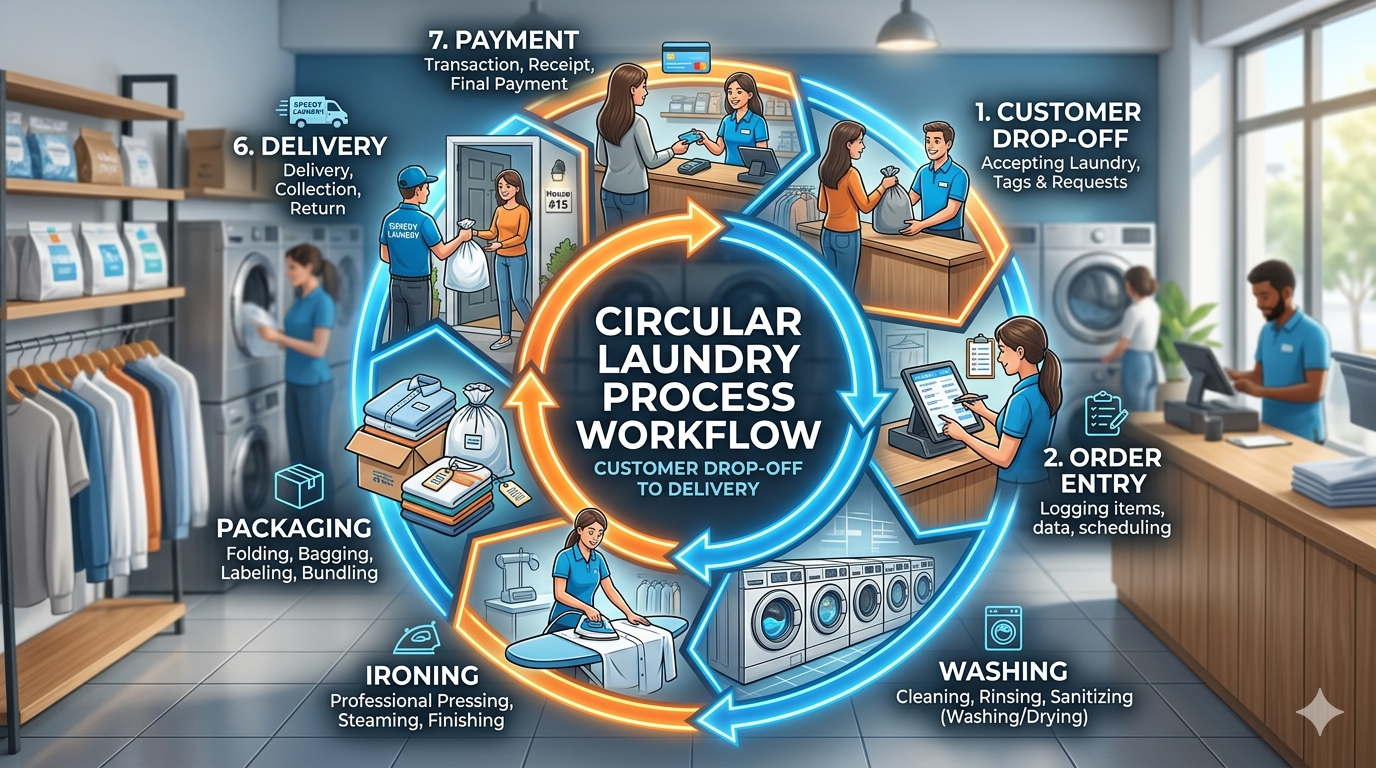
Inventory tracking for chemicals and packaging matters once you scale. Running out of hangers or dry-cleaning solution mid-day disrupts operations. The software should alert you when stock runs low.
Multi-branch support becomes important if you plan to expand. Managing two or three locations from one dashboard, comparing performance, transferring stock — these features save massive headaches later.
Understanding Implementation and Training
Switching to new software isn't just buying and installing. There's a transition period.
Most small business owners worry their staff won't adapt. Valid concern. The solution? Choose software with genuinely simple interfaces. If your billing operator needs a training manual to generate one invoice, the software is too complicated.
Good vendors provide free onboarding. They should spend 2-3 hours setting up your system, adding existing customer data, configuring pricing, and training your team. Avoid companies that just send a login and say "figure it out."
Data migration deserves attention. Moving customer records, pending orders, and pricing from your current system (even if it's just a notebook) to new software takes time. Plan for this. Don't switch systems on your busiest day of the week.
Expect a learning curve. First week will feel slower than your old method. That's normal. By week three, operations speed up. By week six, you wonder how you managed before.
Cost Considerations for Small Businesses
Software costs confuse many small business owners. Let's clear that up.
Most modern laundry POS systems work on subscription models. You pay monthly or yearly instead of one big upfront cost. For small shops, this typically ranges from ₹500 to ₹3,000 per month depending on features and customer volume.
Free versions exist but usually limit orders (maybe 50 per month) or lack key features like delivery management or customer SMS. They work for testing but not for real operations.
Best Laundry Management Software in India (2026 Guide)
Installation costs vary. Cloud-based systems need minimal setup — just internet and devices. Some vendors charge ₹2,000-5,000 for initial setup and training. Legacy systems requiring servers and multiple computers can cost ₹50,000+. That's overkill for most small businesses.
Hardware expenses add up. You'll need a billing computer or tablet (₹15,000-30,000), a receipt printer (₹5,000-8,000), and optionally a barcode scanner (₹3,000-6,000). If you already have a computer, you just need the printer.
Hidden costs to watch: SMS charges (₹0.10-0.20 per message), payment gateway fees (1.5-2% of digital transactions), and annual maintenance charges some vendors sneak in.
How Technology Solves Real Operational Problems
Let's connect software features to actual business pain points.
Problem: You forgot to call Mrs. Khanna when her clothes were ready. She shows up three days later, irritated.
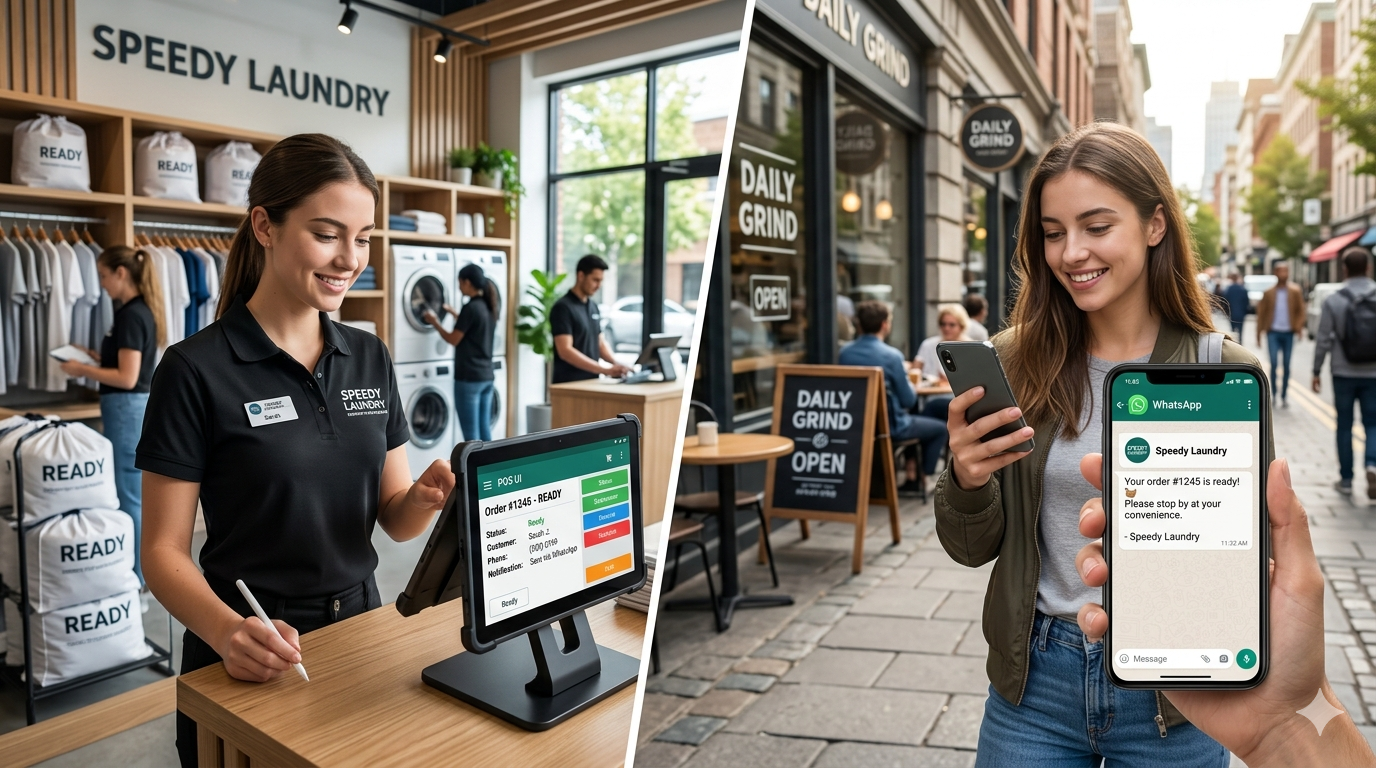
Solution: Automated SMS/WhatsApp notifications when orders are ready. The system sends them without you remembering.
Problem: Your delivery boy claims he visited 12 locations but you suspect he skipped a few.
Solution: GPS tracking in the delivery app shows actual routes taken and addresses visited. No arguments, just data.
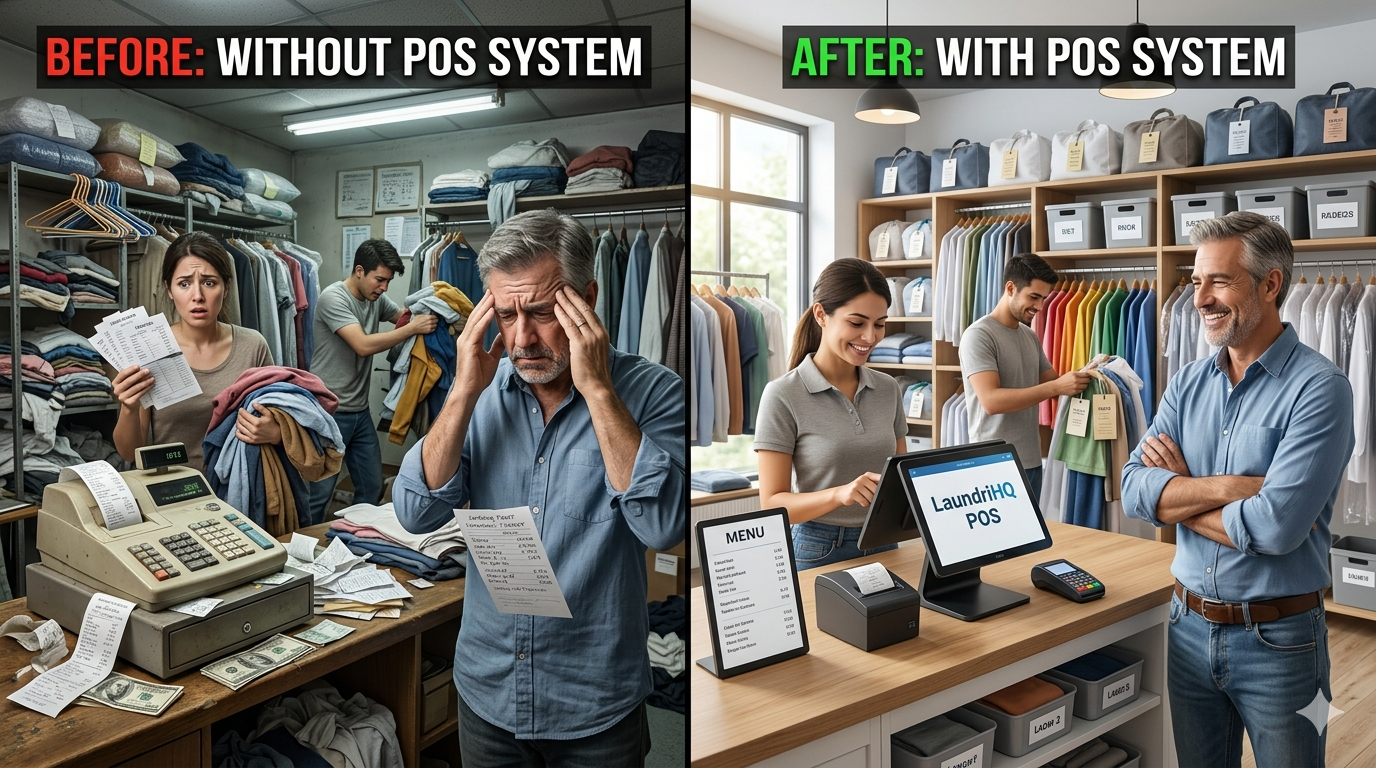
Problem: A customer insists they paid but you have no record. It's their word against yours.
Solution: Digital payment records linked to each order. Every transaction timestamped and searchable.
Problem: You want to reward loyal customers but don't know who they are.
Solution: Customer analytics showing order frequency, total spending, and last visit. You can create targeted offers for top customers.
These aren't theoretical benefits. This is what actually happens when laundry shops move from manual to digital operations.
Ezer POS: A Cost-Effective Solution Worth Considering
When evaluating options, Ezer POS Laundry Management stands out for small businesses specifically.
The system handles everything mentioned above — order tracking, customer management, delivery coordination, GST billing — without overwhelming complexity. What makes it particularly suitable for small shops is the pricing structure. No massive upfront investment. No paying for enterprise features you'll never use.
The mobile app for delivery staff is genuinely useful. Your team gets pickup lists, customer addresses with one-tap calling, and can update order status on the go. Customers get automatic updates without you lifting a finger.
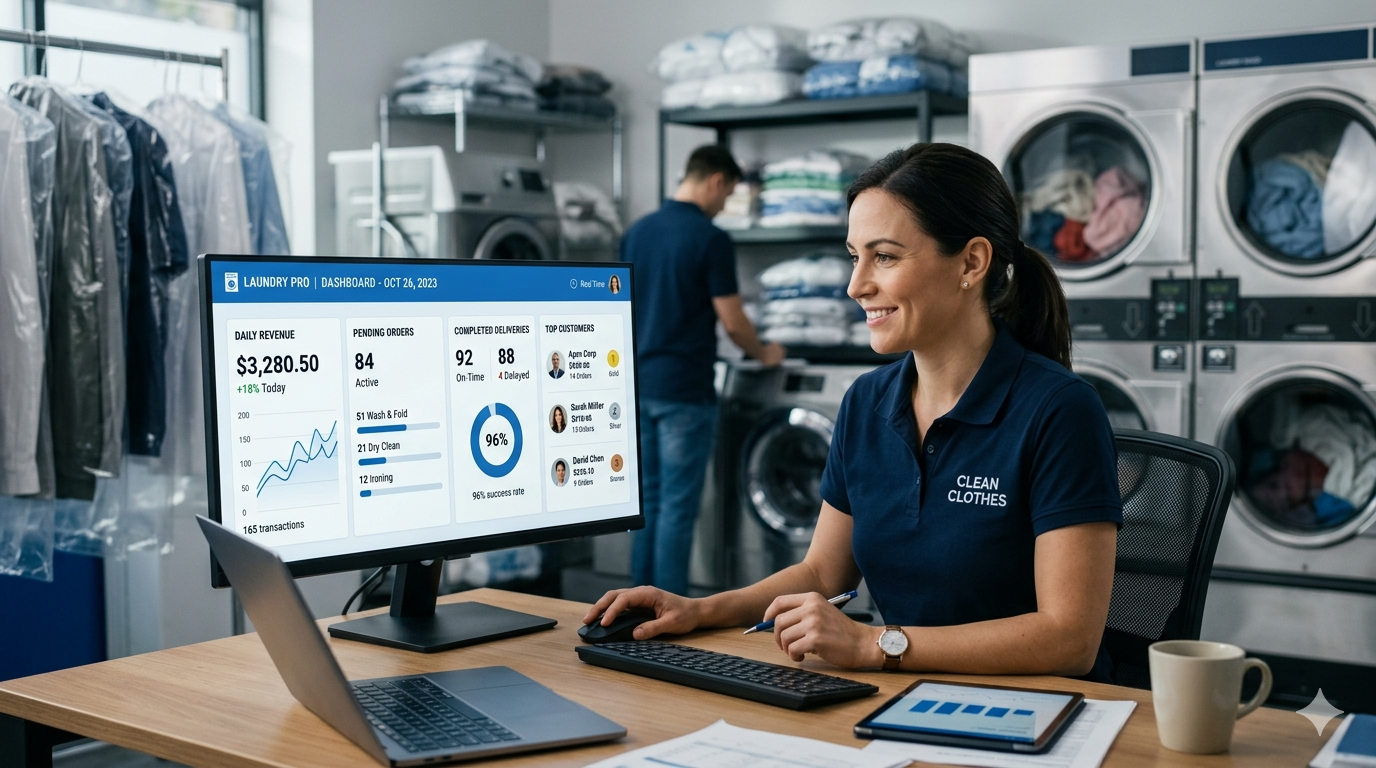
Setup takes hours, not weeks. The vendor provides real onboarding support rather than just documentation. For shops processing 30-500 orders monthly, the cost-benefit ratio makes sense.
Integration with popular payment gateways means you can accept UPI, cards, and wallets without running separate apps. Everything reflects in one place.
Multi-branch functionality matters even if you have one location now. When you open a second shop, the system scales without needing migration to different software.
Ezer Laundry POS System
Streamline your laundry business with our comprehensive POS system. Features include smart billing, garment tracking, WhatsApp notifications, and cloud backup.
Common Mistakes When Choosing Laundry Software
Small business owners often trip on these points.
Choosing based on cheapest price. A ₹300/month system that lacks delivery management will cost you more in lost customers than a ₹1,500/month complete solution. Calculate total cost including time saved and customer retention.
Ignoring mobile compatibility. If your POS only works on desktop, you're stuck in the shop. Mobile-responsive systems let you check operations from anywhere.
Not testing before buying. Most vendors offer free trials. Use them. Run your actual business for a week on trial before committing. Does it handle your specific workflow? Can your staff use it comfortably?
How to Start Your Laundry Business in 2026: Complete Guide
Overlooking customer support. Software will have hiccups. When billing stops working on a Saturday afternoon, can you reach support? Check support hours and response times before purchasing.
Feature overload. That enterprise system with 50 features looks impressive. But if you use 8 of them, you're paying for 42 things you don't need. Match features to your actual requirements.
Data Security and Backup Considerations
Your customer data has value. Protect it.
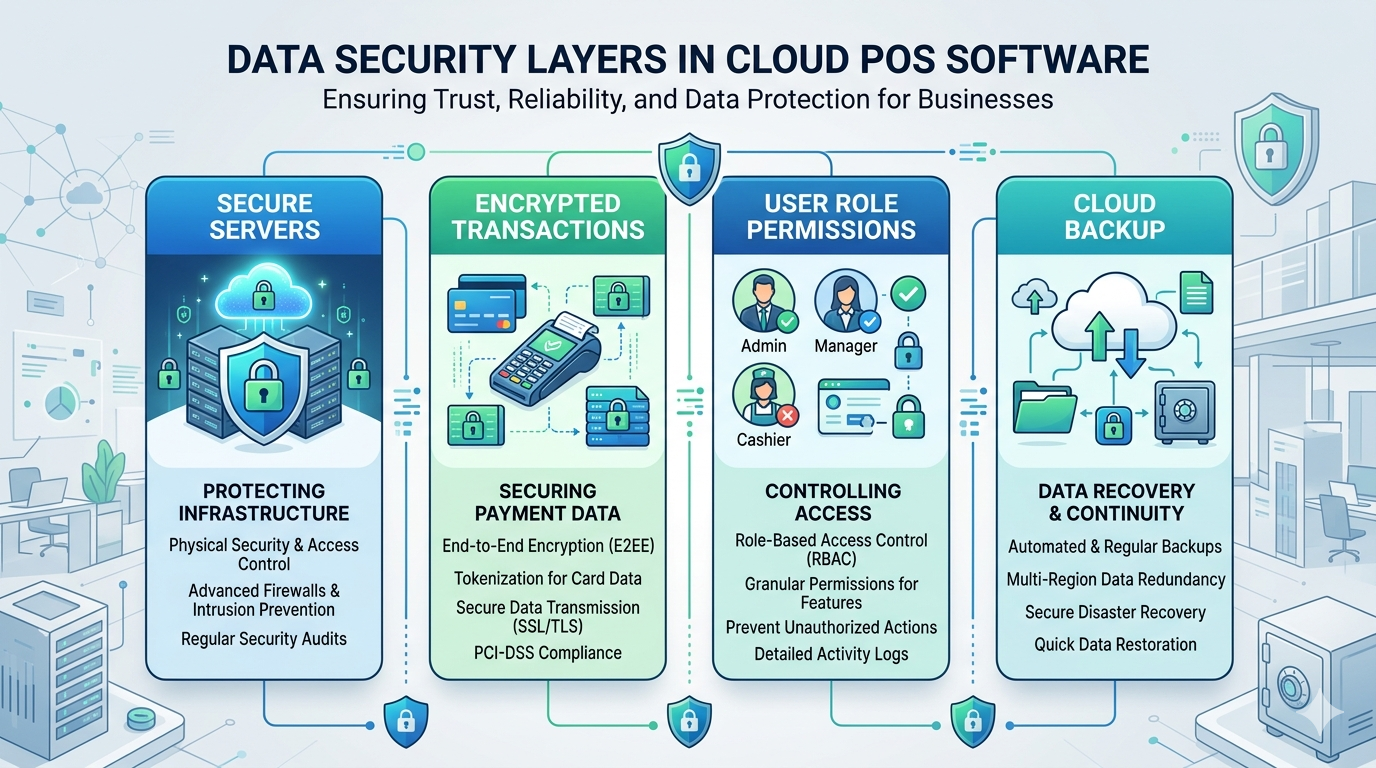
Cloud systems automatically backup data daily. But understand where your data is stored. Is it on Indian servers? What happens if the vendor shuts down? Can you export your data in usable formats?
Access controls matter. Your billing staff doesn't need access to financial reports. Your accountant doesn't need to delete customer records. Good software lets you set role-based permissions.
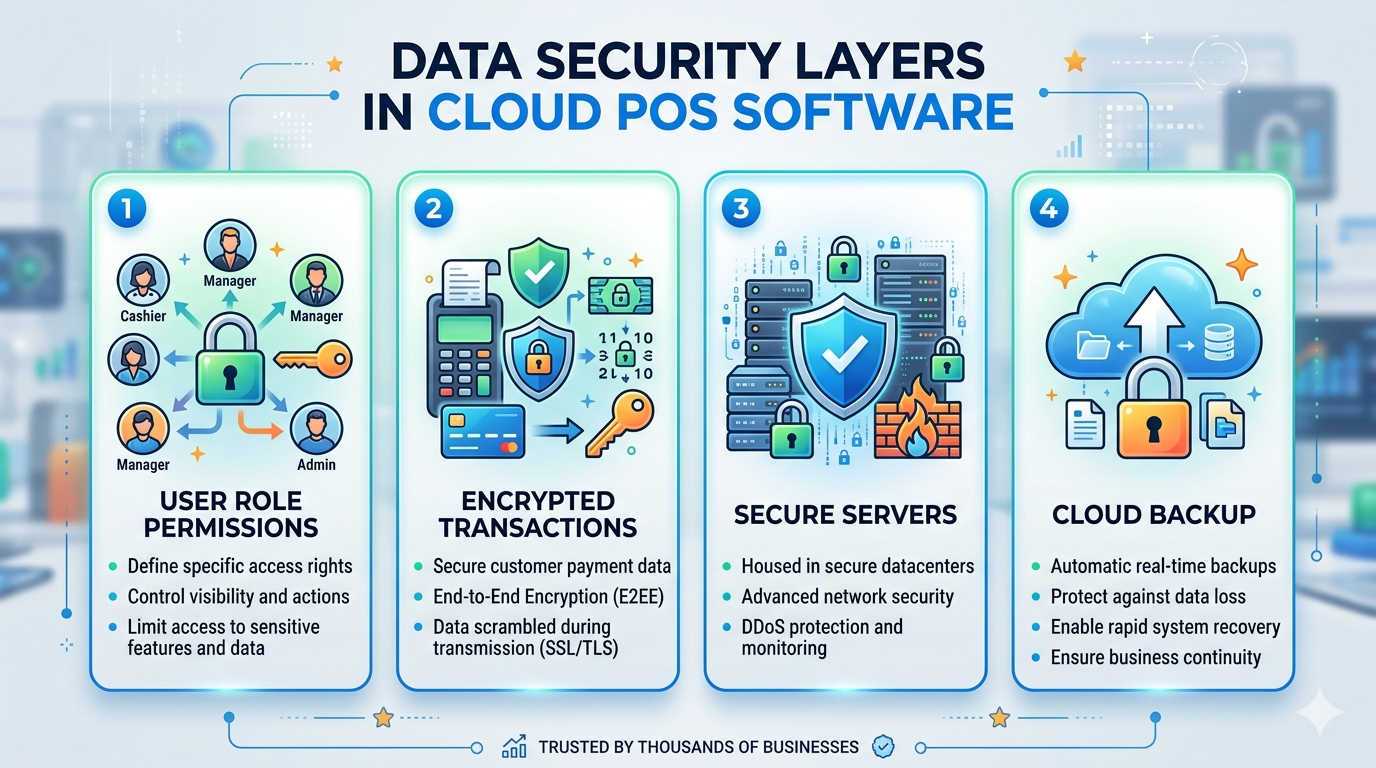
Payment data security is crucial. If your POS stores customer card details, it needs PCI compliance. Better option — use payment gateways that handle sensitive data on their end. Your system just records the transaction reference.
Regular backups should happen automatically, but also know how to export data manually. Once a month, download your customer list and order history as backup. Store it separately.
Scaling Your Business with the Right Software
Good software grows with your business.
Start small. One location, basic features. As orders increase, add delivery management. When you open branch two, activate multi-branch features. The system should allow this without forcing you to buy everything upfront.
API access becomes valuable later. When you want to build a customer-facing app or integrate with third-party services, APIs let you connect systems. Not critical on day one, but check if it's available.
How to Start Your Laundry Business in 2026: Complete Guide
Reporting capabilities matter for scaling decisions. Which services make the most profit? Which days are busiest? What's your average order value? Software should answer these questions through reports, not manual calculations.
Franchise opportunities emerge when you have systems in place. Documented processes, standardized software, clear reporting — these make your business replicable. Multiple franchises using the same POS system maintain consistency.
Industry Trends and Future-Proofing
The laundry business is evolving. Your software should keep up.
AI-based demand forecasting is entering the market. Software predicts busy days based on historical patterns, helping you schedule staff better. Not widespread yet, but coming soon to mid-tier systems.
Subscription-based services are growing. Customers pay monthly for a set number of washes. Your POS needs to handle recurring billing and subscription management. Some advanced systems already do this.
IoT integration sounds fancy but has practical applications. Smart washing machines reporting usage to your POS, automatic inventory deduction based on actual chemical consumption — these features are arriving in commercial laundry software.
Voice-based order updates might become standard. Customer calls asking "Is my order ready?" — AI responds automatically after checking your POS system. Reduces phone handling time significantly.
Choose software that updates regularly. Stagnant systems become obsolete. Vendors pushing updates quarterly or monthly show they're actively improving the product.
Making the Final Decision
You've researched enough. Time to choose.
List your non-negotiables. Maybe it's GST compliance and delivery tracking. Everything else is secondary. Narrow options to software covering these basics.
Test 2-3 systems properly. Don't just click through demos. Enter real orders, generate actual bills, try the mobile app. See what feels natural versus clunky.
Check references. Ask the vendor for contacts of similar-sized laundry businesses using their software. Call them. Ask about problems they faced and how support responded.
Read contracts carefully. What happens if you want to stop using the software? Can you export your data? Are there cancellation fees? These details matter.
Trust your gut feeling. If a system feels overcomplicated during trial, it won't get simpler with daily use. Conversely, if something feels intuitive immediately, that's a good sign.
FAQs
What is the average cost of laundry POS software for a small business?
Most cloud-based laundry POS systems cost between ₹500-3,000 per month for small businesses processing up to 500 orders monthly. One-time setup fees range from ₹2,000-5,000. Hardware like printers and tablets add another ₹15,000-30,000 initially. Avoid systems with hidden charges for SMS, support, or annual maintenance unless they're clearly disclosed upfront.
Can I use regular POS software instead of laundry-specific systems?
Technically yes, but you'll struggle. Regular POS is built for retail sales, not service orders with multiple variables like garment types, service categories, delivery dates, and special instructions. You'll need extensive customization and still lack features like automated customer updates and delivery management. Laundry-specific software handles these complexities out of the box.
How long does it take to train staff on new POS software?
With user-friendly systems, basic operations take 2-3 hours of training. Your team should comfortably handle billing and order entry within the first week. Advanced features like reporting and inventory management might need another week to master. Good vendors provide free onboarding and support during the first month. Complex systems requiring extensive training usually aren't worth it for small businesses.
Is cloud-based POS safe for storing customer data?
Yes, when done properly. Reputable cloud POS vendors use encrypted storage, regular backups, and secure data centers. Risk is actually lower than keeping customer records in physical registers that can burn or get stolen. Ensure your vendor follows data protection practices and stores data on Indian servers for compliance. Check if you can export data independently.
What happens if the internet goes down during business hours?
Most modern cloud POS systems have offline modes that store data locally and sync when connection returns. You can continue billing without internet for a few hours. However, features like customer SMS, payment gateway integration, and real-time multi-branch syncing need active internet. Consider backup internet options like mobile hotspot for critical days.
Can the software handle both dry cleaning and regular laundry services?
Good laundry POS systems manage multiple service categories within one platform. You can set different pricing for dry cleaning, wash-and-fold, ironing, and specialized services like carpet cleaning or leather treatment. Each service type can have its own rates, processing time, and workflow. Ezer POS Laundry Management and similar platforms handle this flexibility as standard functionality.
Should I buy or rent the hardware needed for POS?
For small businesses, buying makes more sense. A basic setup costs ₹20,000-35,000 one-time. Renting might cost ₹2,000-4,000 monthly, adding up to ₹24,000-48,000 yearly. After two years, you've paid more in rent than outright purchase. Buy hardware, but choose software on subscription model to minimize upfront investment while maintaining flexibility.
Conclusion
Choosing the best laundry POS software for your small business comes down to matching features with actual needs. You don't need enterprise-level complexity. You need reliable billing, proper order tracking, customer management, and delivery coordination — all at a reasonable cost. Systems like Ezer POS Laundry Management hit this balance well for Indian small businesses.
Start with a clear list of your must-have features. Test software properly before committing. Don't pay for functions you won't use, but don't cheap out on features that directly impact customer experience. The right POS system pays for itself through time saved, errors prevented, and customers retained.
Ready to see how modern POS software can transform your laundry operations? Explore cloud-based solutions built specifically for small laundry and dry-cleaning businesses. Book a free demo and test the system with your real business workflows before making any commitment.