
Common Problems Laundry Owners Face Without Software in 2026
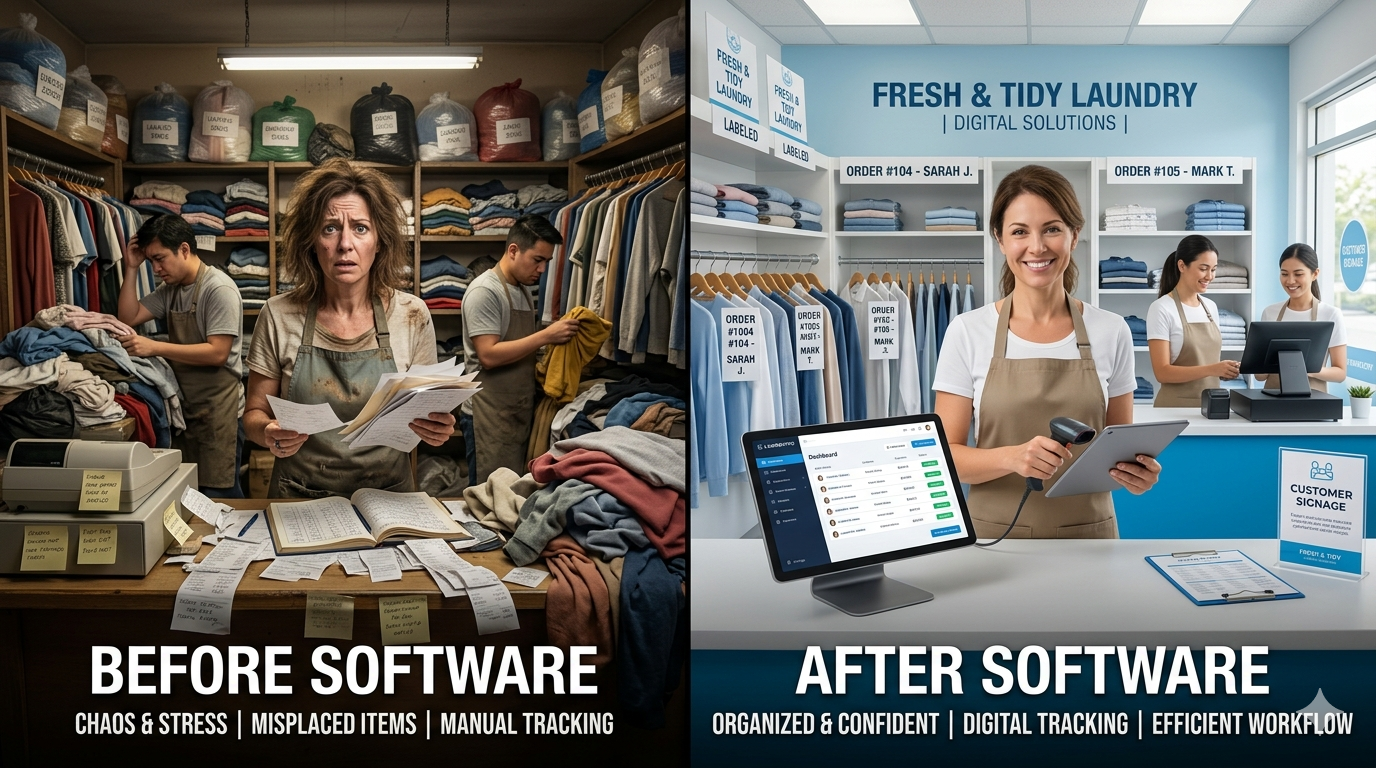
Running a laundry business without proper software is like managing a restaurant kitchen with just pen and paper. It works, until it doesn't. Most laundry shop owners I've spoken with start manually—noting orders in registers, tracking deliveries on sticky notes, calculating bills with calculators. Within months, they're drowning in confusion. Missing orders. Billing mistakes. Customer complaints. Staff blaming each other. If you're reading this, you probably know exactly what I'm talking about. This guide breaks down the real operational headaches that come from running laundries the old way, and what actually solves them.
Why Manual Operations Create Chaos in Laundry Businesses
Manual systems work fine when you're handling 5-10 orders daily. But scale up to 30-50 orders? That's when things fall apart.
The problem isn't laziness or bad staff. It's the nature of manual work. Human memory fails. Handwriting becomes illegible. Papers get lost. One staff member knows where everything is, another doesn't. When that key person takes leave, your entire operation stutters.
I've seen shops where the owner keeps everything in his head. Customer preferences. Pending deliveries. Who owes what. It's exhausting and unsustainable. The moment you want to grow—open another branch, hire more people, introduce pickup services—the manual approach becomes your biggest bottleneck.
Order Tracking Becomes Nearly Impossible
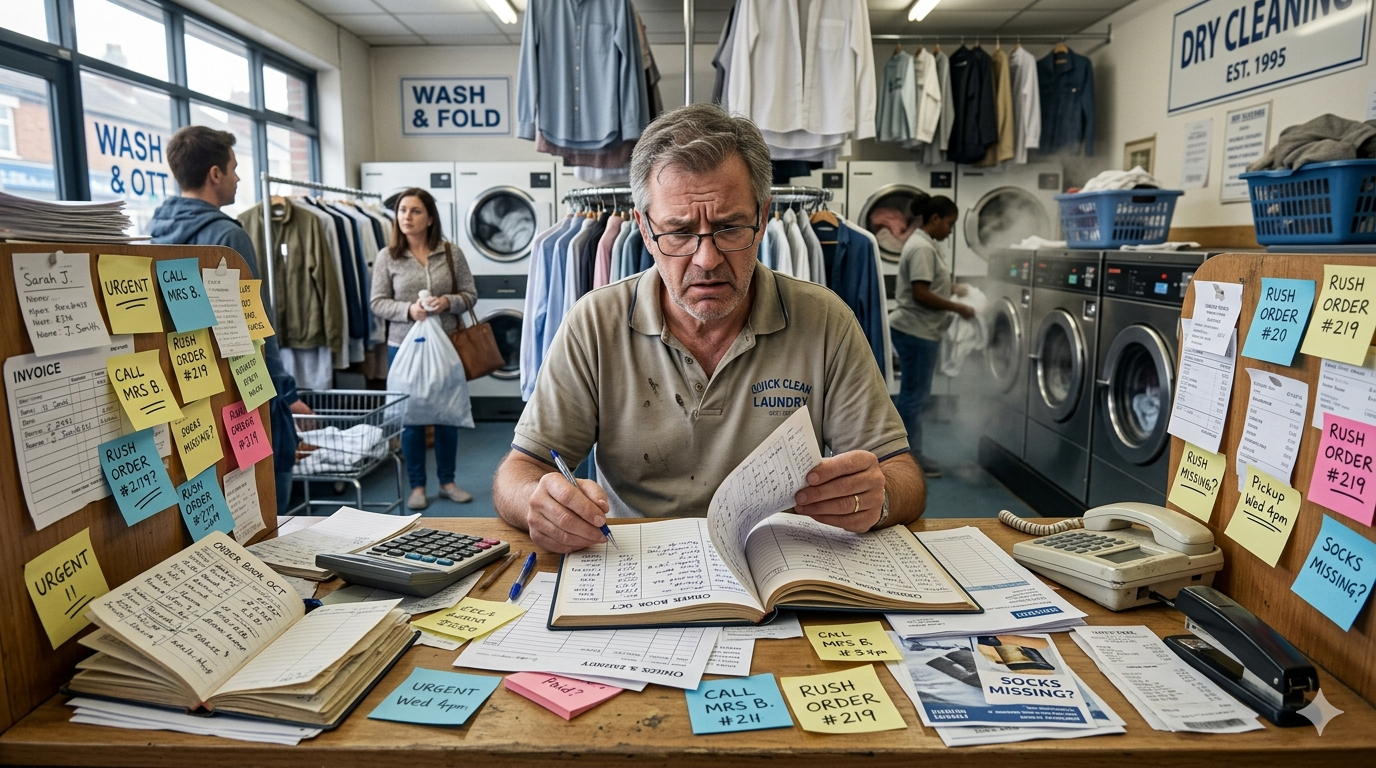
This is the number one complaint. Where is Mrs. Sharma's saree? Did we deliver Mr. Gupta's shirts? What stage is that wedding order in?
Without software, tracking relies entirely on memory and messy registers. Staff writes order numbers on clothes tags, then manually searches through books to find details. During rush hours, mistakes happen. Tags fall off. Numbers get mixed up. Clothes go missing.
The real damage isn't just lost clothes—it's lost trust. Customers stop coming back because they can't rely on you. Word spreads fast in local communities. One delayed wedding order can ruin your reputation in an entire neighborhood.
The Delivery Timing Problem
Manual tracking makes delivery promises meaningless. You tell customers "ready by Thursday," but there's no system checking if the work is actually done. Staff forgets. Ironing piles up. Customers arrive expecting their clothes, and you're scrambling.
This creates awkward conversations, refunds, and customer churn. Repeat business is everything in laundry services, and poor tracking kills it.
Billing Errors Cost You Money and Customers
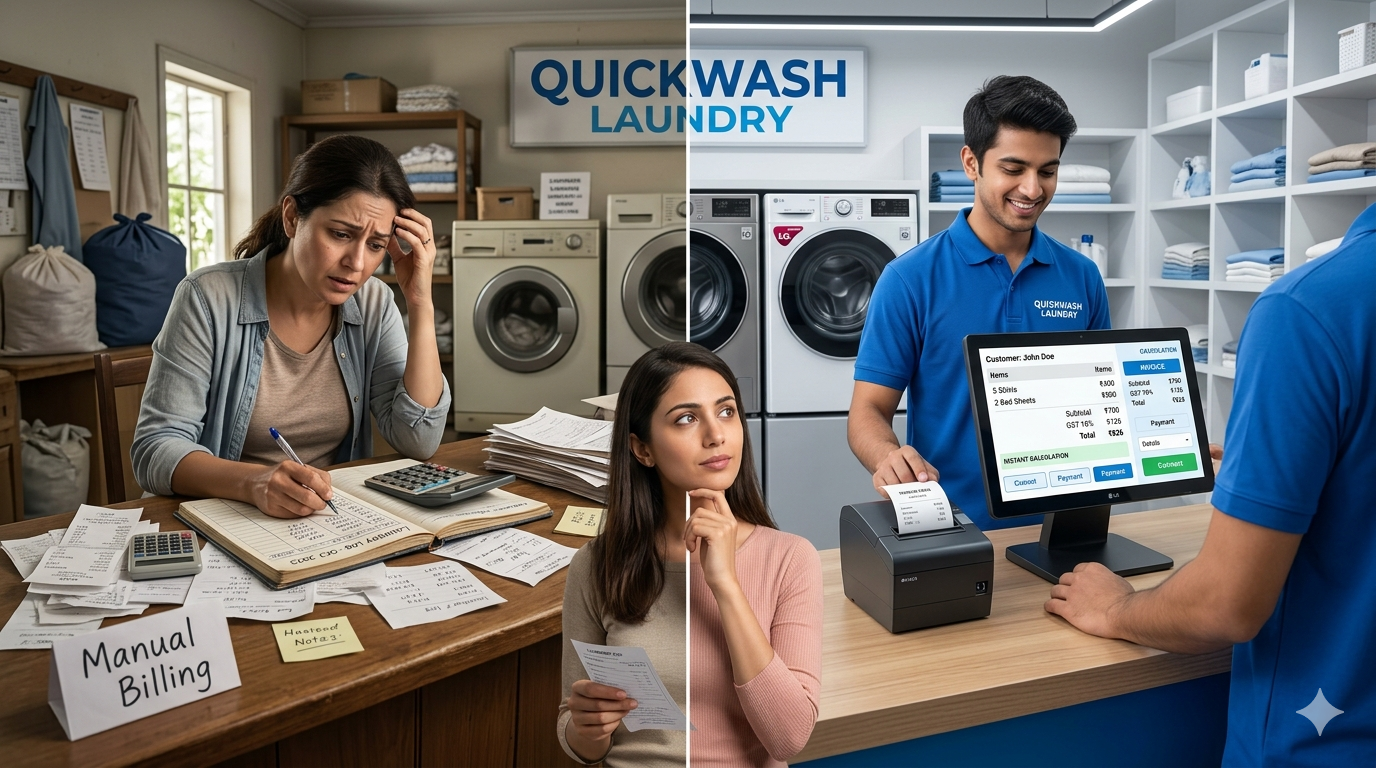
Calculate this manually: 3 shirts at ₹40 each, 2 trousers at ₹60 each, 1 bedsheet at ₹80, add dry cleaning charges for a blazer, apply a 10% discount, add GST. Now do this 50 times a day while customers wait.
Billing errors happen constantly. Undercharging loses you revenue. Overcharging creates disputes. GST calculations go wrong. Customers question invoices, and you have no clear way to verify what was actually agreed upon.
I've met owners who discovered thousands in lost revenue simply because staff consistently undercharged certain items. Others faced customer complaints because different staff members quoted different prices for the same service.
The GST Compliance Headache
If your annual turnover crosses ₹40 lakhs (₹20 lakhs for some states), GST registration becomes mandatory. Filing returns manually when your billing data is scattered across registers is a nightmare. Accountants charge extra. You spend hours reconstructing data.
Many small laundry owners I know simply avoid proper GST compliance because manual record-keeping makes it too painful. That's a risk no business should take in 2026.
Staff Dependency Creates Operational Risk
Here's a scenario that happens repeatedly: Your most experienced staff member—the one who knows every customer, every pending order, every pricing detail—quits or falls sick. Suddenly, you can't find orders. New staff doesn't know procedures. Customers get frustrated.
Manual operations create knowledge silos. Information stays in people's heads instead of in accessible systems. This makes you vulnerable. Training new staff takes weeks because there's no standardized process to follow.
The Trust Problem
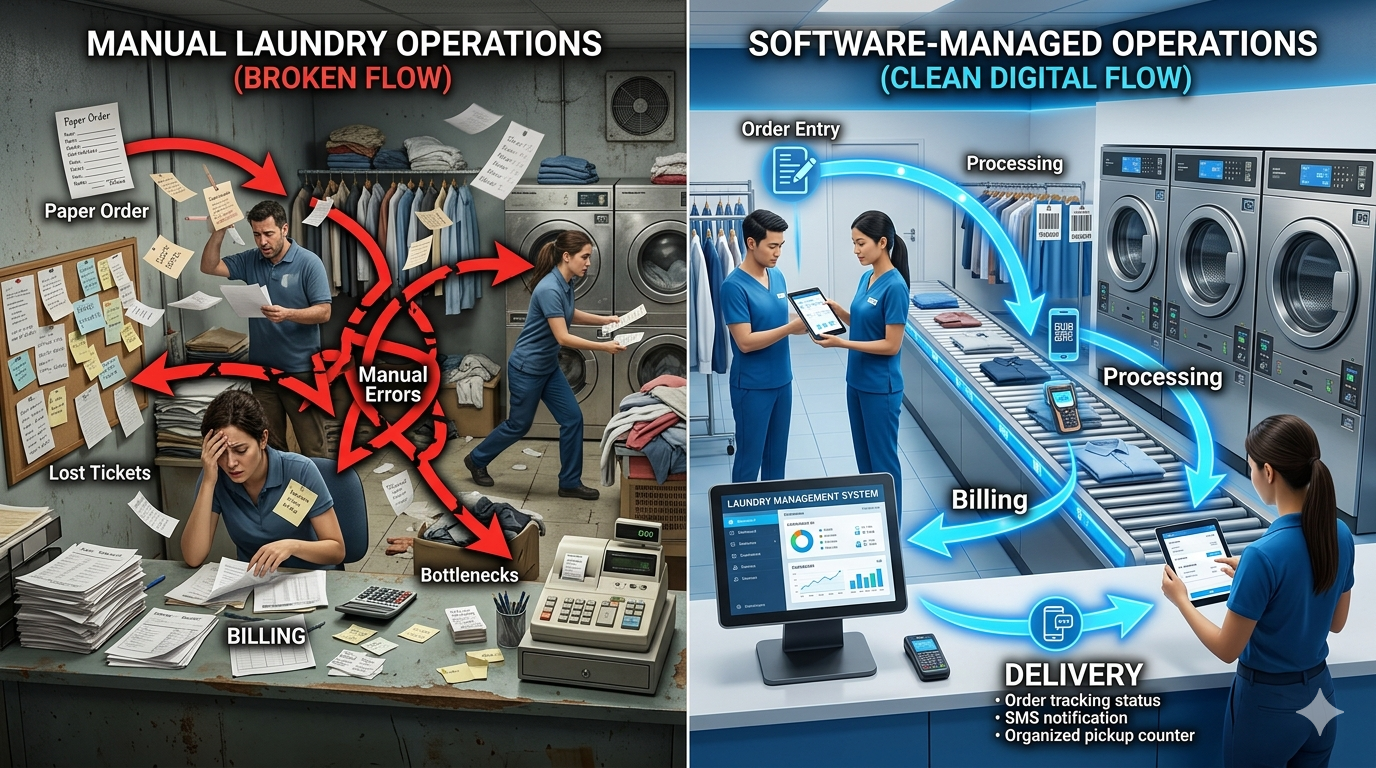
Without software, you can't really verify what happened. Did the staff collect ₹5,000 or ₹6,000 today? How many orders came in? What went out for delivery? You're forced to trust completely, which creates tension and occasional theft.
I'm not saying staff are dishonest. Most aren't. But the lack of transparency creates suspicion on both sides. Staff feel micromanaged. Owners feel anxious. Software solves this by making everything visible.
Customer Data Gets Lost or Forgotten
Remember Mrs. Patel who specifically asked for no starch on her husband's shirts? Or Mr. Khan who needs extra-gentle detergent due to allergies? These preferences matter, but they're impossible to remember across hundreds of customers.
Manual systems don't capture this intelligence. Even if you write it down somewhere, it's hard to retrieve during busy moments. So you treat every customer generically, missing opportunities to provide personalized service that builds loyalty.
Repeat Business Suffers
Without proper customer records, you can't identify your best customers. You don't know who spends the most, who refers others, who hasn't visited in a while. This means you can't run targeted promotions or loyalty programs effectively.
Smart laundry businesses in 2026 know their top 20% of customers who generate 80% of revenue. Manual operations keep you blind to these insights.
Pickup and Delivery Coordination Fails
Offering pickup and delivery is almost essential now. Customers expect convenience. But coordinating this manually is chaos.
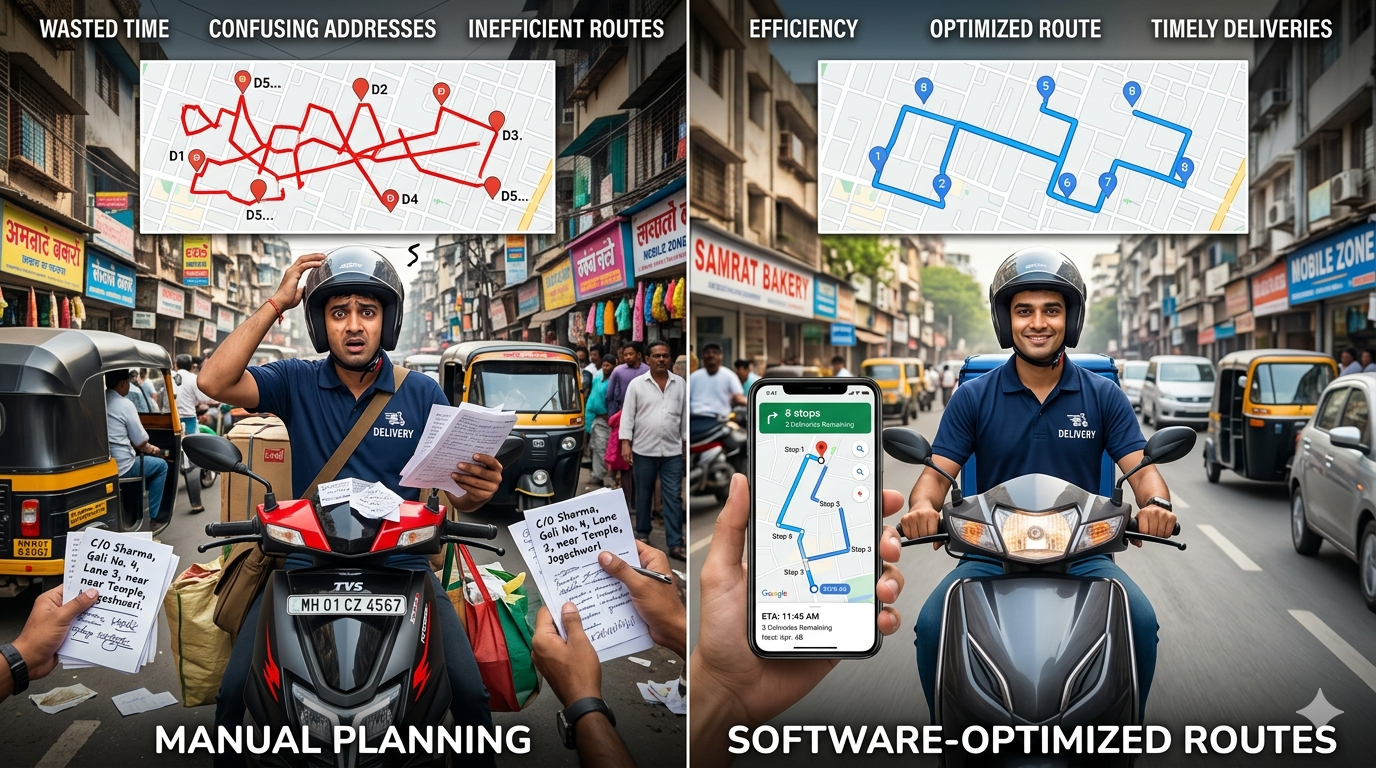
Which orders need pickup today? Which areas? Which delivery person is carrying what? When something goes wrong—customer not home, address unclear, clothes not ready—there's no easy way to update everyone involved.
I've seen delivery staff wasting hours because they were sent to wrong addresses or carried incomplete orders. The inefficiency eats into your margins and frustrates customers who took time off work to receive their clothes.
No Performance Metrics or Business Intelligence
How much revenue did you make last month? Which services are most profitable? What's your average order value? Which marketing effort worked best? What's your customer retention rate?
Manual systems can't answer these questions without days of manual calculation. You're essentially flying blind, making decisions based on gut feeling rather than data.
Growth Planning Becomes Guesswork
Want to open a second branch? Hire more staff? Invest in new equipment? Without clear performance data, you're gambling. You don't know if current operations are truly profitable or just breaking even after all costs.
Software gives you dashboards showing real-time metrics. You can spot trends, identify problems early, and make decisions based on actual numbers.
How Modern Laundry Software Solves These Problems
This is where technology stops being optional and becomes essential. Modern laundry management systems like EzerBiz aren't just digitized registers—they're complete business operating systems.
Good software handles everything: order entry with automatic number generation, customer database with preferences and history, pricing management with item-wise rates and GST, order tracking showing exactly what stage each order is in, delivery scheduling with route optimization, automated SMS notifications to customers, billing with proper invoicing and payment tracking, inventory management for detergents and supplies, staff performance monitoring, and detailed business reports.

Ezer Laundry POS System
Streamline your laundry business with our comprehensive POS system. Features include smart billing, garment tracking, WhatsApp notifications, and cloud backup.
What Actually Changes
With software, new orders get logged in seconds with all details captured. Customers receive SMS updates automatically. Staff can check order status instantly. Billing happens accurately with one click. GST reports generate automatically. Delivery routes get optimized. You can monitor business from anywhere using mobile apps.
The shift isn't just about speed—it's about reliability. Software doesn't forget. It doesn't make calculation errors. It creates an audit trail for everything. This builds customer trust and staff accountability simultaneously.
The Real ROI
Most laundry software in India costs ₹500-2,000 monthly. Sounds like an expense, right? But consider what you gain: fewer billing errors saving thousands monthly, better customer retention increasing lifetime value, reduced staff conflicts and theft, faster operations handling more orders with same team, and proper data for business decisions.
One owner told me he recovered the software cost in the first month just from catching billing errors he didn't know were happening. Another increased capacity by 30% without hiring additional staff, simply through better coordination.
Common Hesitations and Why They Don't Hold Up
"My staff won't learn computers." This assumes software is complex. Modern systems are designed for non-technical users. Most staff learn basic operations in under a day. The interface is often simpler than using multiple registers and calculators.
"I'm too small for software." If you're doing more than 15-20 orders daily, you're big enough. The cost of errors and inefficiency in manual operations likely exceeds software cost.
"What if internet fails?" Cloud-based systems work offline and sync when connection returns. You don't lose data.
"I'll lose control." Actually, you gain control. You see everything happening in real-time instead of discovering problems days later.
FAQs
What's the biggest problem laundry owners face without software?
Order tracking and delivery coordination. When you're managing 30+ orders daily across different stages, manual tracking becomes impossible. Clothes get misplaced, deliveries get delayed, and customers lose trust. This single issue drives more customer complaints than anything else.
Can small laundry shops with 10-15 daily orders work without software?
Yes, but they'll struggle to grow. Even at this volume, billing errors and customer data loss occur regularly. The real question is whether you want to stay small or scale up. Software becomes essential the moment you plan expansion.
How much does laundry management software typically cost in India?
Most cloud-based systems cost ₹500-2,000 per month depending on features. One-time setup fees might apply. Compare this to potential revenue loss from billing errors, delayed orders, and poor customer retention—software usually pays for itself within weeks.
Does laundry software help with GST compliance?
Absolutely. Good software automatically calculates GST on bills, maintains proper records, and generates reports needed for filing returns. This alone saves hours of accounting work monthly and reduces compliance risk significantly.
What if my staff doesn't know how to use computers?
Modern laundry software is designed for non-technical users with simple, icon-based interfaces. Most staff learn basic operations—order entry, billing, status updates—in one training session. The learning curve is much shorter than people expect.
Can software really reduce order tracking errors?
Yes, dramatically. Software assigns unique numbers, tracks every stage automatically, sends customer updates, and alerts staff about pending work. Human memory errors get eliminated. One owner reported tracking errors dropping from 15-20 monthly to almost zero after implementing software.
Is cloud-based software safe for my business data?
Reputable providers use bank-level encryption and automatic backups. Your data is often safer in the cloud than in physical registers that can burn, get wet, or get stolen. Most systems also allow local backups for extra security.
Conclusion
Running a laundry business without software in 2026 is like competing with one hand tied behind your back. The problems I've outlined—order chaos, billing errors, staff dependency, lost customer data, delivery failures—aren't minor inconveniences. They're revenue killers and reputation destroyers.
The good news? These aren't unsolvable problems. Modern laundry management systems exist specifically to handle these challenges. They're affordable, easy to learn, and deliver measurable results within weeks.
If you're currently struggling with manual operations, the question isn't whether to adopt software—it's how quickly you can implement it before competitors leave you behind. Start small. Try a system for one month. Track the difference in errors, efficiency, and customer satisfaction. The results usually speak for themselves.
Want to see how EzerBiz Laundry Software can streamline your operations? Book a free demo and see the difference proper management tools make for your business.
How to Start Your Laundry Business in 2026: Complete Guide How to Manage Laundry Orders Digitally in 2026: A Complete Guide