
Desktop vs Cloud Laundry Software: Which One Should You Choose in 2026?
If you're running a laundry or dry-cleaning business, you've probably wondered whether sticking with desktop software makes sense—or if it's time to move everything to the cloud. It's not just a tech question. It's about how you want to run your business day-to-day. Desktop systems feel familiar and seem cheaper upfront. Cloud solutions promise flexibility and remote access. But which one actually works better for a laundry shop owner in India? Let's break it down without the jargon.
What Is Desktop Laundry Software?
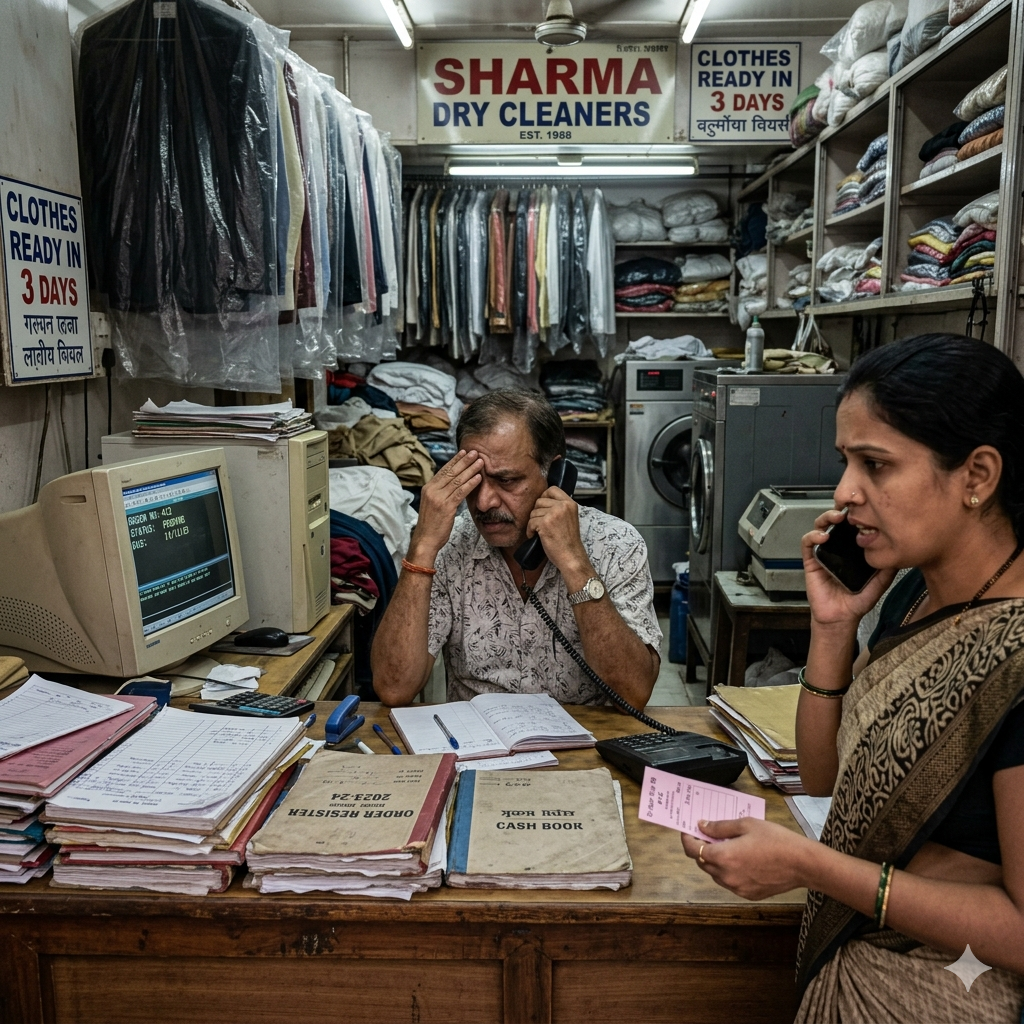
Desktop software is installed directly on your shop's computer. Think of it like Microsoft Word from the old days—everything lives on that one machine. Your billing, order records, customer database, all stored locally.
Many shop owners still use desktop systems because they've always worked that way. The software runs whether you have internet or not, which sounds great until you realize the limitations.
Here's the reality: if that computer crashes, you're stuck. If you need to check an order from home or manage deliveries while you're out, you can't. Desktop software works fine when you're physically present at the shop, but modern businesses don't always run that way anymore.
What Is Cloud-Based Laundry Software?
Cloud laundry software runs on the internet. You access it through a web browser or mobile app, and all your data is stored on secure servers—not on your shop computer.
This means you can log in from anywhere. Check pending orders from your phone. Manage multiple branches from a single dashboard. Your accountant can access reports without visiting your shop. That's the basic idea.
The shift to cloud isn't just a tech trend. It's how businesses operate now. Banking moved to the cloud. Retail moved to the cloud. Even small kirana stores use cloud-based inventory apps. Laundry businesses are simply catching up.
Systems like Ezer POS Laundry Management have made this transition easier for Indian businesses by offering realtime data access that actually works on Indian internet speeds.
Desktop Software: The Traditional Approach
Let's talk about what desktop software does well—and where it falls short.
The Good Parts:
You own the software outright. Pay once, use forever. No monthly subscriptions eating into your margins. Internet outages don't affect your billing system, which matters in areas with unreliable connectivity.
Data stays on your machine. Some owners feel this is more secure, though that's debatable.
The Problems:
Every update requires manual installation. You can't access your business data unless you're at the shop. If you run multiple branches, each location needs separate software and separate data management.
Here's a real scenario: A customer calls asking about their order status while you're at home. With desktop software, you have to either go to the shop or tell them to call back tomorrow. That's not great for customer service.
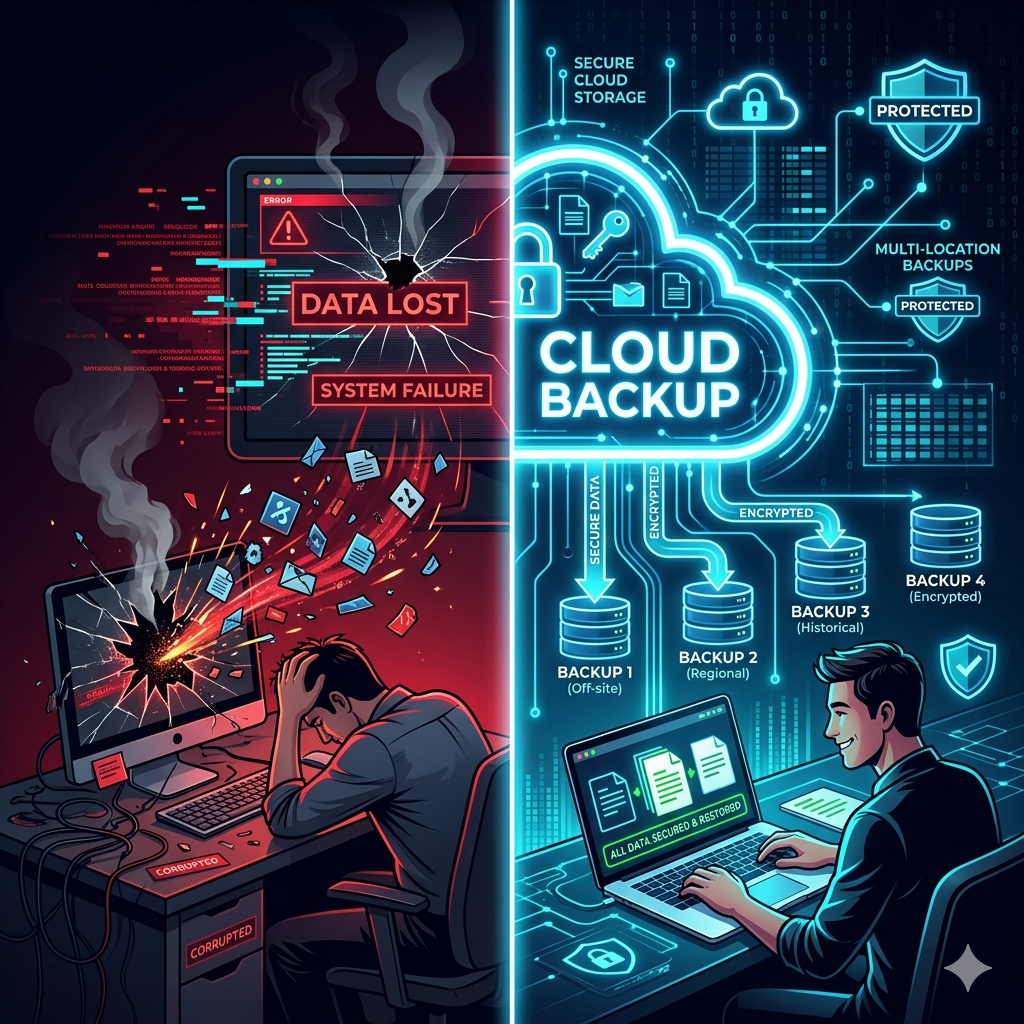
Backup is entirely your responsibility. I've seen shops lose months of billing records because the computer failed and backups weren't maintained properly.
Cloud Software: The Modern Alternative
Cloud systems work differently. Your entire operation runs through the internet, accessible from any device with a browser or app.
What This Means Practically:
You can manage orders from your phone while handling pickups. Staff at different branches see the same updated information instantly. Customer data syncs across all locations automatically. Your accountant pulls GST reports without bothering you for files.
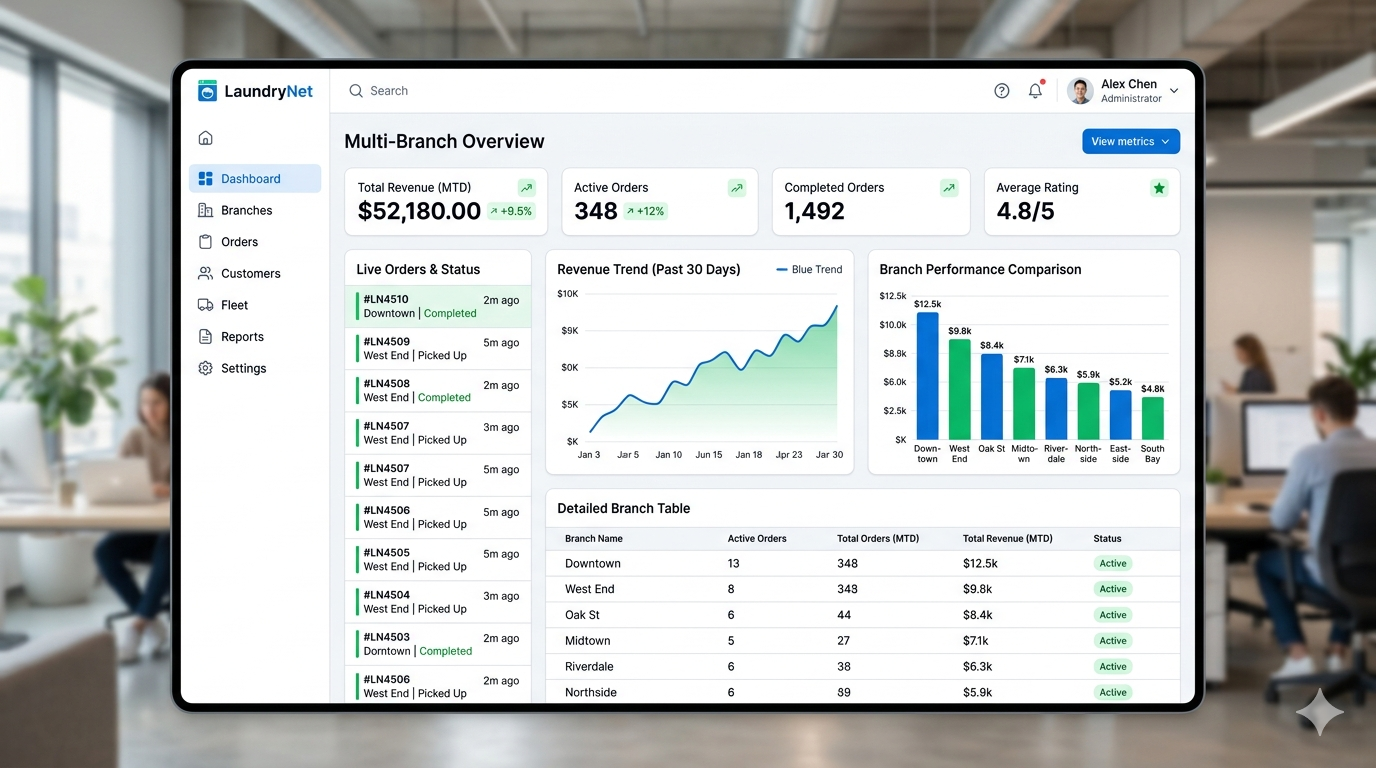
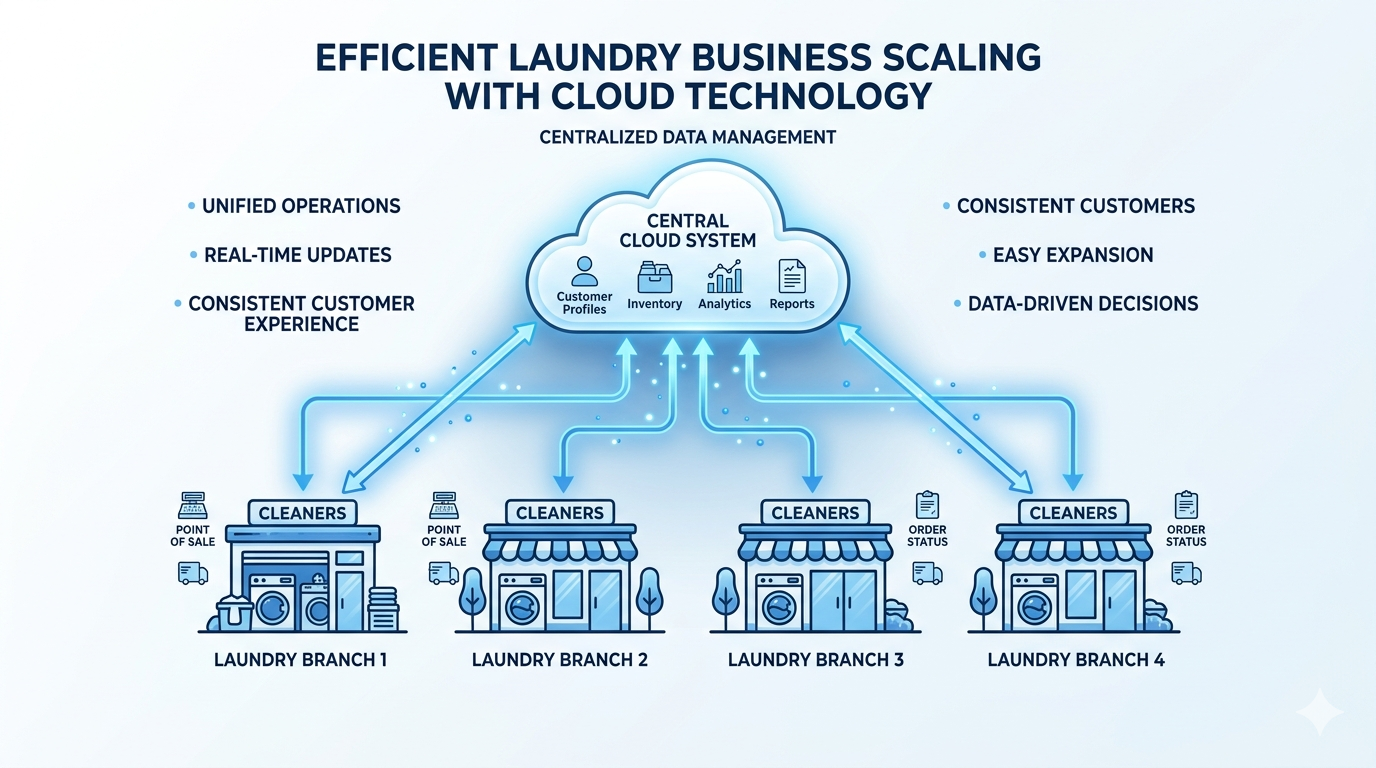
With multi-branch and location support built into modern cloud systems, you're not juggling separate databases. Everything connects. One customer profile works across all your shops.
The Investment Side:
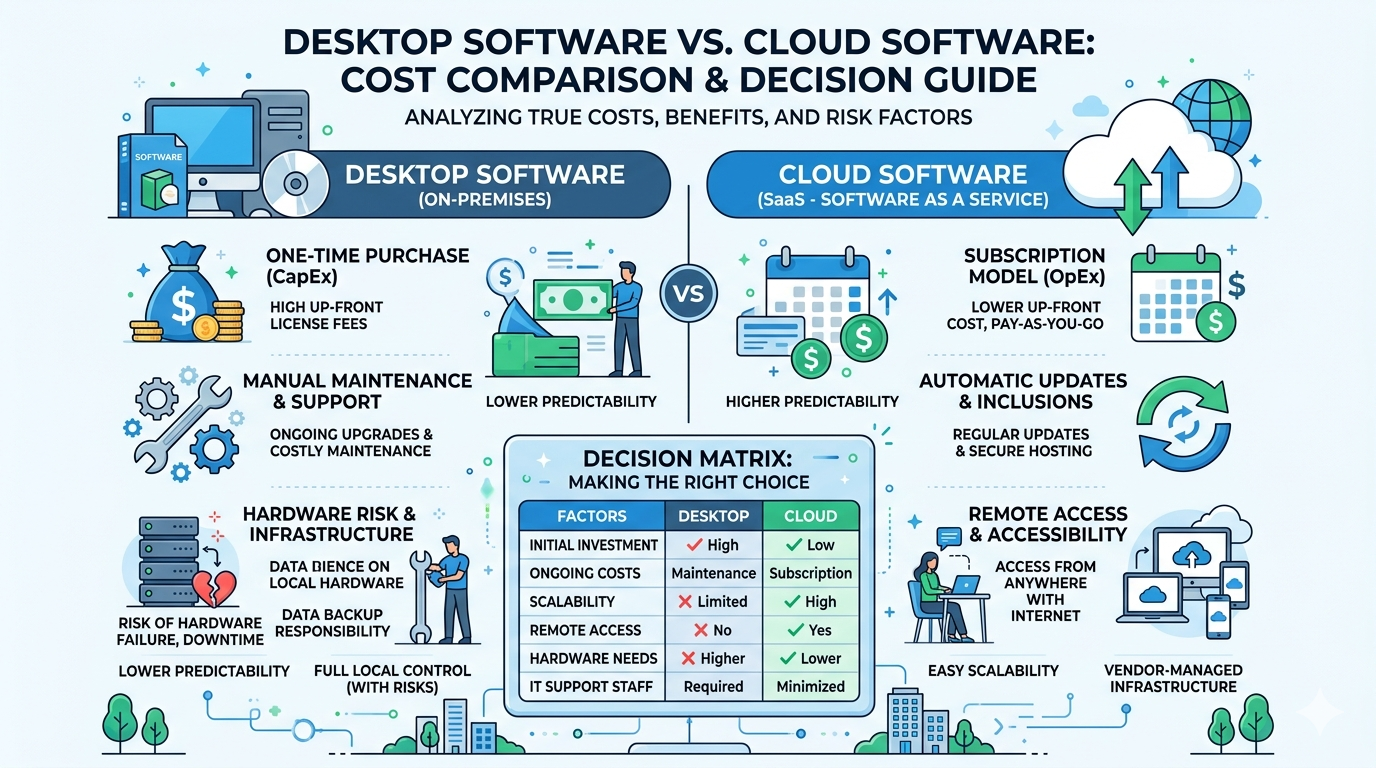
Cloud software typically charges monthly. ₹1,000 to ₹5,000 per month is common for Indian laundry businesses, depending on features and scale. That recurring cost bothers some owners who prefer one-time purchases.
But consider this: desktop software might cost ₹15,000-₹25,000 upfront, but then you're paying for updates, technical support visits, and potential data recovery if something goes wrong. The math isn't always as clear-cut as it seems.
Real-Time Data Access: Why It Matters
This is where cloud software really separates itself from desktop systems.
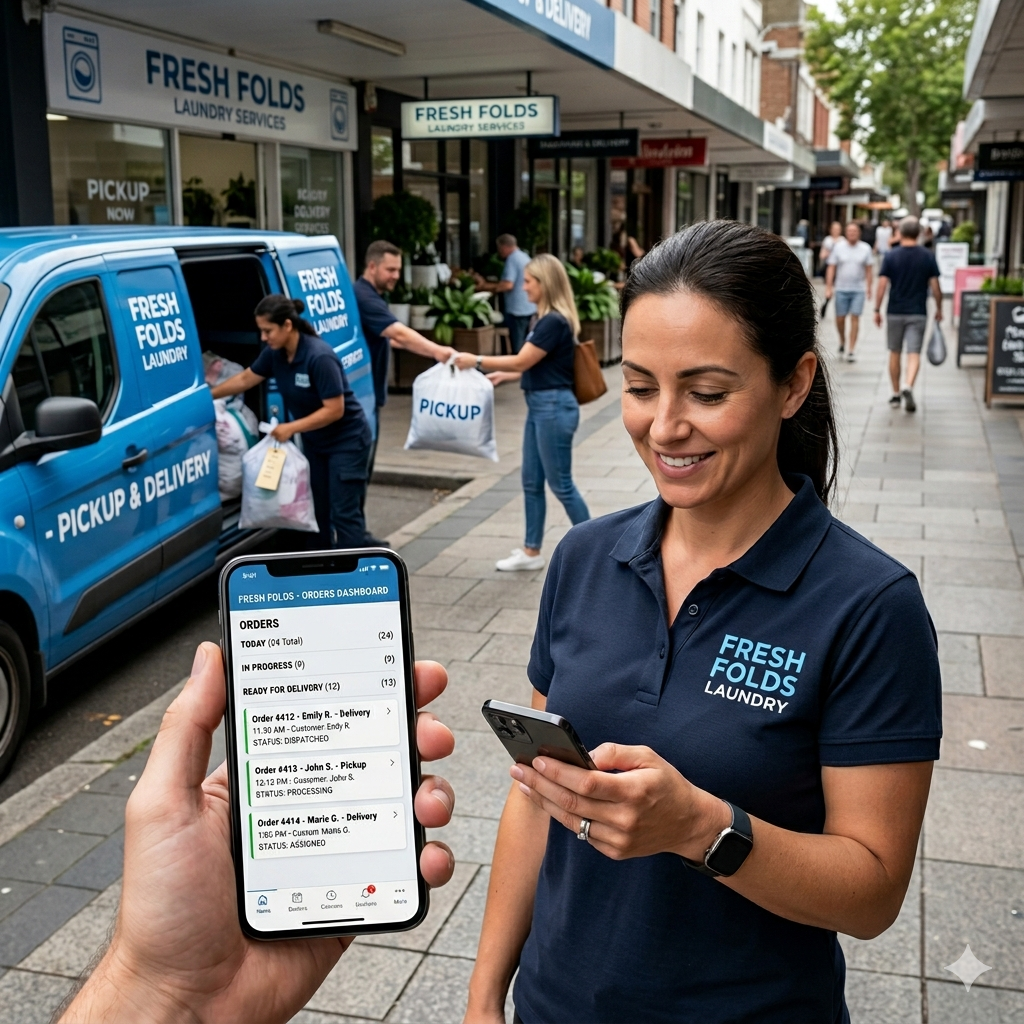
Imagine you're planning inventory purchases. With desktop software, you need to be at the shop, open the program, and manually check stock levels. With cloud systems offering realtime data access, you pull up your phone at the supplier's shop and see exactly what you need.
Or consider delivery management. Your driver updates order status from his phone. The shop sees it immediately. The customer gets a notification. All automatic. Desktop software can't do this—it's physically impossible when everything is locked to one computer.
For multi-location operations, real-time sync prevents the chaos of mismatched records. A customer drops off clothes at Branch A and picks them up at Branch B. Cloud systems handle this seamlessly. Desktop systems? You're making phone calls and manual ledger updates.
Cost Comparison: Beyond the Price Tag
Let's be honest about money because that's what actually matters.
Desktop Software Costs:
- Software purchase: ₹15,000 - ₹30,000
- Annual maintenance: ₹3,000 - ₹8,000
- Technical support visits: ₹500 - ₹2,000 per visit
- Backup solutions: ₹2,000 - ₹5,000 annually
- Hardware dependencies: If the computer dies, you're buying new machines and reinstalling everything
Cloud Software Costs:
- Monthly subscription: ₹1,000 - ₹5,000
- Automatic updates: Included
- Technical support: Usually included
- Backups: Automatic
- Hardware flexibility: Works on any device
Over three years, desktop might cost ₹30,000-₹50,000 when you factor in maintenance and support. Cloud runs ₹36,000-₹180,000 depending on your subscription tier. The gap narrows significantly, especially when you add the value of mobility and multi-branch support.
There's also hidden costs in staff dependency. Desktop systems often mean only one or two people know how to operate the software properly. Cloud systems with mobile apps? Anyone can learn the basics in an hour.
Data Security and Backup: Setting the Record Straight
Many owners think desktop software is more secure because "the data is with me." That's not quite accurate.
Desktop security depends entirely on your computer's security. No antivirus? Vulnerable. No regular backups? One hard drive failure wipes everything. Someone steals the computer? Your business data goes with it.
Cloud systems use bank-level encryption. Data centers have redundant backups across multiple locations. Even if your shop catches fire, your customer database and billing history are safe.
The risk isn't where your data lives. It's how well it's protected and backed up. Cloud providers invest millions in security. Most shops can't match that with a desktop setup.
How to Start Your Laundry Business in 2026: Complete Guide
Scalability: Planning for Growth
If you're running one shop with no expansion plans, desktop software might suffice. But business plans change.
You open a second location. Suddenly desktop software becomes a nightmare. Two separate systems. Manual consolidation of reports. No unified customer database. You're essentially running two disconnected businesses.
Cloud software scales naturally. Add branches through the same system. Staff access from anywhere. Centralized reporting happens automatically. The technical complexity doesn't multiply with each new location.
Even mobile pickup and delivery operations—which are increasingly common—need cloud infrastructure to work properly. Desktop software wasn't built for this kind of operational model.
Integration and Modern Features
Modern laundry businesses need more than billing software. They need systems that connect with payment gateways, send customer notifications, integrate with delivery apps, and sync with accounting software.
Desktop systems struggle with integration. Each connection requires custom development or doesn't exist at all. Cloud platforms are built for integration. APIs, webhooks, third-party app support—all standard.
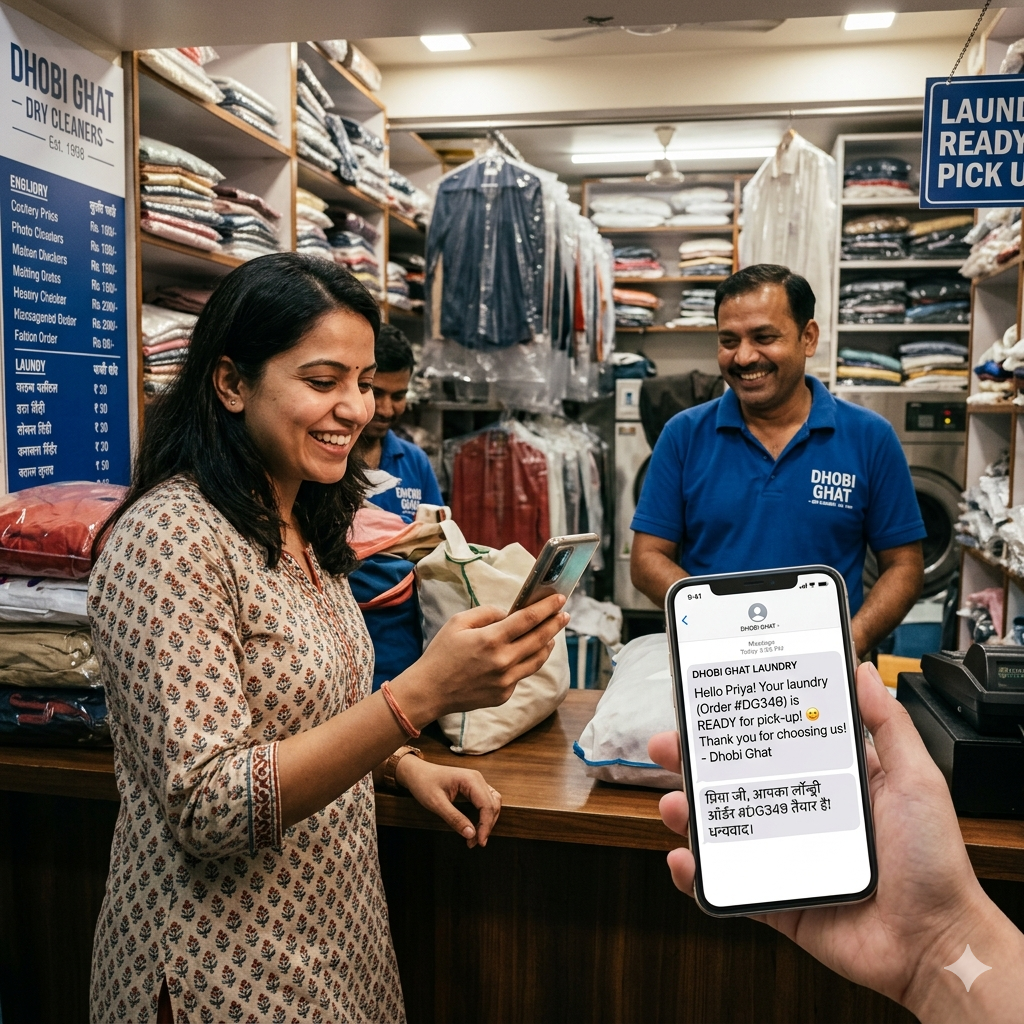
Want automated WhatsApp notifications when orders are ready? Need online payment collection? Looking to integrate with Razorpay or Paytm? These features work naturally with cloud systems like Ezer POS Laundry Management. Desktop software either can't do it or requires expensive customization.
Ezer Laundry POS System
Streamline your laundry business with our comprehensive POS system. Features include smart billing, garment tracking, WhatsApp notifications, and cloud backup.
Which One Should You Actually Choose?
There's no universal answer, but here's a practical framework:
Choose Desktop Software If:
- You run a single location with no expansion plans
- Internet connectivity in your area is genuinely unreliable (not just occasionally slow)
- Your business is very small and computer-dependent workflows don't bother you
- You prefer one-time payments and can manage technical maintenance yourself
Choose Cloud Software If:
- You run or plan to run multiple branches
- You want to manage your business remotely or check data outside shop hours
- You offer pickup and delivery services
- You want automatic backups without thinking about them
- You value real-time insights into business performance
- Staff turnover is an issue and you need easy-to-learn systems
For most laundry businesses operating in 2026, cloud makes more sense. The flexibility alone justifies the investment. But if you're truly a single-shop operation with reliable local management and no growth ambitions, desktop isn't wrong—just limiting.
How Technology Solves Real Laundry Business Problems
Let's move past the desktop-versus-cloud debate and talk about what actually matters: solving problems.
Billing errors happen less with cloud systems because multiple people can't modify the same order simultaneously. Delivery delays reduce when drivers update status in real-time and customers get automatic notifications. Customer retention improves when you can see purchase history instantly and offer personalized services.
Multi-branch operations stop feeling chaotic when everything syncs automatically. Staff dependency decreases when systems are accessible and intuitive enough that anyone can be trained quickly.
The goal isn't to use technology for technology's sake. It's to run your business better with less daily friction. Whether that means desktop or cloud depends on your specific situation, but the trend is unmistakably toward cloud-based solutions for good operational reasons.
How to Manage Laundry Orders Digitally in 2026: A Complete Guide
FAQs
Is cloud laundry software safe for my customer data?
Yes, when you choose reputable providers. Cloud systems use encryption, regular security audits, and distributed backups across multiple data centers. This is typically more secure than keeping everything on a shop computer that might not have proper antivirus or backup protocols. Check that your provider complies with data protection standards and offers secure login methods.
Can I use cloud software without constant internet?
Most cloud systems need internet to function, but modern platforms cache recent data so you can view information and even process some transactions offline. Once internet reconnects, everything syncs automatically. If your area has frequent long-duration outages (hours, not minutes), desktop might be safer—but for typical Indian connectivity with occasional drops, cloud systems handle it fine.
What happens if I want to switch from desktop to cloud software?
Good cloud providers offer data migration services. You'll export your customer database, order history, and other records from the desktop system, and they'll import it into the cloud platform. There's usually a transition period where you run both systems briefly to ensure everything transferred correctly. Most migrations complete within a week with minimal business disruption.
Do I need technical knowledge to manage cloud software?
Not really. Cloud platforms are designed for business owners, not IT professionals. If you can use WhatsApp and check email, you can manage cloud laundry software. Providers typically offer training videos, documentation, and customer support. The learning curve is much gentler than traditional desktop software because interfaces are simpler and more intuitive.
Can desktop software handle GST billing properly?
Yes, both desktop and cloud software can generate GST-compliant invoices if designed for Indian businesses. The difference is that cloud systems update automatically when GST rules change, while desktop software requires manual updates that you might forget or delay. Given how frequently tax regulations evolve, automatic compliance updates are genuinely valuable.
Is monthly subscription really better than one-time payment?
It depends on your cash flow and business priorities. Monthly subscriptions spread costs over time, include automatic updates and support, and let you cancel if the software doesn't work for you. One-time payments seem cheaper initially but exclude ongoing support, updates, and the operational benefits of cloud access. Calculate total cost over 3-5 years including all factors before deciding.
Can I manage multiple laundry branches with one cloud system?
Absolutely. That's one of cloud software's biggest advantages. Multi-branch and location support means you access all shops through one login, see consolidated reports, share customer databases across locations, and maintain consistent pricing and services. Staff permissions can be set by branch, and you get real-time visibility into what's happening across your entire business simultaneously.
Conclusion
Choosing between desktop and cloud laundry software isn't about following trends. It's about matching technology to how you actually run your business.
Desktop works if you're small, local, and comfortable with its limitations. Cloud works when you need flexibility, growth capability, and modern operational features. For most Indian laundry businesses moving into 2026, cloud systems offer practical advantages that directly improve daily operations—from realtime data access to seamless multi-branch management.
The investment isn't just in software. It's in removing friction from your business processes, serving customers better, and building a system that scales with your ambitions rather than holding them back.
Want to see how cloud-based laundry management actually works for Indian businesses? Explore platforms designed specifically for our market conditions and operational needs. The right system should feel like it simplifies your work, not complicates it.