
How to Manage Multiple Laundry Branches Easily in 2026
Running one laundry shop is hard enough. Managing two, three, or more? That's when things get messy fast. Different staff at each location, inconsistent pricing, lost orders, no idea which branch is actually profitable. I've seen shop owners juggling WhatsApp groups, Excel sheets, and physical registers just to know what's happening across their branches. It doesn't have to be this way.
If you're planning to expand or already managing multiple laundry outlets, this guide walks you through practical systems that actually work. No theory. Just what helps real businesses stay organized, reduce errors, and grow without chaos.
Why Multi-Branch Management Fails for Most Laundry Businesses
Most laundry owners start their second branch thinking they'll just repeat what worked at the first location. Then reality hits.
The manager at Branch A uses one pricing method. Branch B does something completely different. A customer drops clothes at one outlet and tries to pick them up from another. Nobody knows where the order is. Staff call you at 9 PM because they can't access customer history. Your accountant is frustrated because billing formats don't match across locations.
These aren't rare problems. They're standard operating procedure when you don't have centralized systems. The issue isn't your staff or your customers. It's trying to run modern operations with outdated methods.
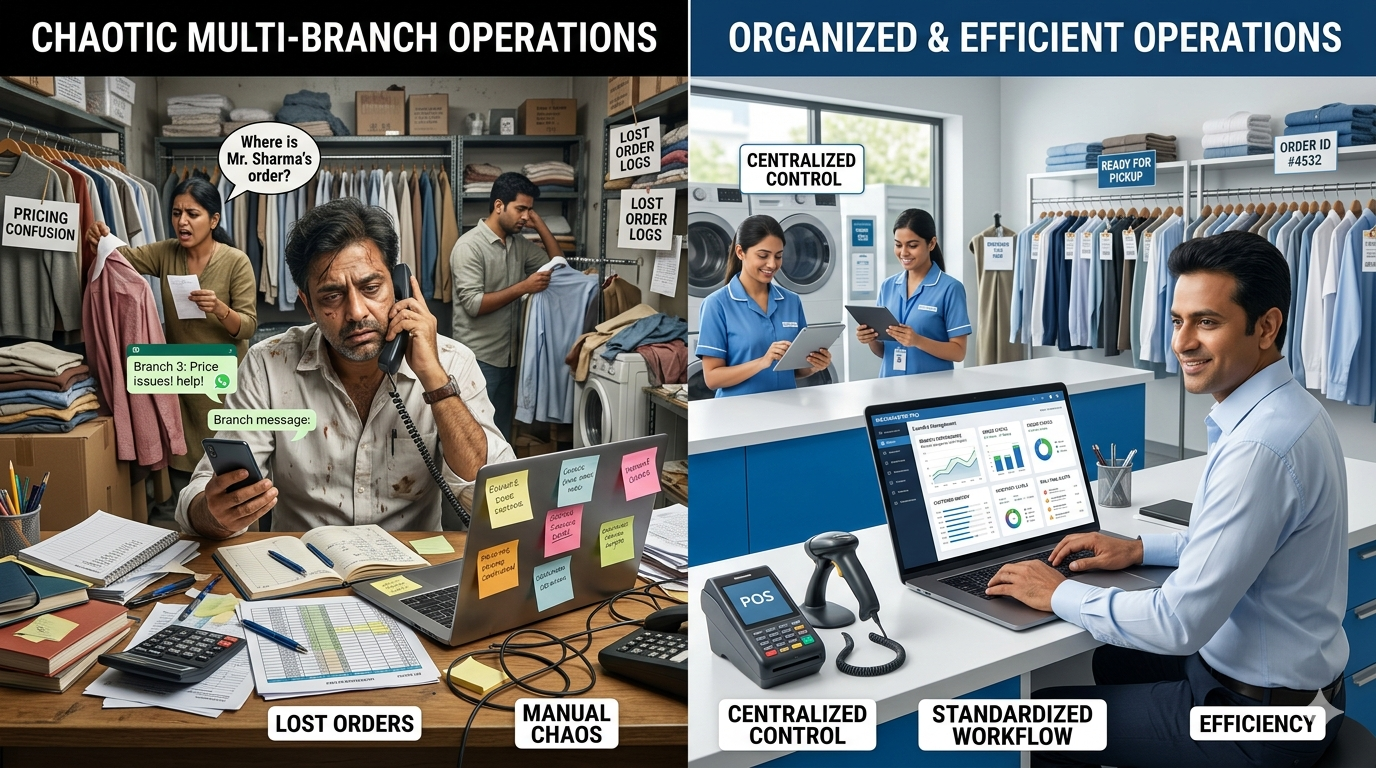
Paper registers work fine for one shop. They completely break down across multiple locations. You can't see real-time data. You can't standardize processes. You definitely can't track which branch is losing money on discounts or late deliveries.
Here's what happens: owners end up physically visiting each branch daily just to keep things running. That's not scaling a business. That's creating multiple jobs for yourself.
The Real Challenges of Managing Multiple Laundry Outlets
Let me break down the specific operational headaches that come with expansion.
Inconsistent Pricing and Service Quality
Each branch starts developing its own unofficial price list. One location charges ₹40 for shirt washing. Another charges ₹50. A third gives random discounts to "regulars" without any system. Customers notice. They compare. They get annoyed.
Service quality varies too. Branch A delivers on time 90% of days. Branch B? Maybe 60%. You won't even know these numbers without proper tracking.
Customer Data Scattered Everywhere
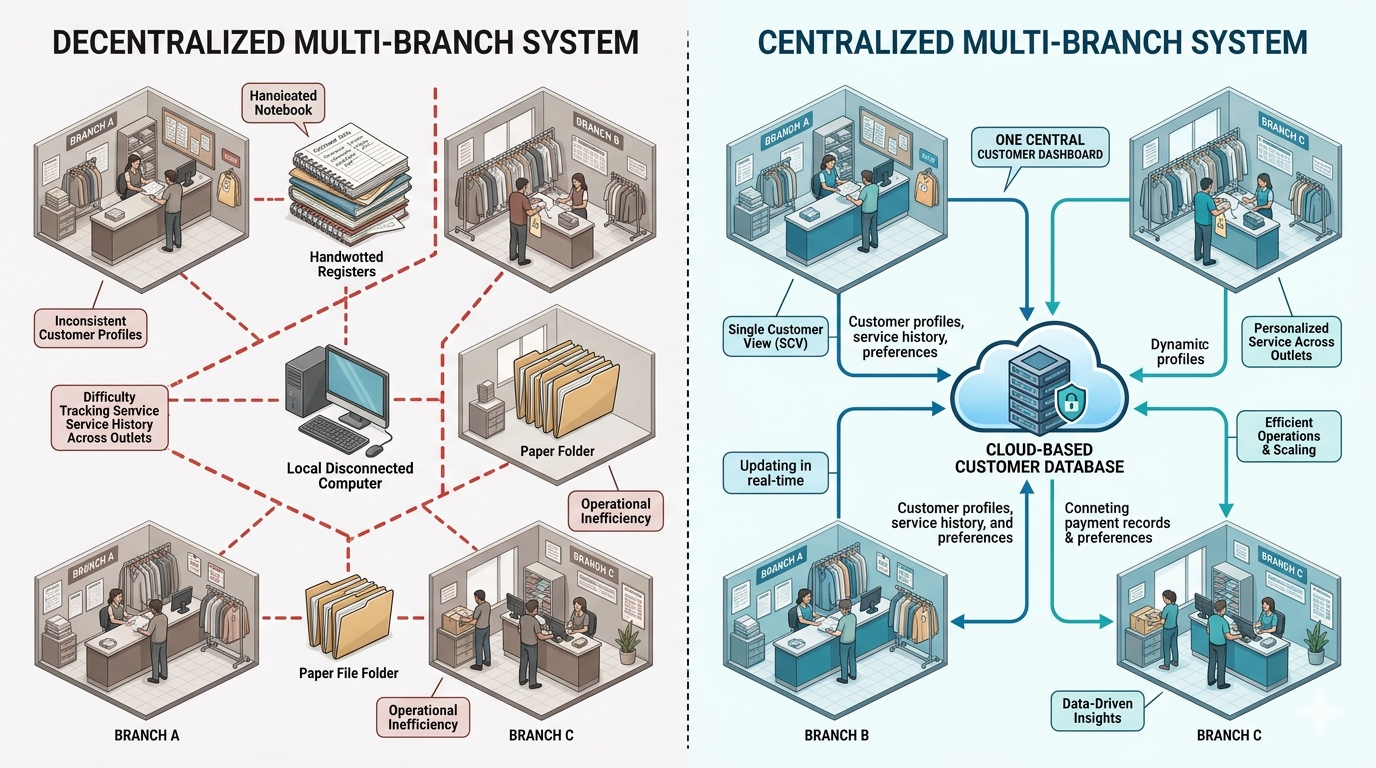
A customer who's been using your Indiranagar branch for two years walks into your Koramangala outlet. Your staff has no record of them. No purchase history. No preference data. The customer has to explain everything again. They feel like a stranger despite being a loyal client.
This happens because customer data sits in isolated registers or local systems at each branch. No central database means no continuity of service.
Staff Accountability Issues
When problems occur, finger-pointing starts. An order got damaged. Which branch handled it? Who was on duty? What actually happened?
Without proper logging systems, you can't track staff performance across locations. You don't know if someone is consistently making billing errors or if delivery delays come from specific team members.
Inventory Chaos
Detergent stock runs out at Branch A. Branch B has excess. But nobody knows until customers start complaining about delays. Fabric softener expires unused at one location while another branch is desperately low.
Multiply this across all your supplies and consumables. The waste adds up quickly.
Financial Blind Spots
Which branch is actually profitable? You might think you know, but unless you're tracking expenses, revenue, and margins separately for each location, you're guessing. Rent, electricity, staff salaries, supplies, equipment maintenance—all these costs need proper allocation.
Many owners discover too late that one branch has been losing money for months because they were only looking at combined revenue numbers.
Core Systems You Need for Smooth Multi-Branch Operations
Forget complicated corporate frameworks. Here's what actually matters for laundry businesses.
Centralized Order Management
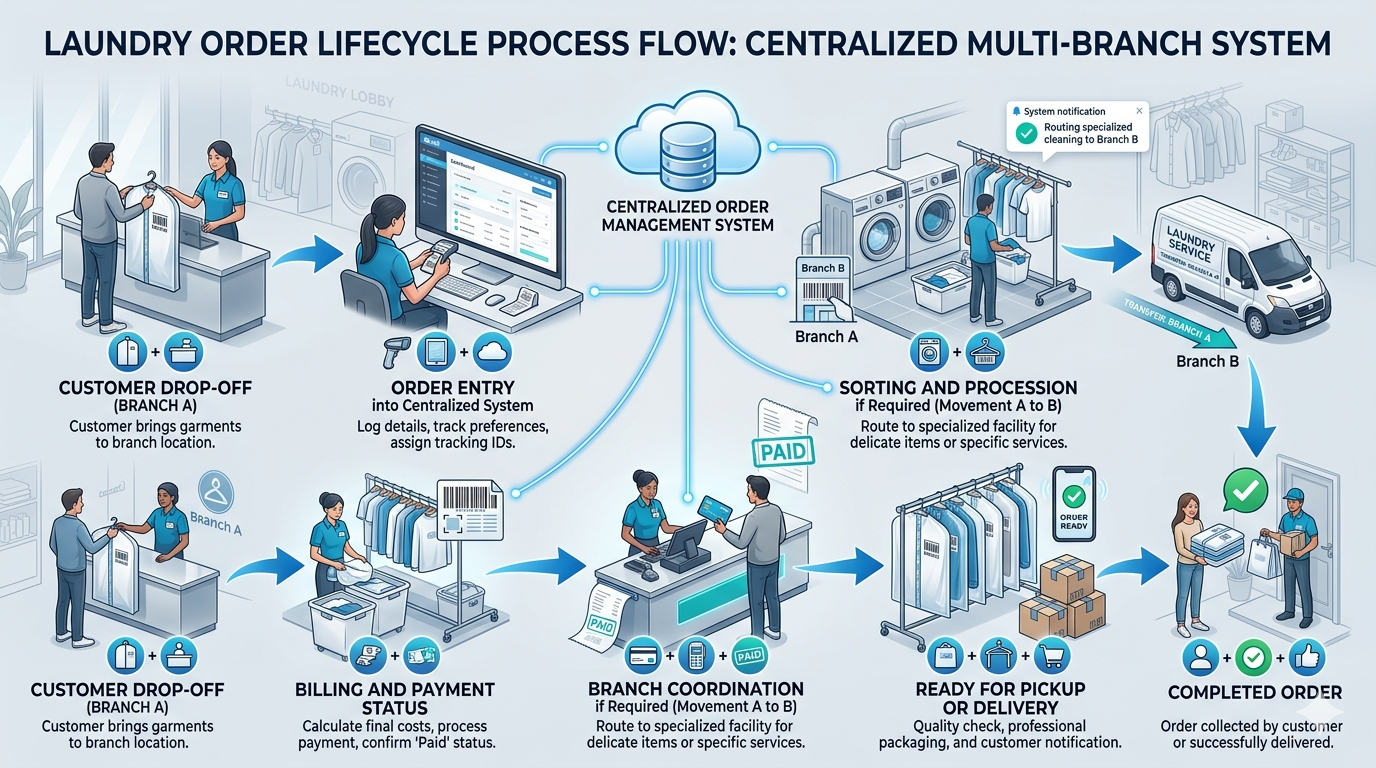
Every order, regardless of which branch takes it, should go into one system. This means if a customer drops clothes at Location A and wants to pick up from Location B, your staff can handle it. No phone calls. No confusion.
How to Start Your Laundry Business in 2026: Complete Guide
The system should show:
- Order status across all branches
- Who handled which order
- Service type and special instructions
- Payment status
- Estimated delivery time
When everything's in one place, communication gaps disappear. Your staff spends less time on coordination and more time serving customers.
Unified Customer Database
Build one customer record that's accessible from all branches. When someone walks into any of your outlets, staff should see:
- Full service history
- Preferred services
- Payment patterns
- Any special handling instructions
- Outstanding balances
This isn't just convenient. It builds customer loyalty. People appreciate being recognized and not having to repeat themselves.

Standardized Pricing and Service Catalog
Create one master price list. Every branch uses it. Period.
Yes, you can have location-based variations if needed—maybe premium charges for faster delivery in certain areas. But the base pricing structure should be identical. Your billing system should enforce this automatically so individual staff can't make up prices.
Same logic applies to your service catalog. If Branch A offers curtain dry cleaning, all branches should. If you're running a discount campaign, it should be active everywhere unless specifically excluded.
Real-Time Inventory Tracking
You need visibility into stock levels at each location without physically visiting. Set minimum thresholds for essential items. Get alerts when supplies run low at any branch.
Some businesses go further and enable stock transfers between branches through the system. If one location is overstocked and another is running low, shifting inventory becomes a simple internal transaction instead of an emergency shopping trip.
Branch-Wise Financial Reporting
Track revenue, expenses, and profitability separately for each location. This means:
- Daily sales reports by branch
- Expense categorization per outlet
- Staff cost allocation
- Comparison dashboards
You should be able to pull up reports and see which branch had the highest revenue last week, which one has the best profit margins, and where you're spending too much on supplies relative to revenue.
7 Critical Mistakes to Avoid When Starting a Laundry Business in 2026
Staff Access Controls and Activity Logs
Not every employee needs access to everything. Branch managers might need full access to their location's data. Front-desk staff need order entry and billing. Delivery personnel need order status and customer addresses.
Role-based access prevents mistakes and reduces opportunities for fraud. Activity logs let you trace who did what and when—essential for accountability.
How Technology Solves Multi-Branch Management Problems
Here's where modern POS and management systems make a real difference.
Cloud-based software designed for laundry businesses handles all the systems I mentioned above in one platform. Instead of maintaining separate registers, spreadsheets, and communication channels, everything runs through a single interface accessible from anywhere.

The practical benefits are immediate. A customer calls asking about their order. Any staff member at any branch can look it up in seconds. Someone needs to check yesterday's revenue across all locations. One click. Inventory running low somewhere. You get an automatic notification.
This is how Ezer Laundry POS Software is different from generic POS systems. It's built specifically for the laundry and dry-cleaning workflow across multiple outlets. You're not trying to force-fit retail software into your operations.
The system handles:
- GST-compliant billing that's consistent across branches
- Customer management with unified profiles and service history
- Order tracking from pickup to delivery across any location
- Mobile app access for customers and delivery staff
- Automated reporting that breaks down performance by branch
- Centralized rate management so pricing stays standardized
What this means in practice: you spend less time putting out fires and coordinating between locations. Your staff makes fewer errors because the system guides them through standard processes. Customers get reliable service regardless of which branch they visit.
You can add new branches without recreating your entire operational setup. The same system scales. New staff can be onboarded quickly because they're learning one standardized process, not each location's unique quirks.
Ezer Laundry POS System
Streamline your laundry business with our comprehensive POS system. Features include smart billing, garment tracking, WhatsApp notifications, and cloud backup.
Step-by-Step: Setting Up Multi-Branch Systems
If you're ready to organize your operations properly, here's a realistic approach.
Phase 1: Standardize Your Processes First
Before implementing any software, document your ideal process flow. How should orders be taken? What information do you need from customers? How should billing work? What's your delivery process?
Write this down. Create simple process maps. Get input from your best-performing staff members. This becomes your standard operating procedure across all branches.
Phase 2: Clean Up Your Customer Data
If you have customer information scattered across different branches, start consolidating. Export whatever data you have. Look for duplicates. Standardize formats.
This is tedious work, but it's necessary. A clean, unified customer database is the foundation for good multi-branch operations.
Phase 3: Choose the Right Software
Look for systems that specifically support:
- Multi-branch architecture with central admin control
- Branch-level access permissions
- Real-time synchronization across locations
- Mobile accessibility
- Good customer support (you'll need help during setup)
Don't just pick the cheapest option. Factor in implementation support, training, and ongoing updates. A system that costs slightly more but includes proper onboarding will save you headaches.
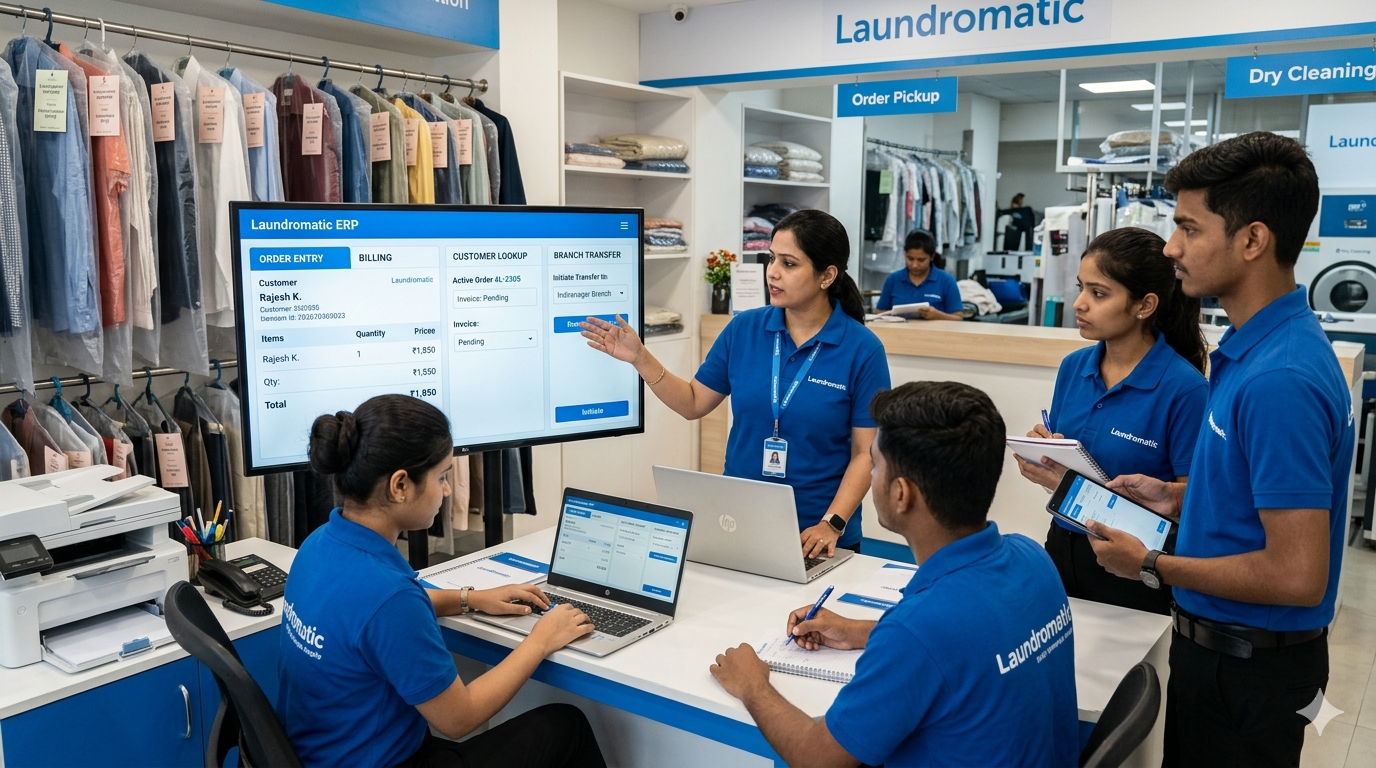
Phase 4: Train Your Staff Thoroughly
Rolling out new systems without proper training guarantees failure. Plan training sessions at each branch. Cover:
- Why you're making this change
- How the new system works
- Common scenarios they'll handle
- Who to contact for help
Expect resistance. Some staff will prefer the old way of doing things. Be patient but firm. The transition period is uncomfortable but temporary.
Phase 5: Go Live Gradually
Don't switch everything overnight. Start with one branch as a pilot. Work out the issues. Refine your processes. Then roll out to other locations one at a time.
Keep backup systems running parallel for the first few weeks until you're confident everything works smoothly.
Phase 6: Monitor and Optimize
Once you're fully operational, use the data you're now collecting. Review reports regularly. Which branches are performing well? Where are errors happening? What can be improved?
The system gives you visibility. Actually use it to make better decisions.
Common Mistakes to Avoid When Scaling to Multiple Branches
Opening new branches without solid systems is mistake number one. You're just multiplying your problems.
Trying to manage everything through WhatsApp groups and Excel sheets might feel cheap, but the hidden costs in errors, miscommunication, and wasted time are enormous.
Skipping staff training on new systems. Your employees won't magically figure out new software. Invest time in proper onboarding.
Not standardizing processes before expanding. If your first branch runs on informal practices and tribal knowledge, your second branch will be chaos.
How to Start Your Laundry Business in 2026: Complete Guide
Ignoring customer feedback across locations. Complaints at one branch might indicate systemic problems affecting all outlets. Track and address issues centrally.
Failing to track branch-level profitability. Revenue growth means nothing if you're losing money at specific locations.
FAQs
How much does multi-branch management software typically cost?
Pricing varies significantly based on features and number of locations. Expect anywhere from ₹5,000 to ₹20,000 per month for good cloud-based systems serving 2-5 branches. Many providers offer per-branch pricing that scales with your business. Factor in setup costs and training. The investment pays back quickly through reduced errors and better operational efficiency.
Can I manage multiple branches without expensive software?
Technically yes, but it's extremely difficult and doesn't scale well. You'll spend enormous time coordinating, face constant data inconsistencies, and miss growth opportunities because you lack proper visibility. Basic solutions might work for two branches temporarily, but you'll hit a wall quickly. Most owners find that software costs less than the mistakes and inefficiencies it prevents.
What if my branches have different pricing due to location differences?
Good management systems let you set location-based pricing rules while maintaining a base rate structure. You might charge a premium in high-demand areas or adjust for local market conditions. The key is having these variations controlled and tracked through the system, not left to individual staff discretion.
How do I handle inventory differently across branches with varying demand?
Set branch-specific minimum and maximum stock levels based on historical usage patterns. Your system should track consumption rates at each location and alert you when reordering is needed. Some businesses enable inter-branch transfers so excess inventory at slow locations can be redistributed to busier outlets.
Should all branches offer identical services?
Ideally yes, for brand consistency and operational simplicity. However, some locations might justify specialized services based on customer demographics. A branch in a commercial area might focus more on corporate accounts while a residential area branch emphasizes home pickup. The core services should be universal; specializations can be location-specific.
How long does it take to properly implement multi-branch systems?
Expect 2-4 weeks for software setup and initial configuration. Staff training and process standardization add another 2-3 weeks. Full operational smoothness typically takes 2-3 months as you work through edge cases and refine workflows. Rushing this timeline creates problems. Allocate adequate time for proper implementation.
Can customers access their account across all my branches automatically?
Yes, with proper centralized systems. Customer profiles are location-independent. They can drop clothes at Branch A, check status via mobile app, and pick up from Branch B if that's more convenient. This flexibility is a significant competitive advantage and improves customer satisfaction considerably.
Conclusion
Managing multiple laundry branches doesn't have to mean constant firefighting and coordination headaches. The businesses that scale successfully do so by building proper systems before expanding aggressively.
Centralized operations, standardized processes, unified customer data, and real-time visibility—these aren't luxuries. They're operational necessities if you want growth without chaos.
The technology exists to make multi-branch management straightforward. The question is whether you're ready to move past manual methods and invest in systems that actually support your expansion plans.
If you're serious about growing your laundry business efficiently, learn more about how Ezer Laundry POS Software can help you manage multiple branches from one unified platform.