
Complete Laundry Business Checklist for 2026: Setup to Scale
Starting a laundry business sounds straightforward until you're dealing with missing customer orders, manual billing errors, or staff who handle everything on paper. I've worked with shop owners who lost clients simply because they couldn't track when a shirt was supposed to be ready. This checklist covers what actually matters when setting up or improving a laundry business in 2026—from equipment to customer management, and the digital tools that prevent operational chaos.
Whether you're planning your first shop or managing multiple branches, this guide focuses on practical steps that keep your business running smoothly and your customers coming back.
Why Most Laundry Businesses Struggle in the First Year
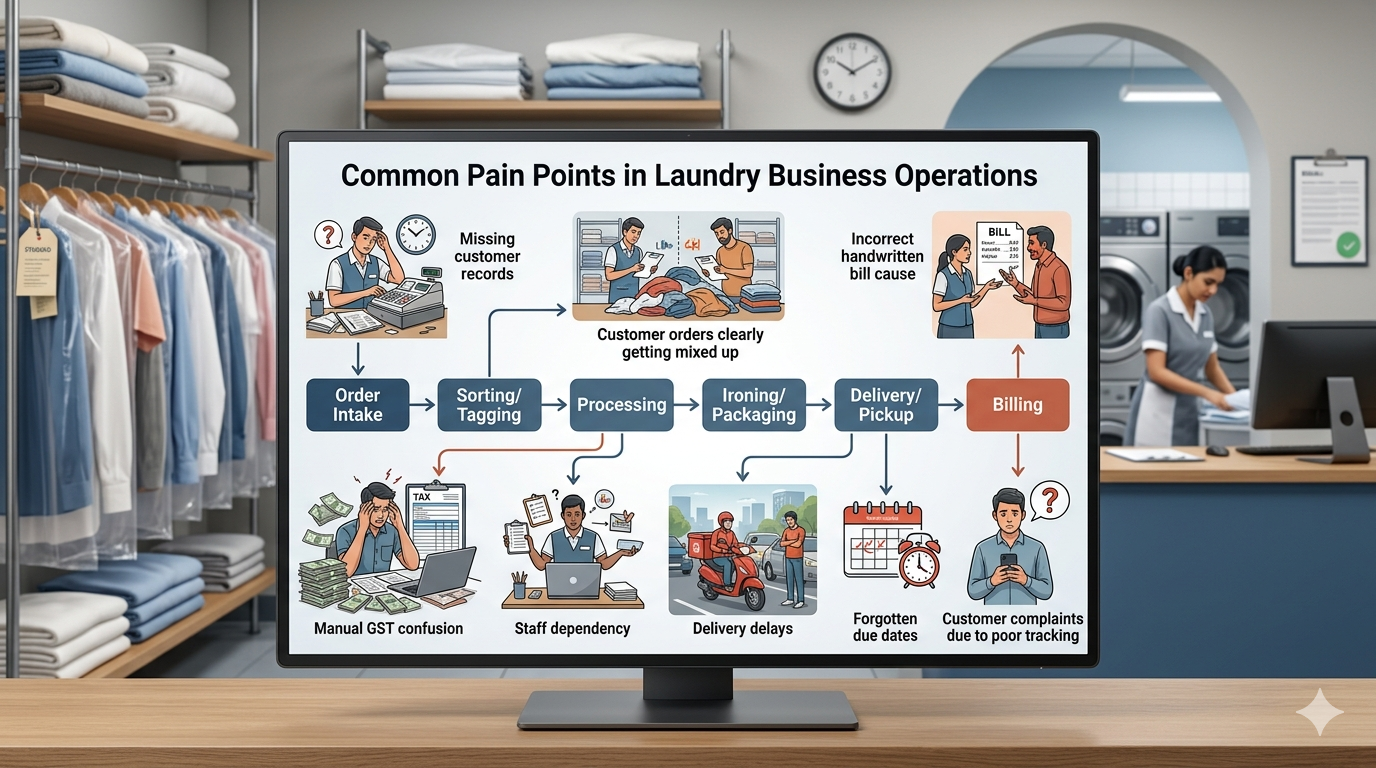
The equipment part is usually fine. Most new owners research washing machines and dryers properly. What catches them off guard is everything else—tracking orders when you're handling 40+ customers daily, managing pickup and delivery schedules, dealing with GST billing, and keeping customers informed without spending all day on phone calls.
Many shop owners start with a register book and WhatsApp. That works until you mix up Mrs. Sharma's sarees with someone else's, or forget which order was supposed to be delivered yesterday. One billing mistake during tax season can cost you hours of backtracking through handwritten records.
The businesses that survive past year one usually have three things sorted: proper customer records, clear process flow, and a way to track orders without depending entirely on human memory.
Essential Equipment and Infrastructure Checklist
Start with commercial-grade machines, not household ones. A commercial washer handles higher loads and runs longer without breaking down. Budget ₹2–4 lakhs for basic equipment if you're starting small.
Core Equipment:
- Commercial washing machines (front-load preferred for water efficiency)
- Industrial dryers with proper venting
- Steam iron and pressing table
- Garment racks and hangers
- Quality laundry detergents and chemicals
Space Requirements: You need more space than you think. A small shop serving 30–40 customers daily needs at least 400–600 sq ft. This includes washing area, drying space, ironing station, and customer counter. Don't forget proper ventilation and water drainage.
Location matters more than most people realize. Being near residential areas is obvious, but check if there are offices, PG accommodations, or gyms nearby. These generate steady bulk orders.
Often Overlooked:
- Backup power (laundry businesses can't afford 4-hour power cuts)
- Water softener (hard water damages fabric and machines)
- Proper waste water disposal system
- Fire safety equipment (dealing with heat and chemicals)
Licensing and Compliance Requirements
You'll need a GST registration if your annual turnover exceeds ₹20 lakhs (₹10 lakhs in some states). Most laundry businesses cross this quickly once pickup and delivery services start.
Get your trade license from the local municipal corporation first. This is non-negotiable. You'll also need:
- FSSAI registration (if handling restaurant linen)
- Pollution Control Board clearance for water discharge
- Shop and Establishment Act registration
- Fire safety NOC (depending on shop size)
Many owners skip the pollution clearance until there's a problem. Save yourself the headache and get it done during setup.
7 Critical Mistakes to Avoid When Starting a Laundry Business in 2026
Customer Management and Order Tracking System
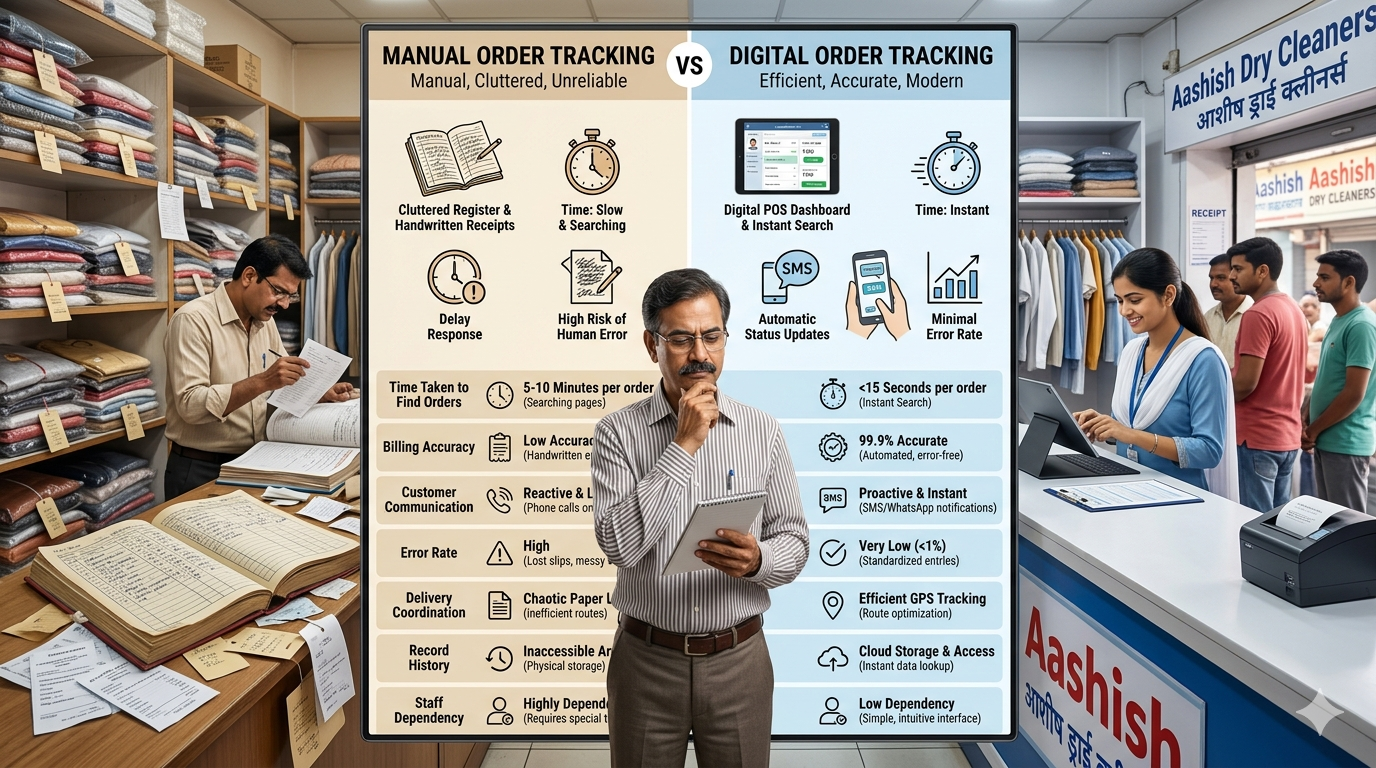
Here's where most traditional setups fall apart. A register book works when you're small, but once you're handling multiple orders per day, you need a proper system.
What you're actually tracking:
- Customer name, phone, address
- Items received (specific count and type)
- Special instructions (starch, no bleach, extra care items)
- Payment status and mode
- Delivery date and address
- Pending balances
Writing this down for 50 customers daily, then searching through pages when someone calls asking about their order—it's not sustainable.
The Real Cost of Poor Tracking: When you can't immediately tell a customer where their order is, they lose confidence. When you deliver someone's clothes late because you forgot the date, they don't come back. When you can't remember which customer still owes ₹2,400, you're losing money.
This is exactly why laundry businesses have moved to digital systems. Not because it's trendy, but because manual tracking creates problems that directly hurt revenue.
Pricing Strategy That Actually Works
Don't just copy competitor pricing. Calculate your actual costs first. Include:
- Electricity and water per load
- Detergent and chemicals
- Staff wages (if applicable)
- Rent and equipment depreciation
- Delivery costs
Add your margin on top of real costs. I've seen businesses charge ₹30 for shirt washing when it costs them ₹24 including everything. There's barely any buffer for mistakes or slow months.
Pricing Models:
- Per piece (shirt, trouser, saree)
- Per kg (good for bulk orders)
- Package deals (monthly subscription for regular customers)
Most successful shops use per-piece for individual customers and per-kg for bulk clients like hostels or salons. Subscriptions work well in areas with working professionals who send regular weekly loads.
Premium Services: Express delivery (same day) can command 40–50% premium. Stain removal treatments, dry cleaning, and shoe cleaning are high-margin add-ons.
Building a Delivery and Pickup Operation
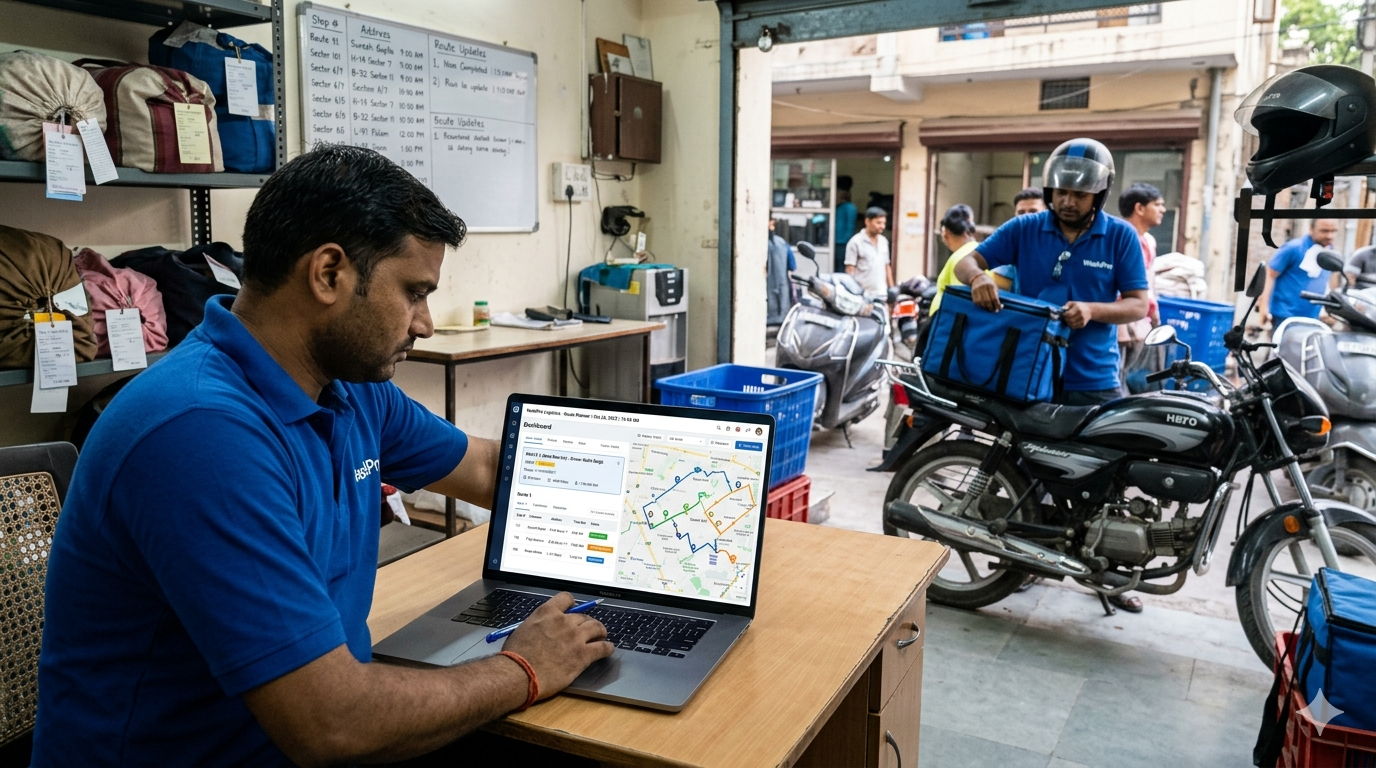
Delivery isn't optional anymore. Customers expect it. But running delivery without a system creates chaos—drivers forgetting addresses, customers complaining about missed time slots, no clear record of what was picked up.
Delivery Basics:
- Define clear service areas (don't overextend initially)
- Set specific time slots, don't promise "anytime"
- Confirm orders before pickup
- Provide pickup and delivery receipts
- Track which driver has which orders
You can start with one person on a two-wheeler. That's enough for 15–20 deliveries daily within a 5km radius.
The challenge is coordinating this with your order processing. If your driver picks up clothes but you don't update the order status immediately, you'll lose track. If someone calls asking when their pickup is scheduled and you can't answer, they'll find another service.
This coordination is why laundry POS software has become standard in growing businesses. It's not about being high-tech—it's about not losing orders or customers.
Staff Management and Training
Even in a small setup, you need reliable people. One person for washing and drying, one for ironing and folding, and yourself managing customers and delivery.
Training Priorities:
- Fabric identification (treating silk differently from cotton)
- Stain removal techniques
- Operating machines safely
- Customer interaction basics
- Handling special care items
The biggest operational risk is staff dependency. If one person knows all your customer details and processes, you're in trouble when they're sick or leave. Document your processes. Write down handling instructions for different fabrics. Create a standard operating procedure even if it feels excessive.
Managing Workload: Laundry businesses see patterns—weekends are busier, month-end sees more orders. You need enough capacity for peak times without overstaffing during slow periods.
How Technology Solves Real Operational Problems
This isn't about replacing your team with software. It's about removing the parts of the job that waste time and cause errors.
What Modern Laundry POS Software Handles:
- Instant order creation with customer details
- Automatic SMS/WhatsApp updates to customers
- GST-compliant billing
- Delivery schedule management
- Inventory tracking for detergents and supplies
- Customer payment history and pending balances
- Multi-branch coordination (if you expand)
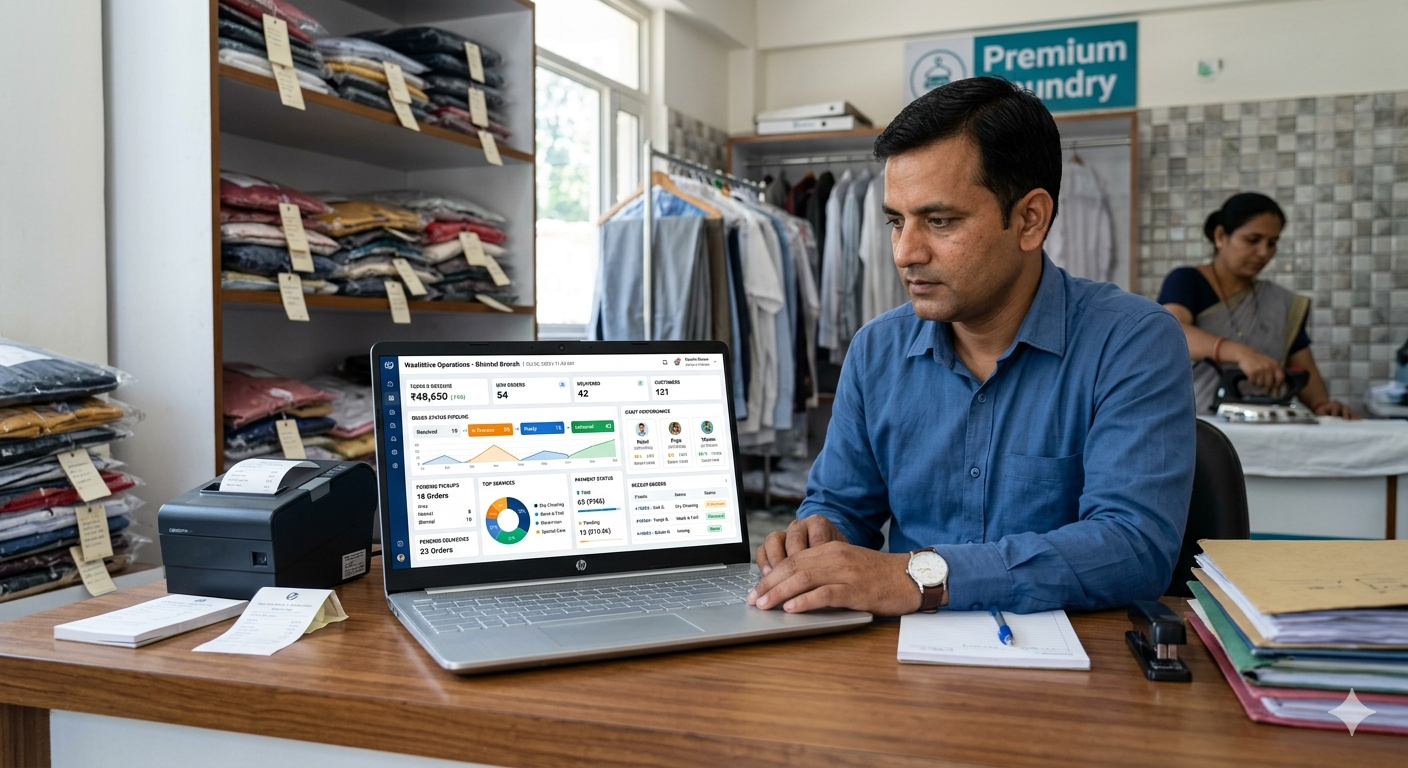
The difference is immediate. When a customer calls about their order, you pull it up in seconds instead of flipping through a register. When it's time for delivery, you see exactly which orders are ready and where they need to go. GST filing becomes data export instead of manual calculation.
Mobile apps let your delivery person update order status in real-time. Customers can track their orders without calling you repeatedly.
Cost vs Benefit: Cloud-based laundry management systems typically cost ₹500–2,000 per month depending on features. That's less than one lost customer. It pays for itself if it prevents even one major order mix-up per month.
The businesses I've worked with that adopted proper POS systems reduced billing errors by about 80% and cut time spent on order lookups by half. That's time you can spend actually growing the business.
How to Start Your Laundry Business in 2026: Complete Guide
Ezer Laundry POS System
Streamline your laundry business with our comprehensive POS system. Features include smart billing, garment tracking, WhatsApp notifications, and cloud backup.
Marketing Your Laundry Business Locally
You're not selling a complicated product. You're selling convenience and reliability. Your marketing should reflect that.
What Works:
- Google My Business listing (people search "laundry near me")
- WhatsApp Business for customer communication
- Referral discounts (₹50 off when you refer a friend)
- Local partnerships (gyms, PGs, corporate offices)
- First-order discounts
Put up a simple website or at least a Facebook page with your services, pricing, and contact number. Keep your Google listing updated with accurate hours and phone number.
The Real Marketing: Consistent quality and reliable delivery time. That's it. If you say clothes will be ready Thursday evening, they better be ready Thursday evening. This sounds basic, but many businesses fail here.
Building a customer base takes 6–8 months. Early customers who have good experiences become regulars and refer others. That's your actual marketing engine.
Customer Retention and Repeat Business
Getting a customer once is expensive (marketing, first-order discount). Getting them to come back 20 times is where you make money.
Retention Tactics:
- Keep customer preferences on record (extra starch, preferred delivery time)
- Send order ready notifications proactively
- Offer subscription packages for regular customers
- Maintain quality consistency
- Resolve complaints immediately
The biggest retention killer is making customers follow up with you. If they have to call asking "is my order ready?" every time, they'll eventually find a service that proactively updates them.
Digital systems help here by automating notifications. But even manually, make it a practice to inform customers when their order is done, not wait for them to ask.
Handling Complaints: You will damage clothes occasionally. Buttons will come off. Colors might bleed. How you handle it determines whether the customer stays.
Accept responsibility quickly. Offer compensation (free service, discount on next order). Most customers are reasonable if you're honest and prompt about fixing issues.
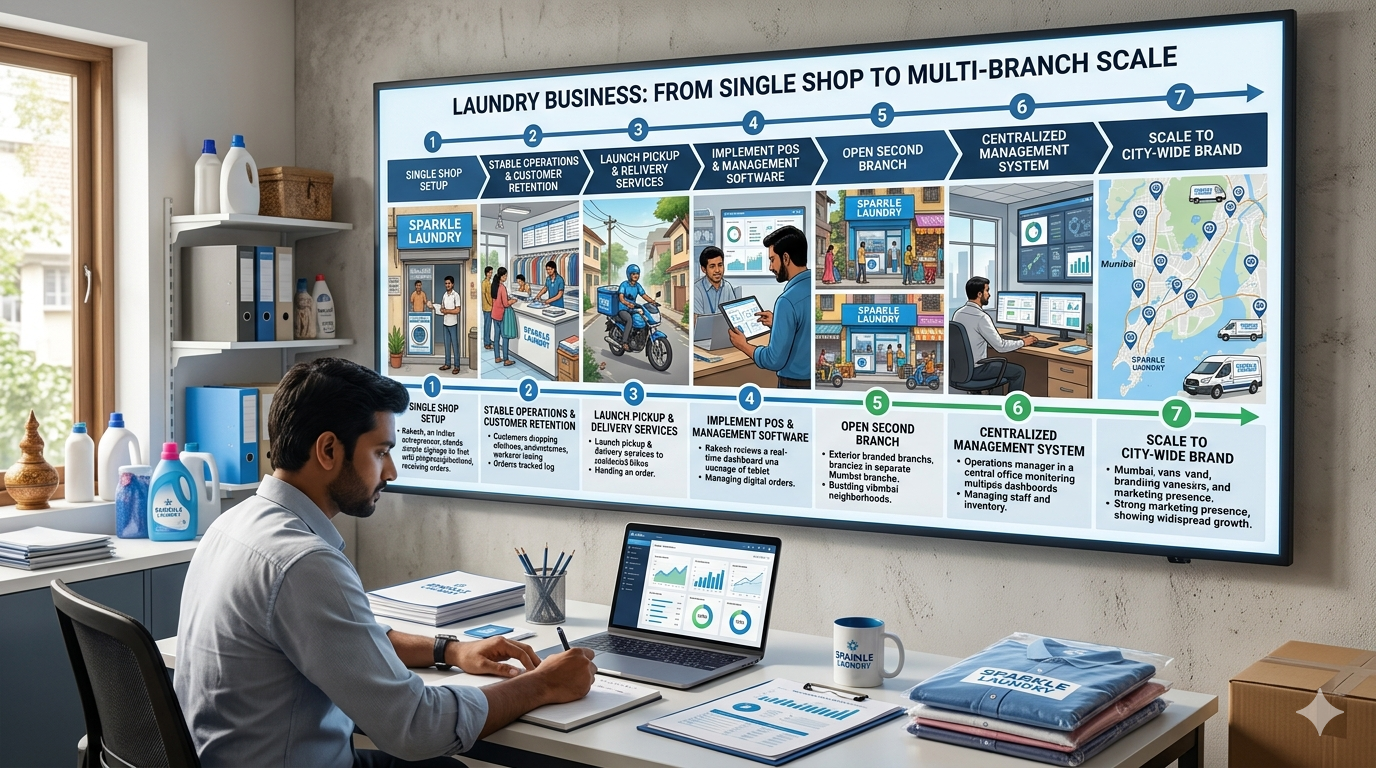
Expansion and Scaling Considerations
Once your first location is profitable (typically 12–18 months), you might consider expansion. But scaling a laundry business has specific challenges.
Multi-Branch Complexity:
- Coordinating inventory across locations
- Maintaining service quality everywhere
- Managing multiple teams
- Centralized vs. localized decision making
- Cross-location order handling
Some customers might drop clothes at one branch and want delivery from another. You need systems that handle this smoothly.
Cloud-based management software becomes essential here. You can't run three branches with register books.
Growth Options:
- Additional locations in nearby areas
- Pickup points in high-density residential areas
- B2B contracts (hotels, hospitals, salons)
- Franchise model (if you've perfected operations)
Don't expand just because you can. Make sure your first location runs smoothly without requiring your constant presence. If you're still manually tracking everything, adding a second location will overwhelm you.
Common Mistakes to Avoid
Underestimating Working Capital: You'll buy detergent in bulk, pay rent upfront, and handle equipment maintenance. Many new owners budget only for equipment and setup, then struggle with running costs in months 2–4.
No Clear Pricing Structure: Deciding prices on the spot leads to inconsistency and confusion. Set clear rates and stick to them.
Ignoring Customer Data: Every customer interaction is information—what they order, when they order, how much they spend. Without tracking this, you're guessing instead of planning.
Over-Promising Delivery Times: Saying "tomorrow" for everything sounds good until you can't deliver. Be realistic. Customers prefer accurate timelines over optimistic ones.
Skipping Quality Checks: One button missing or one color bleeding incident can lose a customer forever. Check orders before delivery, especially for expensive items.
Financial Planning and Break-Even Analysis
Most laundry businesses reach break-even in 8–14 months, depending on location and initial investment.
Typical Investment (Small Setup):
- Equipment: ₹2–4 lakhs
- Shop setup and interior: ₹1–2 lakhs
- Initial inventory (detergents, hangers, packaging): ₹30,000–50,000
- Deposits and licenses: ₹50,000–1 lakh
- Working capital: ₹1–2 lakhs
Total: ₹5–10 lakhs
Monthly Revenue Potential: With 30–40 orders daily averaging ₹250 per order, you're looking at ₹2.25–3 lakhs monthly revenue. After costs (rent, electricity, staff, supplies), profit margins typically land around 30–40%.
Track your numbers monthly. Know exactly how many orders you need to cover costs. Most businesses fail not because the model doesn't work, but because owners don't watch their finances closely enough.
How to Start Your Laundry Business in 2026: Complete Guide
FAQs
What licenses do I need to start a laundry business in India?
You need a trade license from your local municipal corporation, GST registration (if turnover exceeds threshold), and potentially a pollution clearance for water discharge. If handling restaurant or food service linen, FSSAI registration is required. Shop and Establishment Act registration is also standard. Check local requirements as some states have additional regulations.
How much investment is required to start a small laundry shop?
A small laundry setup typically requires ₹5–10 lakhs, including commercial washing machines (₹2–4 lakhs), dryers, ironing equipment, shop setup, initial inventory, and working capital. This covers a basic operation serving 30–40 customers daily. Location and equipment quality significantly impact total investment.
Is laundry POS software necessary for a new business?
Not mandatory initially, but it prevents operational problems as you grow. Once you're handling 20+ orders daily, manual tracking becomes error-prone and time-consuming. POS software handles billing, order tracking, customer management, and GST compliance automatically. Most growing businesses adopt it within 6–12 months of operation when manual systems become unmanageable.
How long does it take for a laundry business to become profitable?
Most laundry businesses reach break-even in 8–14 months. Initial months involve building customer base and establishing reliability. Profitability depends on location, service quality, pricing strategy, and operational efficiency. Businesses with good delivery operations and customer management systems typically achieve profitability faster.
What are the biggest operational challenges in running a laundry business?
Order tracking and customer communication are the main challenges—remembering delivery dates, managing special instructions, coordinating pickups and deliveries. Manual systems fail when volume increases. Other challenges include maintaining fabric quality, managing staff dependency, handling peak load times, and keeping customers informed without constant phone calls.
How do I price my laundry services competitively?
Calculate actual costs first—electricity, water, detergent, staff wages, rent, equipment depreciation. Add your desired margin (typically 40–50%). Research competitor pricing in your area. Use per-piece pricing for individual customers and per-kg for bulk orders. Premium services like express delivery or stain removal can command 40–50% higher rates.
Can a laundry business be run from home?
Technically possible if you have adequate space, proper drainage, and don't violate residential area regulations. However, most residential areas prohibit commercial operations. Water discharge, noise from machines, and chemical use create issues. Better to rent a proper commercial space in a residential area. Home-based operations limit growth and professional credibility.
Conclusion
Starting a laundry business in 2026 requires more than good equipment. You need clear processes for tracking orders, managing deliveries, handling customer communication, and maintaining service quality. The businesses that succeed are the ones that solve operational problems early—before they lose customers.
Whether you're planning your first shop or looking to improve an existing operation, focus on systems that scale with you. Manual tracking works initially, but digital tools become essential as you grow.
If you're serious about building a reliable, scalable laundry business, explore modern laundry management solutions that handle the complexity for you. Book a demo to see how cloud-based POS systems can streamline your operations from day one.