
Laundry Pricing Strategy: How to Maximize Profit Without Losing Customers
Pricing is where most laundry businesses get stuck. Too high, and customers walk away. Too low, and you're drowning in work with barely any profit to show for it. I've seen shop owners who were doing 50+ orders a day but still struggling to pay rent because their pricing didn't account for actual costs.
Getting your laundry pricing strategy right isn't about copying what the shop next door is doing. It's about understanding your real costs, knowing what customers will pay, and building a system that lets you adjust prices without chaos. This guide breaks down exactly how to do that.
Why Most Laundry Shops Price Themselves Into Trouble
Walk into any laundry shop and ask the owner how they decided their prices. Most will say they looked at competitors and went slightly lower to attract customers. That's a race to the bottom.
The problem isn't just low prices. It's pricing without structure. I've worked with owners who charged ₹30 for a shirt wash but had no idea it actually cost them ₹28 when you factored in water, electricity, detergent, labor, and rent per item. They were working hard and earning almost nothing.
Another common mistake is rigid pricing. Markets change. Costs go up. Customer expectations shift. But the price list stays the same for years because changing it manually across registers, staff notebooks, and customer communications feels impossible.
The Real Cost Breakdown You Need to Calculate First
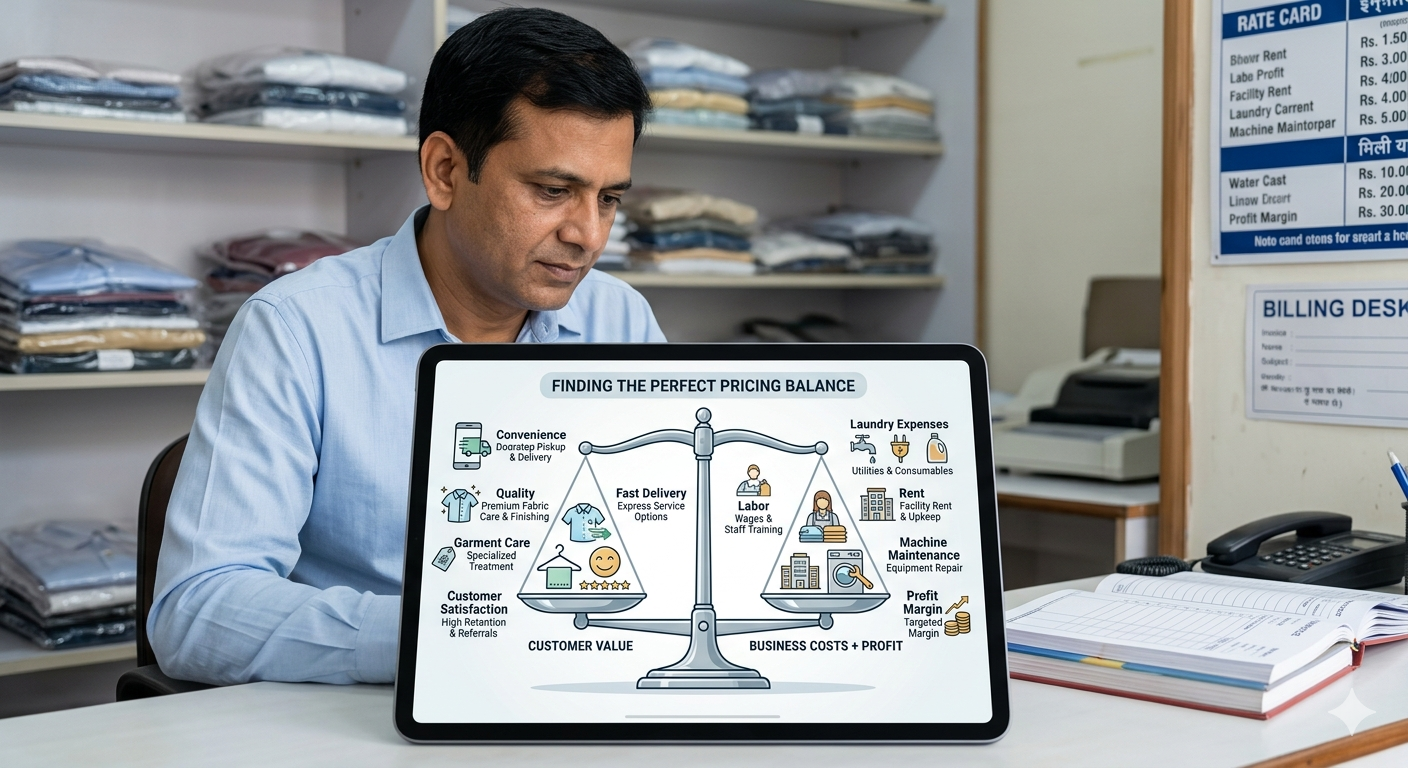
Before you set any price, you need to know your actual cost per item. Most owners skip this step and regret it later.
Start with direct costs per order. Water and electricity bills divided by monthly orders give you utility cost per item. Detergent, softener, and packaging costs are easier to track. Then there's labor. If you're paying staff ₹15,000 monthly and they handle 500 orders, that's ₹30 per order in wages.
Don't forget overhead. Rent, machine maintenance, insurance, and depreciation all add up. A commercial washing machine costs ₹80,000-₹1,50,000 and lasts about 5-7 years. That's roughly ₹1,500-₹2,500 monthly depreciation you should account for.
Here's what surprised one dry cleaner I consulted: delivery costs. He was charging ₹20 for delivery but spending ₹35 in fuel and driver wages per trip. Small leak, but it added up to ₹15,000 monthly losses.
Once you know your total cost per item, add your target profit margin. Most successful laundry businesses work on 30-40% margins on core services. Premium services like dry cleaning or express delivery can go higher.
Building a Flexible Price List That Actually Works
A good price list isn't just a menu. It's a strategic tool.
Start with service categories. Regular wash and fold, dry cleaning, ironing only, express service, and specialty items like curtains or blankets need separate pricing. Each has different costs and customer willingness to pay.
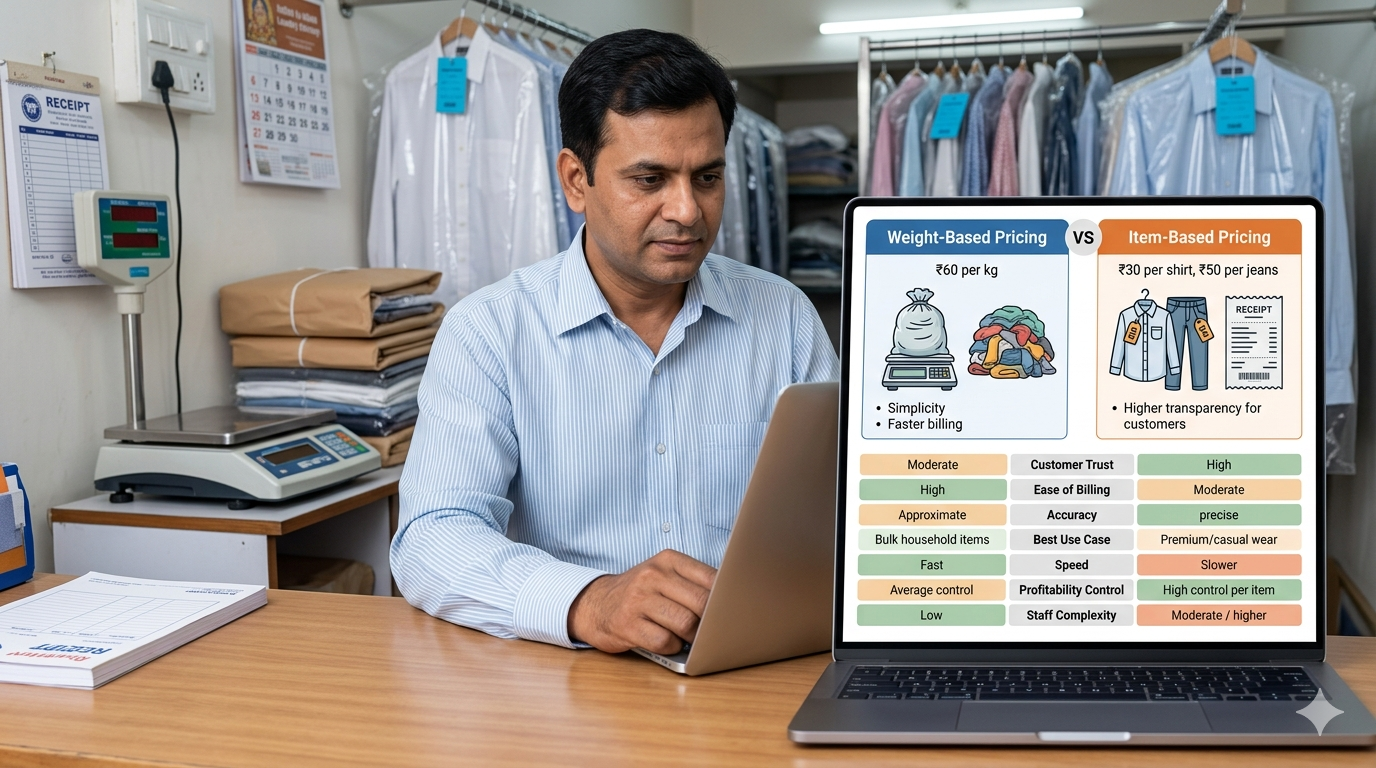
Weight-based versus item-based pricing is a decision you'll face early. Weight-based (₹60 per kg) is simpler but customers don't always trust it. Item-based (₹30 per shirt, ₹50 per jeans) is more transparent but requires detailed tracking. Many shops use a hybrid approach.
Think about price tiers from the start. Regular customers expect some benefit for loyalty. Corporate clients who send 50 shirts weekly deserve better rates than walk-ins. Student accommodations near colleges might need budget packages.
This is where most manual systems fail. Maintaining different price lists for retail, wholesale, corporate, and loyalty customers across paper registers or basic Excel sheets leads to billing errors. Staff forget which customer gets what discount. Arguments happen.
How Customer Segments Change Your Pricing Approach
Not all customers value the same things. Understanding this lets you price strategically.
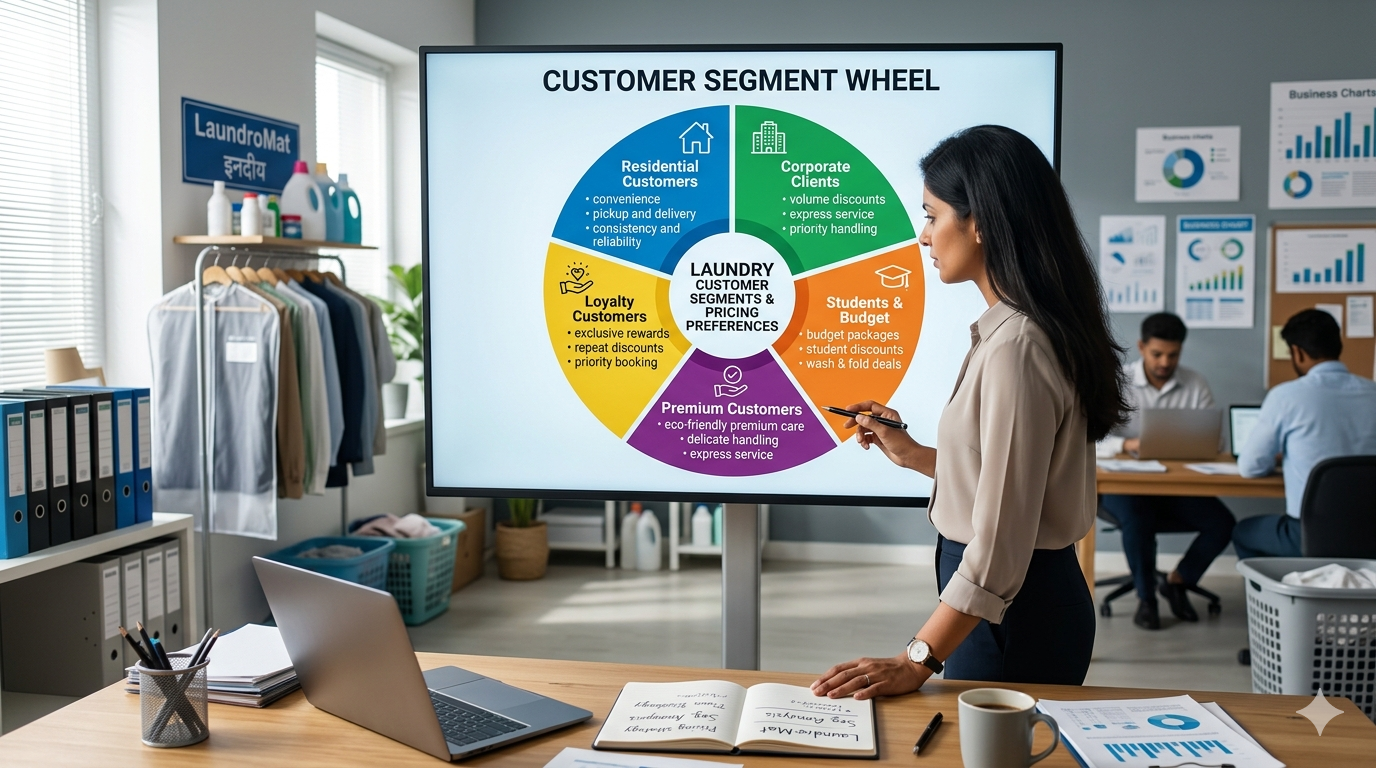
Residential customers care about convenience and quality. They'll pay ₹40 for a shirt if pickup and delivery are smooth and clothes come back perfectly clean. They're less price-sensitive than you think, especially working professionals who value time.
Corporate clients want consistency and volume discounts. Hotels, restaurants, salons—they send regular loads and expect reliability. Your pricing here should reward volume but ensure margins don't disappear. I've seen shops offer 20% corporate discounts and still make better margins than retail because of predictable volume and lower customer acquisition costs.
Students and budget-conscious customers need basic packages. A ₹150 wash-and-fold for 5kg might work where premium pricing won't. Don't ignore this segment. They're volume customers, and many become long-term clients as their income grows.
Premium customers exist in every market. Some people will pay double for same-day service or eco-friendly detergents. Create options for them.
Dynamic Pricing Without Confusing Your Customers
Prices shouldn't be set in stone, but changes need to be handled carefully.
Seasonal pricing makes sense for laundry businesses. Winter months see more heavy clothing and blankets. Summer might be slower. Some shops increase prices 10-15% during peak wedding season when demand spikes. Just communicate it clearly.
Time-based pricing can work too. Offer 15% discounts for off-peak day collection. It smooths your workload and gives budget customers options. Express service at 50-80% premium captures urgent demand without affecting regular pricing.
The biggest challenge is implementing these changes consistently. Manual price lists taped to walls or written in notebooks can't handle dynamic pricing. Staff confusion leads to wrong bills, which leads to customer complaints and lost revenue.
Managing Multiple Price Lists Without Going Crazy
Here's where technology becomes necessary, not optional.
Once you have retail customers, corporate contracts, loyalty members, and special promotions running simultaneously, manual tracking breaks down. You need a Laundry POS Software that manages different price lists automatically.
Good POS systems let you create unlimited customer groups with their own pricing. A corporate client gets their contracted rates automatically when their account is selected. A loyalty member who's crossed ₹10,000 in purchases gets their 10% discount without staff having to remember or calculate it.
This isn't about replacing human judgment. It's about removing friction. Your staff focuses on service quality and customer relationships instead of fumbling with calculators and discount percentages.
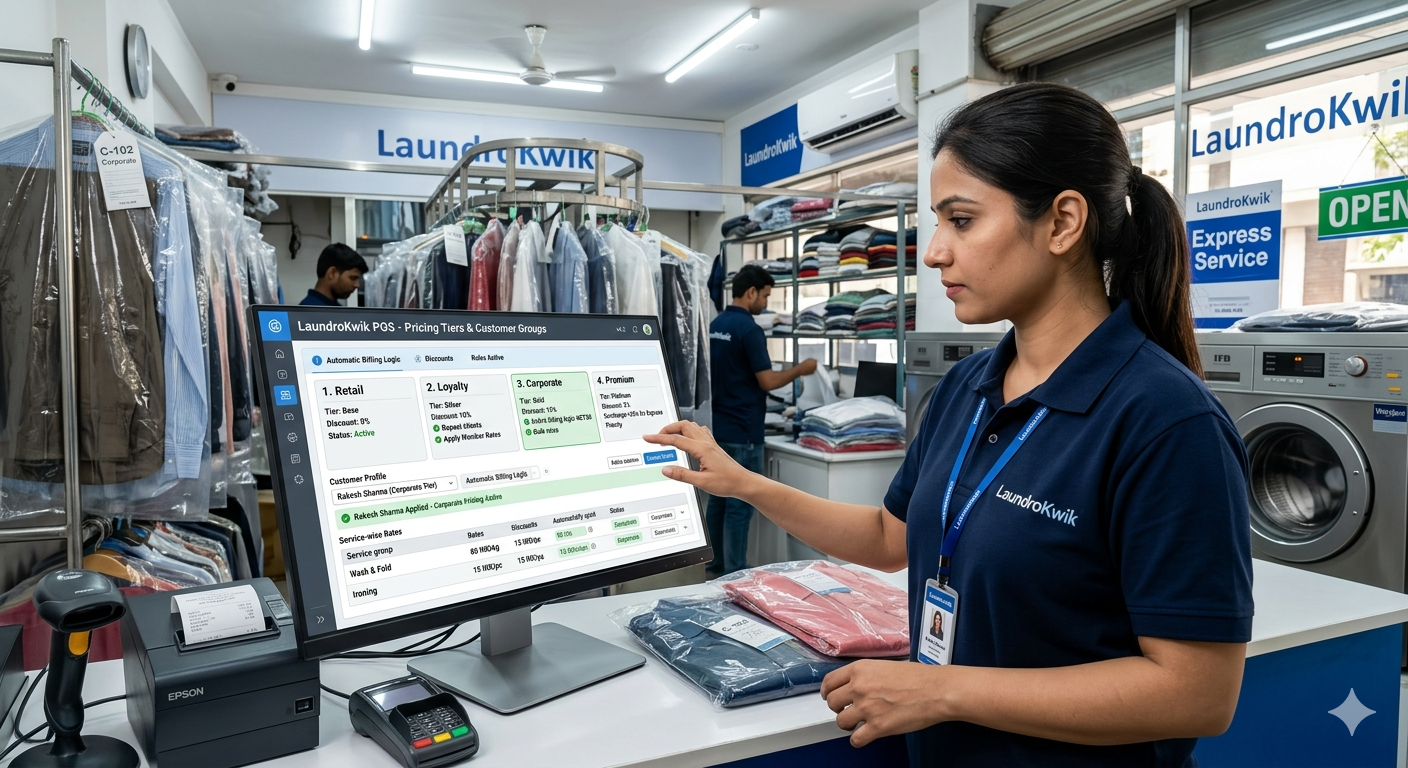
The system should also track pricing effectiveness. Which services have the best margins? Which customer segments are most profitable? Where are you leaving money on the table? You can't optimize what you don't measure.
Ezer Laundry POS System
Streamline your laundry business with our comprehensive POS system. Features include smart billing, garment tracking, WhatsApp notifications, and cloud backup.
Customer Loyalty Discounts That Actually Drive Retention
Loyalty programs sound great in theory. In practice, most laundry shops do them wrong.
Simple punch cards get lost. Verbal promises to regular customers create inconsistency—some staff remember, others don't. Customers feel cheated when their "usual discount" isn't applied.
Automated loyalty tracking solves this. Every purchase automatically accumulates points or moves the customer up tiers. A customer who's spent ₹5,000 graduates from 5% to 10% discount without asking. It happens in the system, shows on their bill, and they feel valued.
Structure your loyalty tiers based on real behavior. Bronze for customers who've done ₹2,000 in business, Silver at ₹5,000, Gold at ₹10,000. Each tier gets incrementally better rates or perks like free pickup-delivery or priority service.
The key is making it automatic. Manual tracking of loyalty discounts is where most shops give up after a few months. It's too much work. But a Laundry POS Software handles it passively. Customer loyalty becomes a competitive advantage instead of an administrative burden.
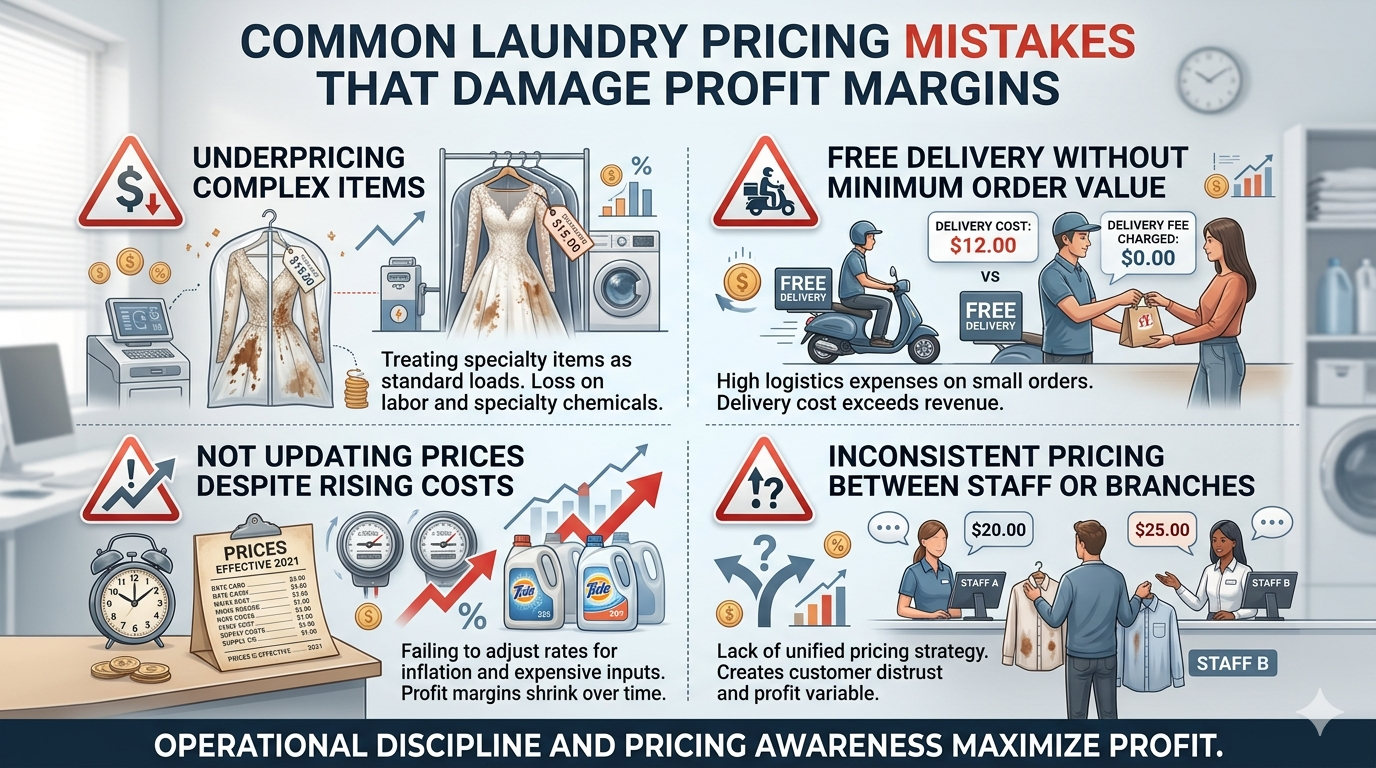
Common Pricing Mistakes That Kill Profit Margins
I've seen these mistakes repeatedly across laundry businesses.
Underpricing complex items is common. That heavily stained tablecloth or delicate saree takes 3x the effort of regular clothes but gets charged the same. Price specialty items properly. If something needs extra care, charge for it.
Ignoring delivery economics hurts many shops. Free delivery sounds customer-friendly but when you're spending ₹30 per trip and not charging anything, you're subsidizing customers who should be paying. Either set minimum order values for free delivery or charge appropriately.
Not updating prices despite cost increases is another killer. Your electricity bill went up 20% this year, detergent costs increased 15%, but your prices are unchanged from 2023. That's a slow profit death.
Inconsistent pricing between staff, branches, or customer types without proper systems creates chaos. One employee charges differently than another. Customers notice and trust erodes.
How to Raise Prices Without Losing Customers
Price increases are inevitable. How you handle them matters.
First, never surprise customers. Announce changes 2-4 weeks in advance. Put up notices, send messages if you have customer contacts, explain briefly on bills. "Due to increased operational costs, prices will be revised from March 1st."
Second, grandfather existing loyalty customers when possible. If someone's been coming to you for three years, a small delayed increase or loyalty discount cushion keeps them happy. It costs you little but builds immense goodwill.
Third, add value when raising prices. If you're increasing rates 10%, maybe introduce free pickup-delivery, better packaging, or faster turnaround. Customers accept price increases more easily when they see improvements.
Use technology to implement increases smoothly. Updating prices across a Laundry POS system takes minutes. Updating paper lists, training all staff, ensuring consistency—that takes days and still has errors.
Setting Up Your Pricing System for Long-Term Success
A sustainable pricing strategy isn't static. It evolves with your business.
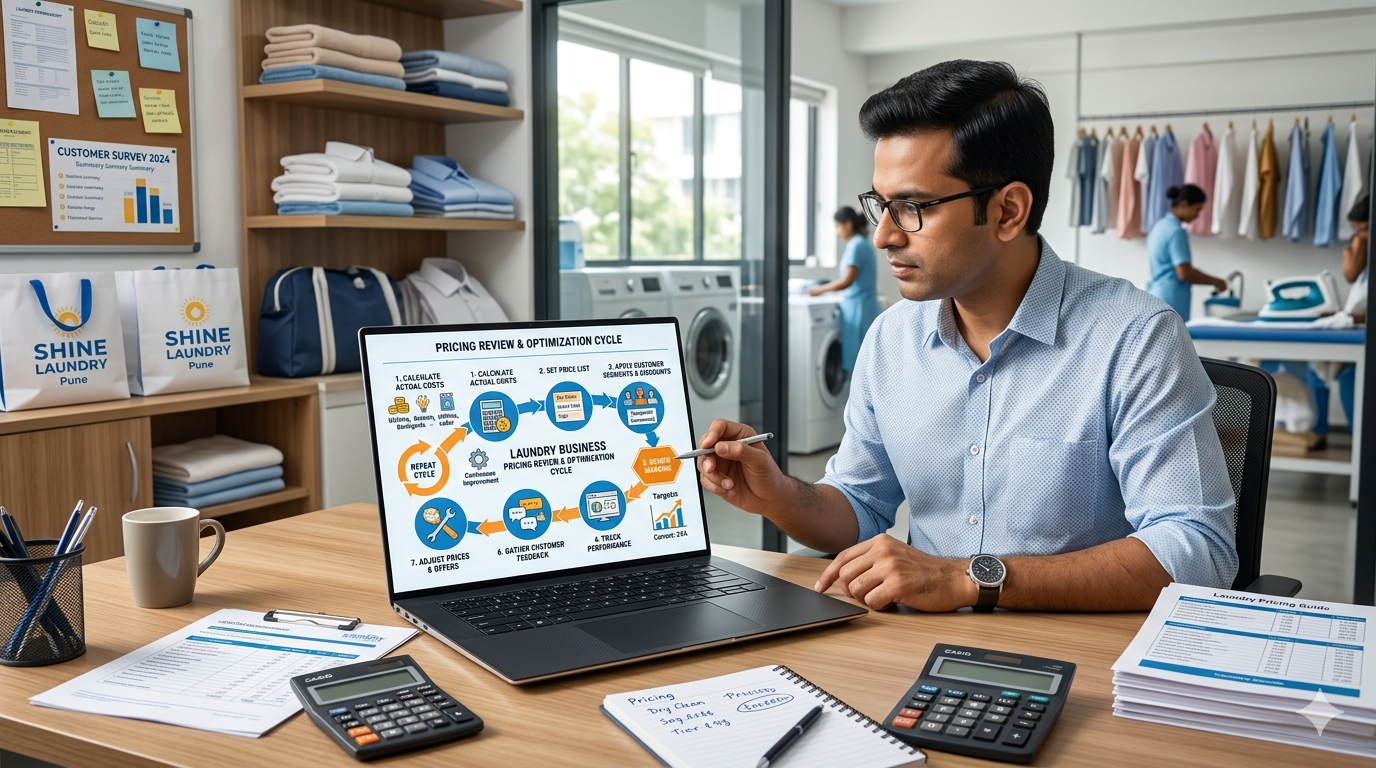
Review your pricing quarterly. Check if costs have changed significantly. See which services are most popular and most profitable. Sometimes you discover you're fully booked for regular service but barely anyone uses express—maybe your express pricing is off.
Track customer feedback on pricing. Not just complaints, but what people ask about. If multiple customers ask for student discounts, there's demand for a budget tier. If corporate clients want weekend service at premium rates, there's an opportunity.
Document everything. Your pricing logic, cost calculations, customer tier structures—all of it should be written down. When you expand to a second branch or hire new managers, they need to understand the system.
Consider software that grows with you. Basic billing apps work for single shops with simple pricing. But if you plan to scale, you need systems that handle multi-branch operations, complex customer hierarchies, and integrated billing from day one.
Technology's Role in Modern Laundry Pricing Management
Manual pricing management has hard limits. Once you cross 30-40 orders daily or have more than 3-4 customer types, you need automation.
Modern Laundry POS Software does more than just billing. It manages your entire pricing architecture. Create seasonal rates, loyalty tiers, corporate contracts, and promotional discounts—all in one place. Staff just select the customer and correct prices apply automatically.
The best systems integrate pricing with inventory. When you're low on premium detergent, the system can alert you before you commit to jobs requiring it. When a machine is down, you can temporarily adjust capacity-based pricing without chaos.
Mobile apps extend this further. Customers can see pricing, place orders, and track status. Price transparency builds trust. Automated quotes for bulk or specialty items save time.
Multi-branch pricing is where software becomes essential. Maintaining consistent yet flexible pricing across locations manually is nearly impossible. Central pricing control with local override permissions gives you the best of both worlds.

Reports matter too. Which price points drive maximum revenue? Which customer segments have the best lifetime value? Which services subsidize others? Data-driven pricing beats guesswork every time.
FAQs
How do I calculate the right profit margin for my laundry business?
Start by calculating your total cost per item including direct costs (water, electricity, detergent, labor) and overhead (rent, depreciation, maintenance). Add 30-40% margin for regular services. Premium services like dry cleaning or express delivery can carry 50-60% margins. Track actual profitability monthly and adjust if margins compress.
Should I offer discounts to compete with nearby laundry shops?
Only if you can afford it without killing margins. Instead of blanket discounts, compete on service quality, convenience, and reliability. Use targeted discounts for specific customer segments (corporate, loyalty) rather than across-the-board price cuts. Automated loyalty systems let you reward regular customers without eroding overall pricing.
How often should I update my laundry service prices?
Review pricing quarterly but only update when cost changes justify it. Small fluctuations don't need immediate adjustments. If input costs increase 10-15% or market conditions shift significantly, update prices with 2-4 weeks notice to customers. Annual price reviews are minimum.
What's the best way to manage different pricing for different customer types?
Use a Laundry POS Software that supports customer groups and automated pricing tiers. Manual tracking through notebooks or basic registers leads to errors and inconsistency. Digital systems apply correct rates automatically based on customer profile—retail, corporate, loyalty tier, or promotional segments.
Can I charge different prices at different branches of my laundry business?
Yes, if local costs or market conditions vary significantly. Commercial areas might support higher pricing than residential neighborhoods. However, brand consistency matters. Use centralized pricing management software that allows location-based variations while maintaining overall control and preventing excessive deviation.
How do I introduce loyalty discounts without reducing overall revenue?
Structure loyalty programs as incremental benefits for high-value customers rather than blanket discounts. For example, 5% off after ₹5,000 spent, 10% off after ₹10,000. Automated systems track this passively. The discount cost is offset by increased customer retention and higher lifetime value. Focus loyalty benefits on customers already spending significantly.
What pricing strategy works best for new laundry businesses?
Start with competitive but sustainable pricing—don't undercut severely. Focus on 2-3 customer segments initially (residential, small corporate/salon). Keep pricing simple until you understand your actual costs and customer behavior. Add complexity (loyalty tiers, seasonal pricing) after 6-12 months when you have data to guide decisions.
Conclusion
Pricing your laundry services isn't about picking random numbers or copying competitors. It's about understanding your real costs, recognizing what different customers value, and building systems that let you manage complexity without drowning in administrative work.
The shops that thrive long-term are those that treat pricing as a strategic tool, not a fixed menu. They know their numbers, use technology to handle multiple customer segments and pricing tiers automatically, and adjust based on data rather than guesses.
If you're still managing pricing through paper lists and manual calculations, you're limiting your growth. Modern Laundry POS Software eliminates the friction, letting you focus on serving customers instead of fixing billing errors.
Ready to see how automated pricing management can transform your laundry business? Explore how the right system can handle complex pricing, customer loyalty, and multi-branch operations without the headaches.
How to Start Your Laundry Business in 2026: Complete Guide
7 Critical Mistakes to Avoid When Starting a Laundry Business in 2026