
Laundry Shop Setup Cost Calculator: Complete Budget Guide 2026
Starting a laundry business sounds straightforward until you sit down to calculate actual costs. Most first-time owners underestimate expenses by 30-40%, which creates cash flow problems within the first six months. Whether you're planning a small neighborhood shop or a multi-branch operation, understanding your complete setup cost upfront helps you avoid surprises later. This guide breaks down every expense category, hidden costs, and shows you how to build a realistic budget for your laundry shop in 2026.
Understanding Your Laundry Shop Setup Budget
The total investment for a laundry business varies dramatically based on location, scale, and service type. A basic dry-cleaning shop in a tier-2 city might cost ₹8-12 lakhs, while a full-service laundry with delivery in metro areas can exceed ₹25 lakhs.
Your budget should account for one-time setup costs and working capital for at least three months. Many owners focus only on equipment and rent, forgetting about licensing, marketing, and operational buffer. This is where businesses struggle early on.
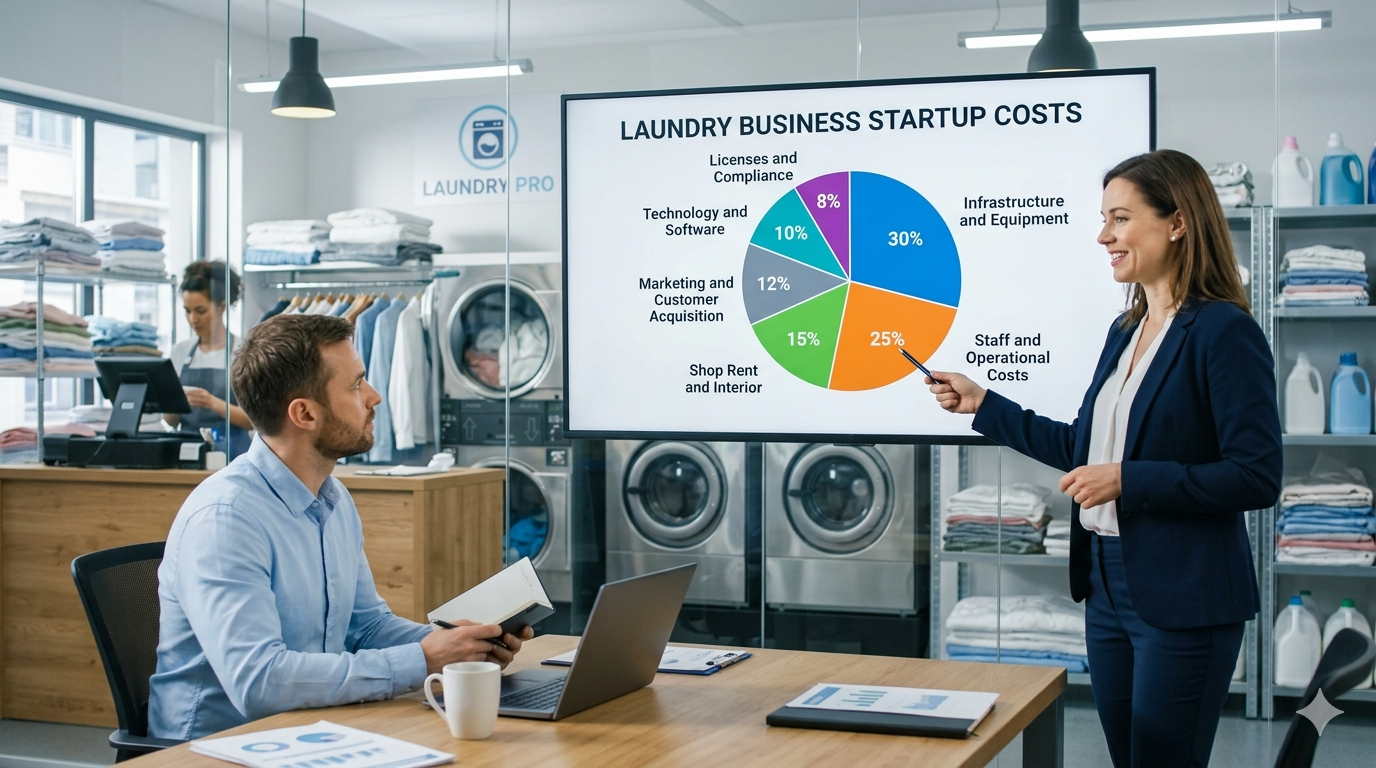
Think of your budget in four main buckets: infrastructure (shop setup and equipment), operations (staff and inventory), technology (billing and management systems), and marketing (customer acquisition). Each category has both obvious and hidden costs.
Infrastructure Costs: Space and Equipment
Shop Rental and Interior Setup
Rental deposits typically require 6-10 months advance in metro cities, sometimes more. A 400-600 sq ft space suitable for a laundry shop costs ₹15,000-40,000 monthly depending on location. Factor in ₹1.5-3 lakhs just for securing the space.
Interior work includes flooring (tile or epoxy for water resistance), plumbing modifications, electrical wiring for heavy machinery, ventilation systems, and basic fixtures. Budget ₹2-4 lakhs for a professional setup. Cutting corners here creates maintenance headaches later.
Don't forget signage, storage shelving, customer waiting area furniture, and safety equipment. These "small" items add up to ₹50,000-1 lakh quickly.
Laundry Equipment and Machinery
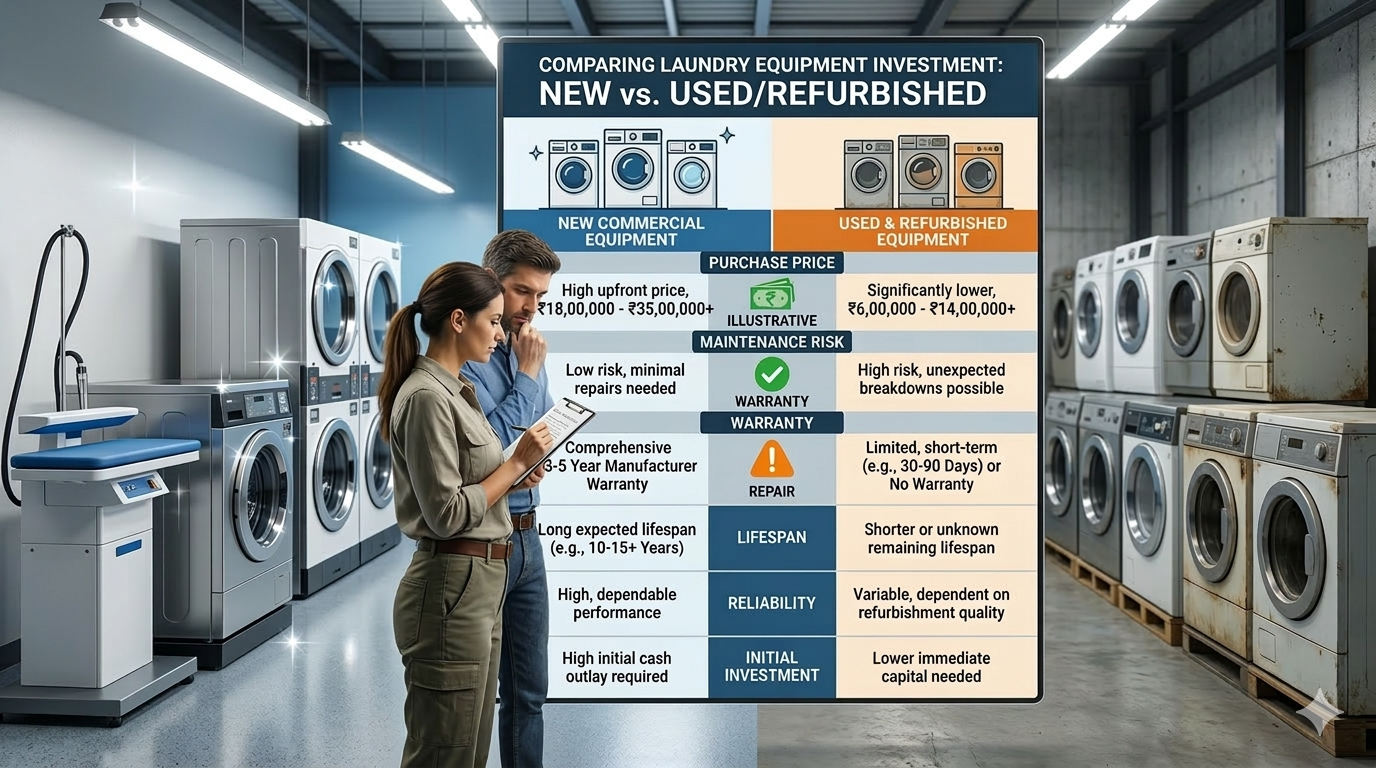
This is your biggest expense. A commercial washing machine (8-10 kg capacity) costs ₹80,000-1.5 lakhs. You'll need at least two for reasonable capacity. Industrial dryers run ₹70,000-1.2 lakhs each.
Dry cleaning machines are expensive—₹3-5 lakhs for a basic hydrocarbon or PERC machine. Steam presses and boilers cost another ₹40,000-80,000. Ironing tables, packaging equipment, and garment racks add ₹30,000-50,000.
Total equipment cost for a mid-sized shop: ₹6-12 lakhs. Buying used equipment saves money but increases breakdown risk. Most owners mix new and refurbished machines strategically.
Operational Running Costs
Staffing and Labor Expenses
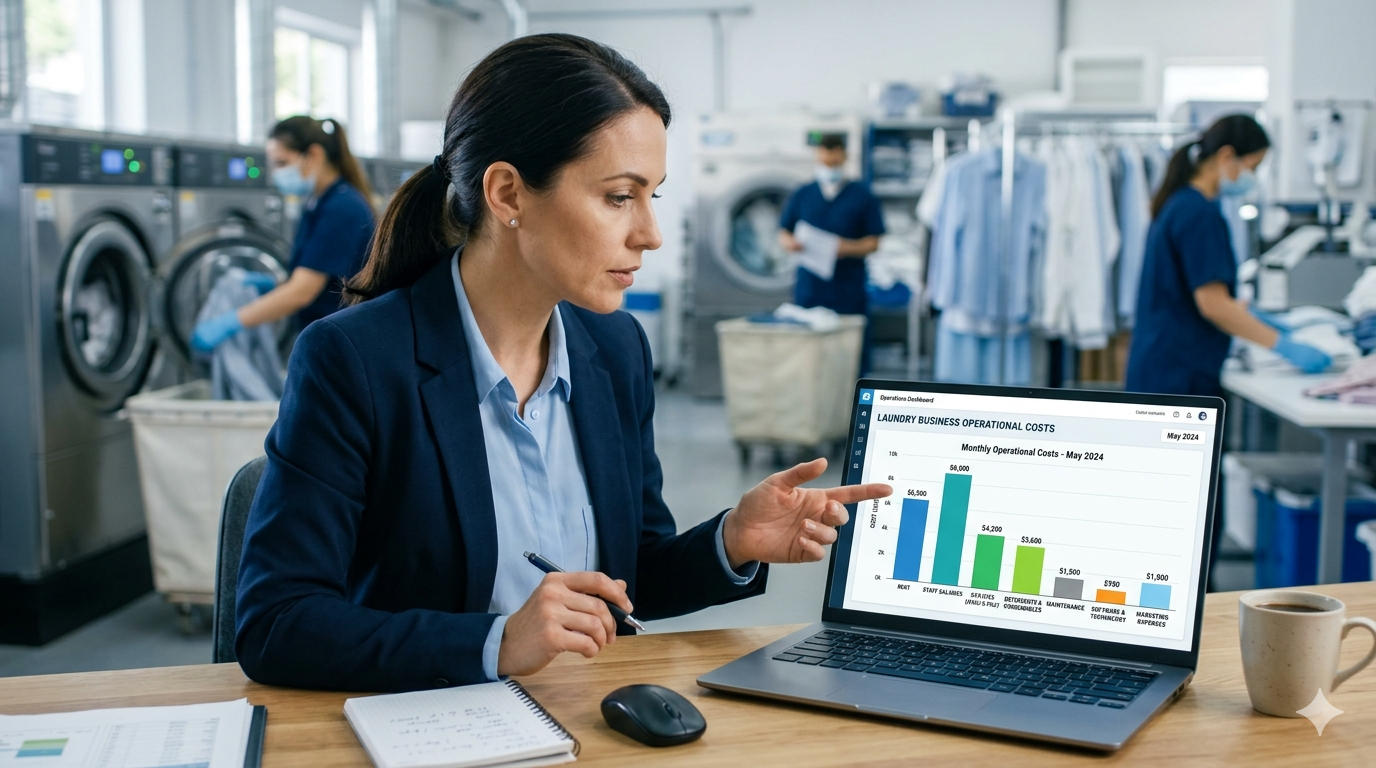
You'll need at least 2-3 people initially: one for front desk and billing, one or two for operations. Monthly wages vary—₹12,000-18,000 for helpers, ₹15,000-25,000 for experienced operators in cities. Add 10-15% for PF and other benefits if you're following labor regulations properly.
Delivery personnel add another ₹12,000-15,000 monthly if you offer pickup and drop services. Most shops start with outsourced delivery to reduce fixed costs.
Staff dependency is a real issue in this business. Train at least two people on every critical task. When your best operator doesn't show up, you should still function.
Utilities and Consumables
Water and electricity bills are substantial. A busy laundry shop uses 3,000-5,000 liters daily and consumes 400-600 units of electricity monthly. That's ₹8,000-15,000 combined in most cities.
Detergents, fabric softeners, dry cleaning solvents, starch, and packaging materials cost ₹20,000-35,000 monthly depending on volume. Buy in bulk once you understand your consumption pattern.
Maintenance and repairs are unpredictable. Set aside ₹5,000-10,000 monthly. Machines break down, plumbing leaks, and small issues pile up fast.
Licensing, Registration, and Legal Costs
Business registration (proprietorship or partnership) costs ₹5,000-15,000 depending on structure. GST registration is mandatory if your turnover exceeds ₹20 lakhs annually (₹10 lakhs for special category states). Professional CA fees for this: ₹3,000-8,000.
Trade license from municipal corporation: ₹2,000-5,000. Fire NOC and pollution clearance (especially for dry cleaning): ₹5,000-15,000. Shop and establishment registration: ₹2,000-4,000.
Insurance for equipment and premises is often overlooked but crucial. Budget ₹15,000-30,000 annually. When a washing machine worth ₹1.2 lakhs breaks down due to voltage fluctuation, insurance coverage makes sense.
Total legal and compliance costs: ₹35,000-75,000 initially, with annual renewals costing ₹10,000-20,000.
How to Start Your Laundry Business in 2026: Complete Guide
Technology Investment: Laundry POS Software
Manual billing with receipt books might seem cheaper initially, but it creates serious problems as you grow. Misplaced orders, billing errors, no customer history, difficulty tracking deliveries—these issues directly impact revenue and reputation.
Modern laundry POS software handles billing with GST compliance, order tracking, customer database management, SMS notifications, and delivery coordination from one system. Cloud-based options mean you can check business status from anywhere.
Pricing varies widely. Basic systems start at ₹5,000-10,000 one-time or ₹500-1,500 monthly subscription. Comprehensive platforms with mobile apps, multi-branch support, and inventory management cost ₹15,000-40,000 annually.
The ROI is clear: reduce billing mistakes (which cost you money), improve delivery tracking (which improves customer satisfaction), and access data for better decisions. A customer database alone is worth the investment—repeat customers are your profit engine.
Look for software that includes customer tagging (VIP customers, corporate clients), pricing schemes, expense tracking, and staff performance reports. These features directly impact how efficiently you run operations.
Ezer Laundry POS System
Streamline your laundry business with our comprehensive POS system. Features include smart billing, garment tracking, WhatsApp notifications, and cloud backup.
Marketing and Customer Acquisition Costs
Your first customers are the hardest to acquire. Budget ₹30,000-60,000 for initial marketing across three months. This covers pamphlet distribution in nearby societies, local newspaper ads, Google My Business optimization, and opening offers.
Digital marketing is increasingly important. A simple website costs ₹8,000-15,000. Running targeted Facebook and Instagram ads in your locality: ₹5,000-10,000 monthly initially. WhatsApp Business is free and highly effective for repeat orders and customer communication.
Partnerships with residential societies, offices, and hotels require relationship building but minimal investment. Offer them better rates or dedicated service, and you have consistent volume.
Discount during launch is necessary but be careful. A "50% off on first order" attracts customers but sets wrong price expectations. Consider "free pickup and delivery" or "express service at regular rates" instead.
Customer retention is cheaper than acquisition. A simple loyalty program (10th wash free, birthday discount) costs nothing to implement but improves repeat business significantly.
7 Critical Mistakes to Avoid When Starting a Laundry Business in 2026
Hidden Costs Most Owners Miss
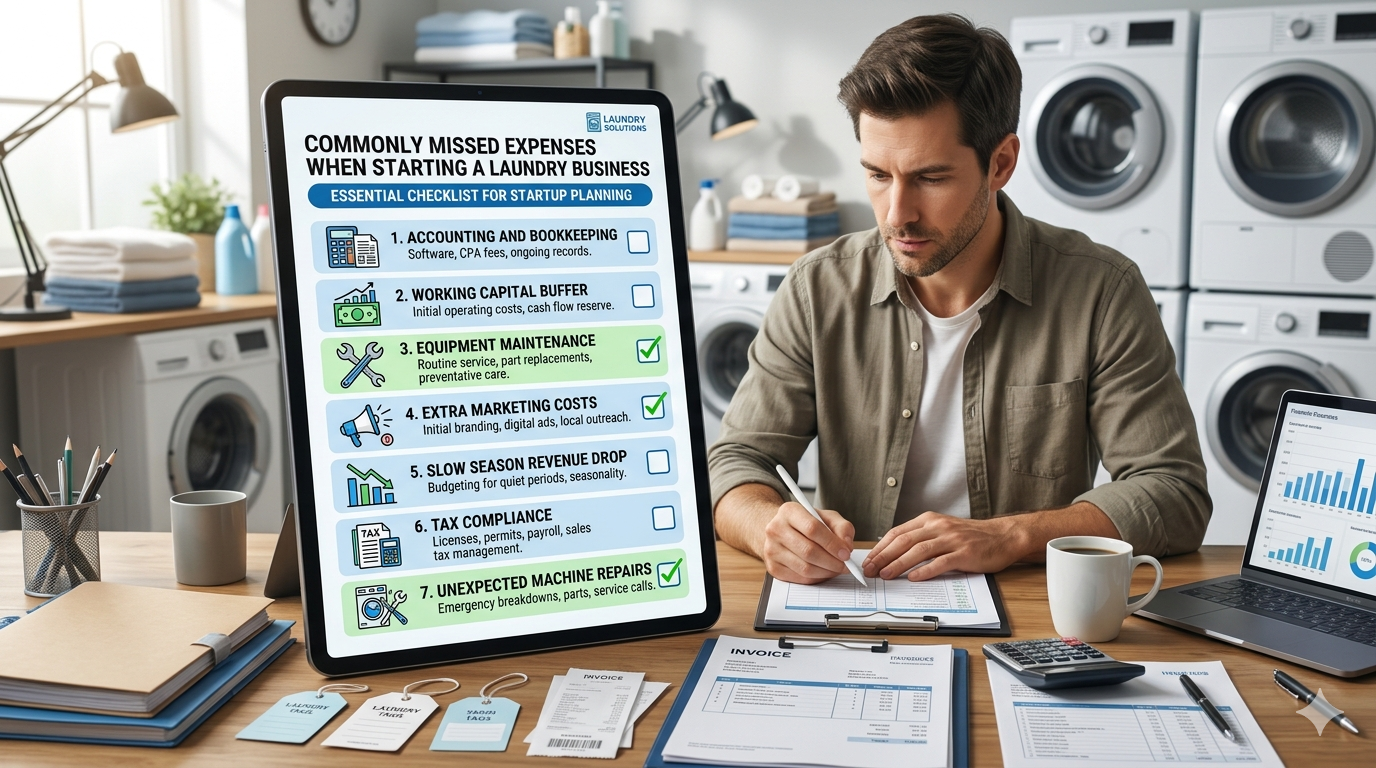
Accounting and bookkeeping seems minor until tax filing deadline. Either learn basic accounting or hire someone for ₹3,000-5,000 monthly. Mess this up and you'll pay more in penalties or wrong tax calculations.
Working capital for slow months—June to September typically sees 20-30% drop in dry cleaning volume in many regions. You still pay rent, salaries, and utilities. Keep cash buffer for 2-3 slow months.
Replacement and upgrade costs. Equipment doesn't last forever. Industrial washers need major servicing every 18-24 months. Dryer heating elements fail. Budget for these expenses or face sudden cash crunches.
Customer acquisition cost in competitive areas exceeds expectations. If you're opening near two existing laundries, you'll spend more on marketing to stand out. Factor this in location-specific budgets.
Building Your Custom Cost Calculator
Start with location-specific variables. Rent, labor costs, and utility rates vary dramatically between tier-1, tier-2, and tier-3 cities. A shop in Mumbai needs ₹20+ lakhs while the same setup in Indore might cost ₹10-12 lakhs.
List every expense category with minimum and maximum estimates. Add 15-20% contingency buffer. Businesses rarely come in under budget but often exceed it.
Separate one-time setup costs from monthly operational expenses. Calculate your breakeven point—how many orders daily to cover monthly costs and when you'll recover initial investment. Most laundry shops break even in 12-18 months with steady customer acquisition.
Consider phased expansion. Start with washing and ironing only, add dry cleaning after six months when cash flow stabilizes. This reduces initial investment and lets you learn the business before committing fully.
Service pricing directly impacts your budget sustainability. If your costs require ₹40 per kg to break even but market rate is ₹35, you have a problem. Research local pricing before finalizing your budget.
Common Budget Mistakes to Avoid
Underestimating marketing needs is the top mistake. "Location is good, customers will come automatically" rarely works. Budget properly for customer acquisition or accept slower growth.
Buying all premium equipment initially sounds good but strains cash flow. Mix strategic purchases—invest in reliable washing machines and dryers (your workhorses) but start with basic pressing and packaging equipment.
Ignoring technology investment until problems appear costs more long-term. Implementing a POS system after one year of manual operation means migrating messy data, changing staff habits, and dealing with customer confusion.
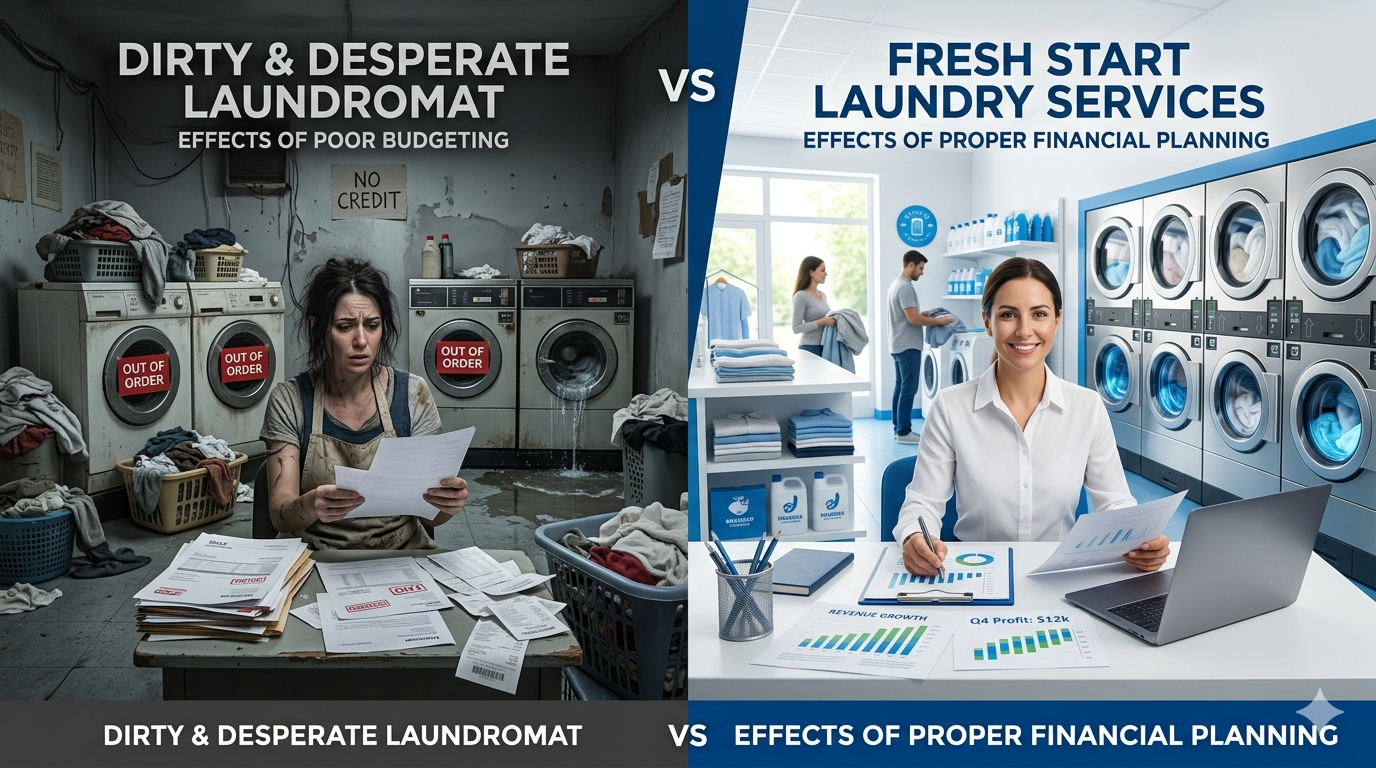
No emergency fund means one equipment breakdown or slow month creates crisis. Keep at least ₹1-2 lakhs accessible for unexpected expenses.
Overestimating initial revenue is dangerous. Even with good marketing, building customer base takes 3-6 months. Your budget should assume lower initial revenue, not optimistic projections.
How Technology Reduces Long-term Costs
A proper laundry POS software isn't just about billing. It reduces operational costs in multiple ways that manual systems can't match.
Order tracking eliminates "lost garment" situations which require compensation. Customer history prevents pricing disputes. Automated SMS reminders reduce no-shows for pickup, improving delivery efficiency.
Inventory management for consumables prevents overstocking and wastage. You know exactly when to reorder detergents or packaging materials based on usage patterns, not guesswork.
Staff performance tracking helps identify training needs and optimize shift allocation. Data on peak hours, busy days, and service type distribution guides better resource planning.
Multi-branch management becomes feasible when everything is centralized. Owners running 2-3 locations can monitor all shops from one dashboard, compare performance, and make data-driven decisions.
The monthly cost of good software (₹1,000-2,500) is recovered easily by preventing just 2-3 billing errors or lost orders. Everything beyond that is pure efficiency gain.
How to Start Your Laundry Business in 2026: Complete Guide
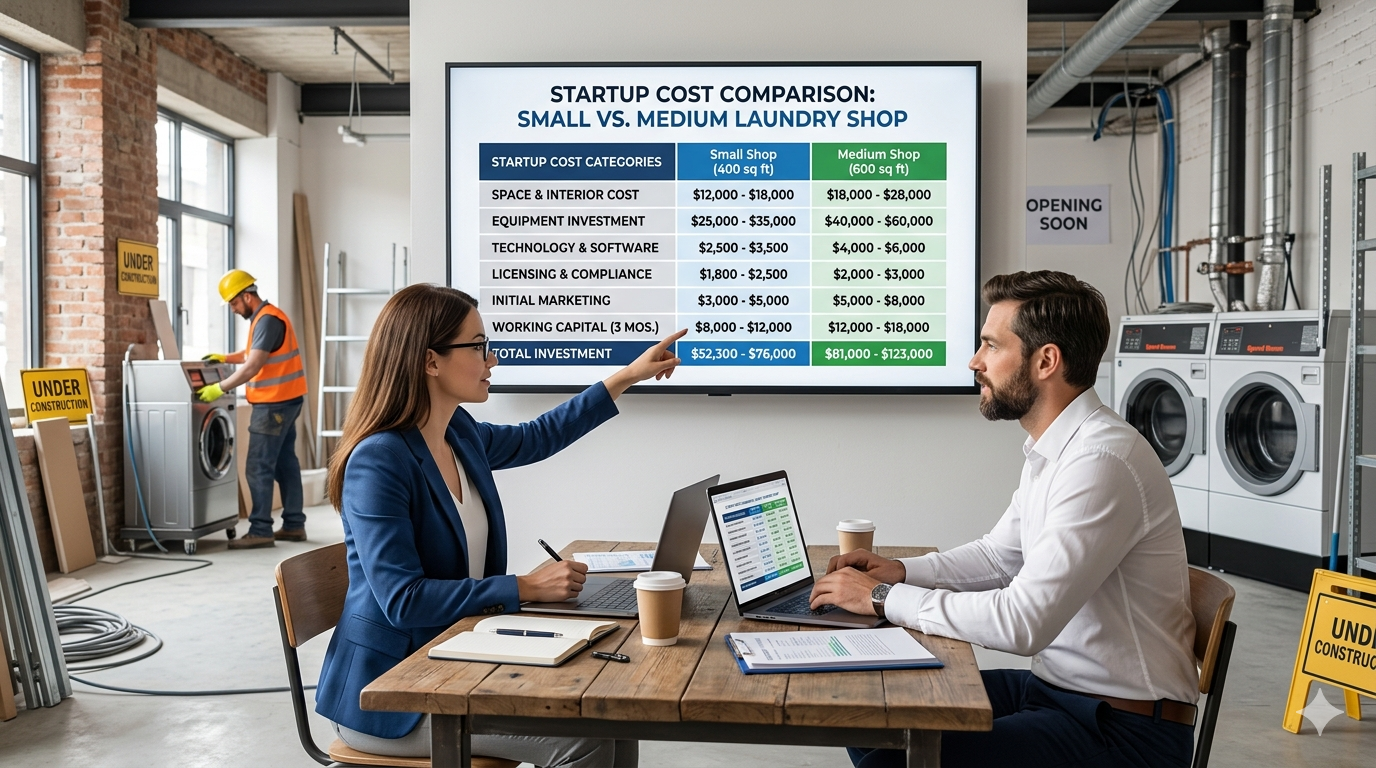
Sample Budget Breakdown: Small vs Medium Shop
Small Shop Setup (400 sq ft, basic services):
- Space & interior: ₹3.5 lakhs
- Equipment: ₹5.5 lakhs
- Technology: ₹15,000
- Licensing: ₹40,000
- Initial marketing: ₹35,000
- Working capital: ₹1.5 lakhs
- Total: ₹11.5-12 lakhs
Medium Shop Setup (600 sq ft, full services including dry cleaning):
- Space & interior: ₹5.5 lakhs
- Equipment: ₹10 lakhs
- Technology: ₹30,000
- Licensing: ₹65,000
- Initial marketing: ₹50,000
- Working capital: ₹3 lakhs
- Total: ₹19.5-20 lakhs
These are baseline estimates. Add 15-20% for metro cities, reduce 10-15% for tier-3 towns. Your actual costs depend on specific choices around equipment quality, interior finishes, and service scope.
Financing Options for Your Laundry Business
Most banks offer MSME loans for laundry businesses. Interest rates range from 9-13% annually. You'll need to show business plan, projected revenue, and personal creditworthiness. Loan approval takes 3-6 weeks typically.
Mudra loans under PMMY scheme cover businesses needing up to ₹10 lakhs (Shishu category) or ₹10 lakhs to ₹5 crore (Kishore and Tarun categories). Process is simpler than traditional business loans but still requires documentation.
Equipment financing from suppliers or specialized NBFCs lets you pay for machines over 12-36 months. Interest rates are higher (14-18%) but eases initial cash requirement. Calculate total interest cost before committing.
Self-funding gives you complete control but ties up your savings. Consider partial self-funding with working capital loan backup. Starting with ₹8 lakhs own money and ₹4 lakh loan is less risky than either extreme.
Whatever your financing mix, ensure monthly EMI doesn't exceed 30% of projected revenue. High debt servicing kills profitability even in otherwise viable businesses.
Measuring ROI and Adjusting Your Budget
Track these metrics from day one: daily order count, average order value, customer acquisition cost, and repeat customer percentage. These numbers tell you if your budget allocations are working.
Most laundry shops see 15-25% monthly revenue growth in first year if customer acquisition is steady. Beyond year one, growth slows but profitability improves as fixed costs are distributed over higher volume.
If customer acquisition cost exceeds ₹200 per customer and average customer lifetime value is only ₹800-1000, your marketing budget needs rethinking. Shift from broad advertising to targeted society partnerships or referral programs.
Review your budget quarterly, not annually. Markets change, competition appears, and opportunities emerge. A rigid annual budget prevents you from capitalizing on these dynamics.
Technology investment ROI is clearest in time saved. If your staff spends 2 hours daily on manual billing and coordination, that's 60 hours monthly. At ₹200/hour labor cost, you're spending ₹12,000 on admin work. A ₹2,000/month software that cuts this to 30 minutes daily saves you real money.
FAQs
What is the minimum investment needed to start a small laundry shop in India?
A basic laundry shop offering washing and ironing services requires ₹8-12 lakhs total investment in tier-2/tier-3 cities. This includes shop setup (₹3-4 lakhs), equipment (₹4-6 lakhs), licensing and initial marketing (₹50,000-1 lakh), and working capital for 2-3 months. Metro cities require 20-30% higher investment due to rental deposits and higher interior costs.
How much monthly revenue can a laundry shop generate?
A small neighborhood laundry handling 15-25 orders daily generates ₹1.5-2.5 lakhs monthly revenue with average order value of ₹250-300. Medium-sized shops with delivery services and 40-60 daily orders can reach ₹4-6 lakhs monthly. Revenue depends heavily on location, service quality, pricing, and customer retention. First 3-4 months typically see lower revenue during customer base building.
Is laundry POS software really necessary for small shops?
While not legally mandatory, POS software prevents costly mistakes that manual billing creates. Order tracking errors, billing disputes, lost customer data, and delivery coordination issues directly impact revenue and reputation. Even basic cloud software (₹500-1,500 monthly) pays for itself by preventing 2-3 lost orders or billing mistakes. It becomes essential once you cross 10-15 orders daily or offer delivery services.
What are the ongoing monthly expenses for running a laundry shop?
Typical monthly operational costs include rent (₹15,000-40,000), staff salaries (₹30,000-60,000 for 2-3 people), utilities (₹10,000-18,000), consumables like detergent and packaging (₹20,000-35,000), maintenance (₹5,000-10,000), and software subscription if applicable (₹1,000-2,500). Total operating expenses range from ₹85,000-1.7 lakhs monthly depending on shop size and location. Marketing and accounting add another ₹8,000-15,000.
How long does it take for a laundry business to become profitable?
Most laundry shops break even in 12-18 months with consistent customer acquisition and good operational management. Initial months see low revenue as you build customer base, but costs remain fixed. Profitability accelerates after crossing 25-30 orders daily as fixed costs get distributed over higher volume. Location, competition, service quality, and marketing effectiveness significantly impact this timeline. Shops in residential areas with limited competition achieve profitability faster.
Should I buy new or used laundry equipment to reduce costs?
Mix strategic purchases for best results. Invest in new washing machines and dryers (your primary workhorses) for reliability and warranty protection. Consider refurbished pressing equipment, ironing tables, and packaging machines where quality impact is lower. Used commercial washers from reputed sellers save 30-40% but check service history thoroughly. Factor in potentially higher maintenance costs. Complete new equipment setup costs ₹8-12 lakhs while mixed approach reduces this to ₹5-8 lakhs.
What hidden costs should I prepare for when starting a laundry business?
Often-missed expenses include higher-than-expected rental deposits (6-10 months), plumbing and electrical modifications for heavy machinery (₹30,000-60,000), pollution clearance and fire NOC for dry cleaning (₹5,000-15,000), accounting and tax compliance (₹3,000-5,000 monthly), customer acquisition in competitive areas (₹40,000-80,000 in first 3 months), and equipment servicing after warranty expires. Keep 15-20% contingency buffer beyond planned budget to handle these surprises.
Conclusion
Starting a laundry business requires realistic budgeting that accounts for both obvious and hidden costs. Your total investment varies from ₹8-12 lakhs for a small shop to ₹20-25 lakhs for a comprehensive operation, depending on location, scale, and service scope.
Focus your budget on reliable equipment, practical interior setup, and sufficient working capital for slow initial months. Don't skip technology investment—a good laundry POS software prevents operational issues that cost far more than the subscription. Marketing and customer acquisition need dedicated budget allocation, not leftover funds.
The shops that succeed plan for realistic revenue timelines, maintain cash buffers for unexpected expenses, and track metrics to adjust spending based on actual business performance. Calculate your specific costs based on your location, research local competition thoroughly, and build in contingency planning.
Ready to streamline your laundry business operations from day one? Explore how modern laundry management software can reduce operational costs, improve customer satisfaction, and help you scale efficiently. Book a free demo to see how the right technology fits into your budget and business plan.