
Online Laundry Business Model: How It Works & Why It Scales
Running a laundry shop used to mean waiting for walk-ins, managing handwritten bills, and hoping customers remember to come back. That model still works, but it leaves money on the table. The online laundry business model flips this—customers order from their phones, you handle logistics, and repeat business becomes automatic. This guide breaks down how it actually works, what it costs to set up, and whether it makes sense for your business right now.
What Is an Online Laundry Business Model?
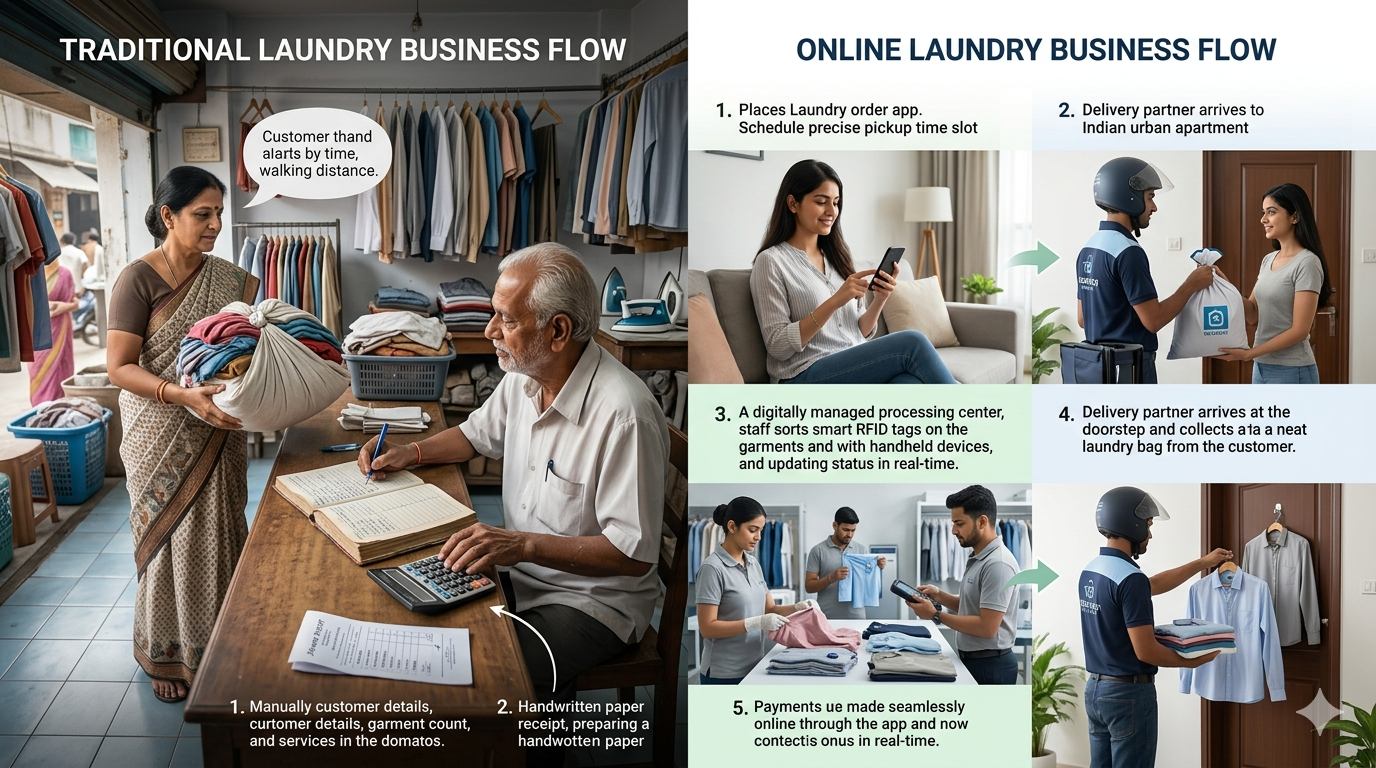
An online laundry business lets customers book services through a website or mobile app instead of visiting your shop. They schedule pickups, track orders, make payments digitally, and get doorstep delivery. You run the same washing and ironing operations, but customer interaction happens online.
This isn't about replacing your physical shop. Most successful setups combine both—existing customers still walk in, while new ones discover you online. The model works particularly well in urban areas where people value convenience over cost savings.
The key difference from traditional operations: you control the customer relationship through technology, not just face-to-face interactions. This means better data on buying patterns, automated reminders, and the ability to serve customers outside your immediate neighborhood.
How the Online Laundry Model Actually Works
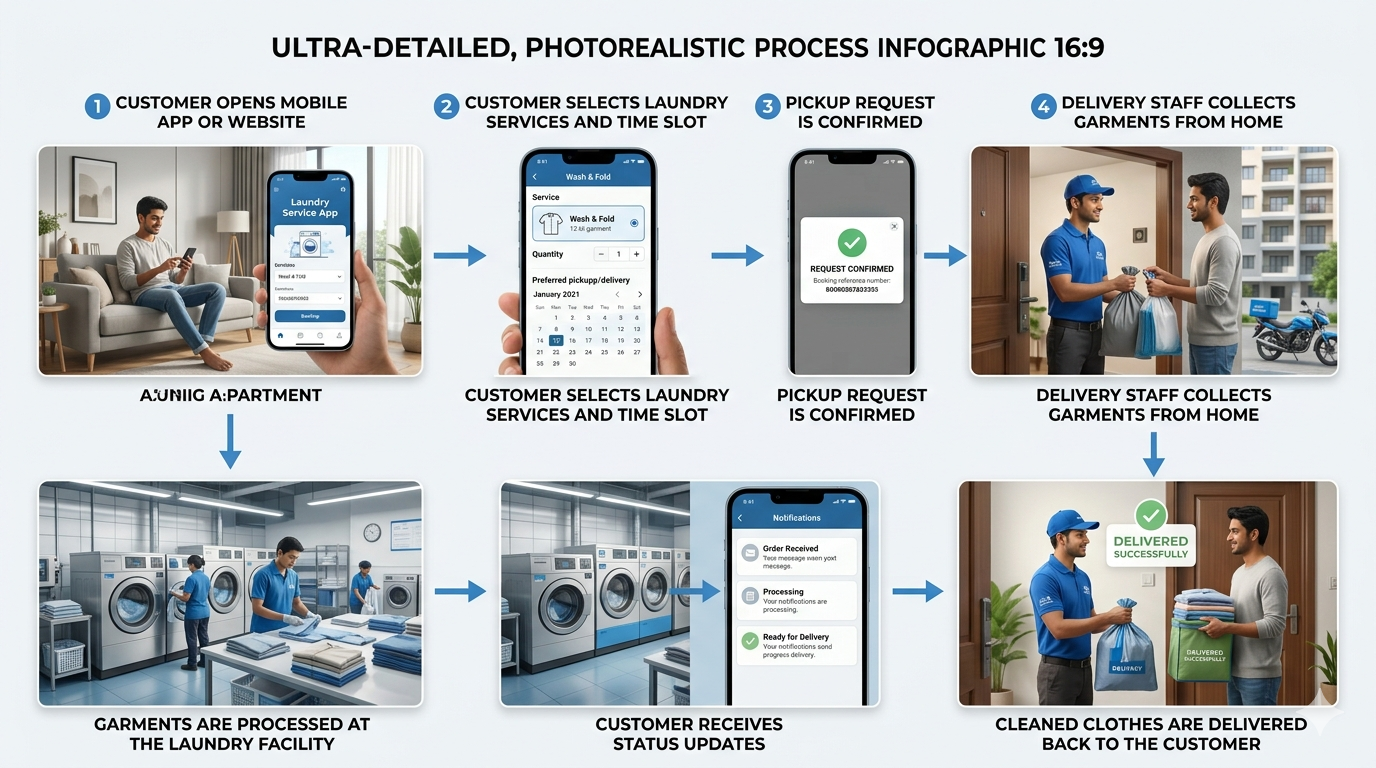
The operational flow is straightforward. A customer opens your app or website, selects services (wash & fold, dry cleaning, ironing), picks a time slot, and confirms the order. Your delivery person collects clothes from their address, brings them to your facility, and returns them cleaned within the promised timeframe.
Behind the scenes, you need three components working together. First, a digital platform where orders come in. Second, a logistics system for pickup and delivery. Third, your actual cleaning operations with proper tracking so items don't get mixed up between customers.
Payment happens online, though many Indian customers still prefer cash on delivery initially. The smart approach is offering both until digital payments become the norm in your area. WhatsApp integration helps too—many shop owners find customers comfortable placing orders through WhatsApp Business rather than downloading a new app.
Order Management Process
When an order arrives, it gets a unique ID. Items are counted, tagged, and entered into your system. This prevents the "where's my blue shirt?" problem that kills trust. Each piece gets a barcode or QR tag linking it to the customer's order.
Processing follows your standard workflow, but with time tracking. If you promised 24-hour delivery, the system should alert you when orders risk running late. Good software shows you the entire production pipeline—what's being washed, what's in drying, what's ready for delivery.
The delivery person picks up completed orders, and customers get a notification. Rating and feedback happen immediately after delivery, giving you real-time quality control data instead of finding out weeks later that someone was unhappy.
Key Revenue Streams in This Model
Your primary income remains service charges—per kg pricing for wash & fold, item-based pricing for dry cleaning. Online models typically add a small convenience fee or delivery charge, though many waive it above a minimum order value to encourage larger baskets.
Subscription plans work surprisingly well. Customers pay monthly for a set number of washes, getting predictable costs while you get predictable revenue. A ₹499/month plan covering 4 wash cycles often converts better than pay-per-use, especially with working professionals.
Premium services become easier to sell online. Express delivery (same-day service), eco-friendly detergents, or fabric-specific care can be highlighted during checkout. Customers who wouldn't ask about these options in person often select them when presented clearly on their phone.
7 Critical Mistakes to Avoid When Starting a Laundry Business in 2026
Costs You'll Actually Face
Setting up online operations isn't free, but it's cheaper than most business owners expect. A basic website with booking functionality costs ₹15,000–₹40,000 if you work with a decent developer. Mobile apps add another ₹30,000–₹80,000 depending on features.
Monthly running costs include hosting (₹500–₹2,000), payment gateway fees (usually 2% per transaction), and software subscriptions if you're using a ready-made platform. Marketing is your biggest variable cost—Google Ads, Facebook campaigns, and delivery partner commissions can quickly eat into margins if not managed carefully.
Delivery logistics depend on your model. Hiring dedicated delivery staff means fixed salaries (₹12,000–₹18,000 per person in most Indian cities). Partnering with gig platforms like Dunzo or Shadowfax costs per delivery but offers flexibility. Most shops start with one delivery person and scale based on order volume.
The hidden cost nobody mentions: time spent managing the digital side. Someone needs to monitor orders, respond to customer queries, and handle the occasional app glitch. Budget for this either as your own time or a part-time operations person.

Technology Requirements for Going Online
You need software that handles three things well: customer orders, inventory tracking, and billing. Everything else is optional. The mistake most shop owners make is buying complicated systems with features they'll never use.
A proper Laundry Management Software for Online Presence should show you pending orders, track which items belong to which customer, and generate GST-compliant invoices. Cloud-based systems work better than installed software because you can check orders from anywhere, not just the shop computer.
Integration matters more than you think. If your booking platform doesn't talk to your billing system, you'll end up entering data twice. If it doesn't sync with your delivery tracking, customers will keep calling to ask where their clothes are. Pick software where these pieces connect automatically.
Mobile accessibility is non-negotiable. Both you and your customers need apps that actually work on Indian networks—meaning they should function even with spotty 4G and not drain battery life. WhatsApp integration often gets better engagement than standalone apps, at least initially.
How to Start Your Laundry Business in 2026: Complete Guide
The Customer Acquisition Challenge
Getting your first 100 online customers is harder than people admit. Paid ads work, but they're expensive—₹30–₹80 per order in competitive cities. The math only works if those customers keep coming back.
Local SEO gives you longer-term results. Claiming your Google Business Profile, collecting reviews, and ranking for "laundry service near me" searches brings qualified customers who are already looking for what you offer. This takes 2–3 months to show results, so don't expect overnight traffic.
Referral programs cut acquisition costs dramatically. Give existing customers ₹100 off their next order for each friend they refer. It costs you less than Google Ads and brings customers who trust you from day one because someone they know recommended you.
Partnerships with apartment complexes, corporate offices, and hostels create bulk acquisition. One deal with a 200-unit residential complex can give you steady baseline revenue while you build individual customer acquisition channels.
Operational Mistakes That Kill Profitability
Overpromising delivery times is the fastest way to burn your reputation. If your washing capacity is 50kg per day, don't accept 80kg of orders just because they came in online. Late deliveries tank ratings, and bad ratings kill future business.
Underpricing to compete with established players destroys margins. Yes, Urban Company and others have aggressive pricing, but they're funded by venture capital. You're running an actual profitable business. Price for sustainability, not market share.
Ignoring customer data means you're flying blind. If 60% of orders come between 6–8 PM, that's when you need delivery staff available. If premium services contribute 40% of revenue from only 20% of customers, you should be actively promoting them. Software should tell you this; acting on it is your job.
Mixing online and offline inventory without proper tracking creates chaos. Items get lost, customers receive wrong orders, and you waste time fixing problems instead of growing the business.
How Software Solves Real Business Problems
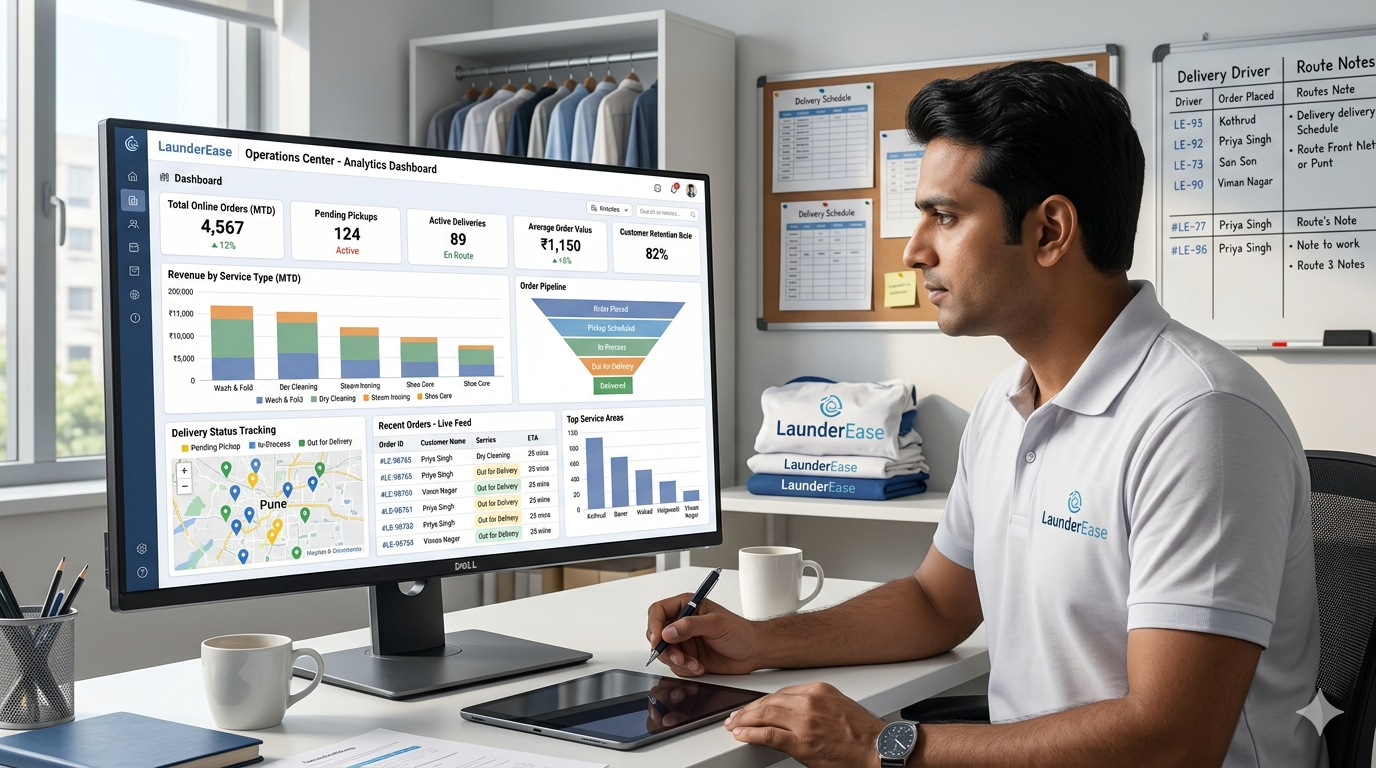
Manual order tracking breaks down fast. You can remember 5 customers and their preferences. You can't remember 50. When someone calls asking about their order status, you shouldn't need to dig through registers—the system should tell you in 3 seconds where their clothes are.
Customer retention requires remembering preferences and purchase history. Good software shows you that Mrs. Sharma always wants fabric softener, Mr. Patel picks up on Saturdays, and the entire second floor of Tower B prefers morning delivery. Use this to deliver better service without mental overhead.
Financial clarity comes from proper reporting. How much revenue came from dry cleaning versus regular wash? Which delivery areas are profitable? What's your average order value? Without software tracking this automatically, you're making decisions based on gut feel instead of data.
A modern Laundry POS & Management System handles billing with GST compliance, tracks customer orders from pickup to delivery, manages multiple locations if you expand, and gives customers mobile access to track their orders. The best ones also handle staff scheduling, inventory management for detergents and supplies, and automated customer reminders.
The ROI usually shows up in three areas: fewer billing errors, better customer retention through automated follow-ups, and your time freed up from administrative work to actually grow the business.
Ezer Laundry POS System
Streamline your laundry business with our comprehensive POS system. Features include smart billing, garment tracking, WhatsApp notifications, and cloud backup.
Scaling From One Shop to Multiple Locations
Growth creates new problems. What worked with one location and 30 daily orders falls apart at three locations with 200 orders. You need centralized visibility—seeing all orders, all inventory, all revenue in one dashboard without calling each shop manager.
Multi-branch support in your software becomes critical. Each location should be able to take orders and process them locally, but you need aggregate reporting. Customer data should be shared—if someone who usually visits your Sector 18 shop places an online order from Sector 22, the system should recognize them and apply their preferences.
Staffing complexity increases exponentially. You need delivery routing that doesn't send your Indirapuram driver to Vaishali. You need inventory that doesn't run out at one location while another has excess. You need quality control that's consistent across branches.
The shops that scale successfully do one thing right: they standardize operations before expanding. Every location follows the same process for tagging items, the same SLAs for delivery, the same quality checks. Software enforces this standardization so individual staff variations don't create customer experience gaps.
Is This Model Right for Your Business?
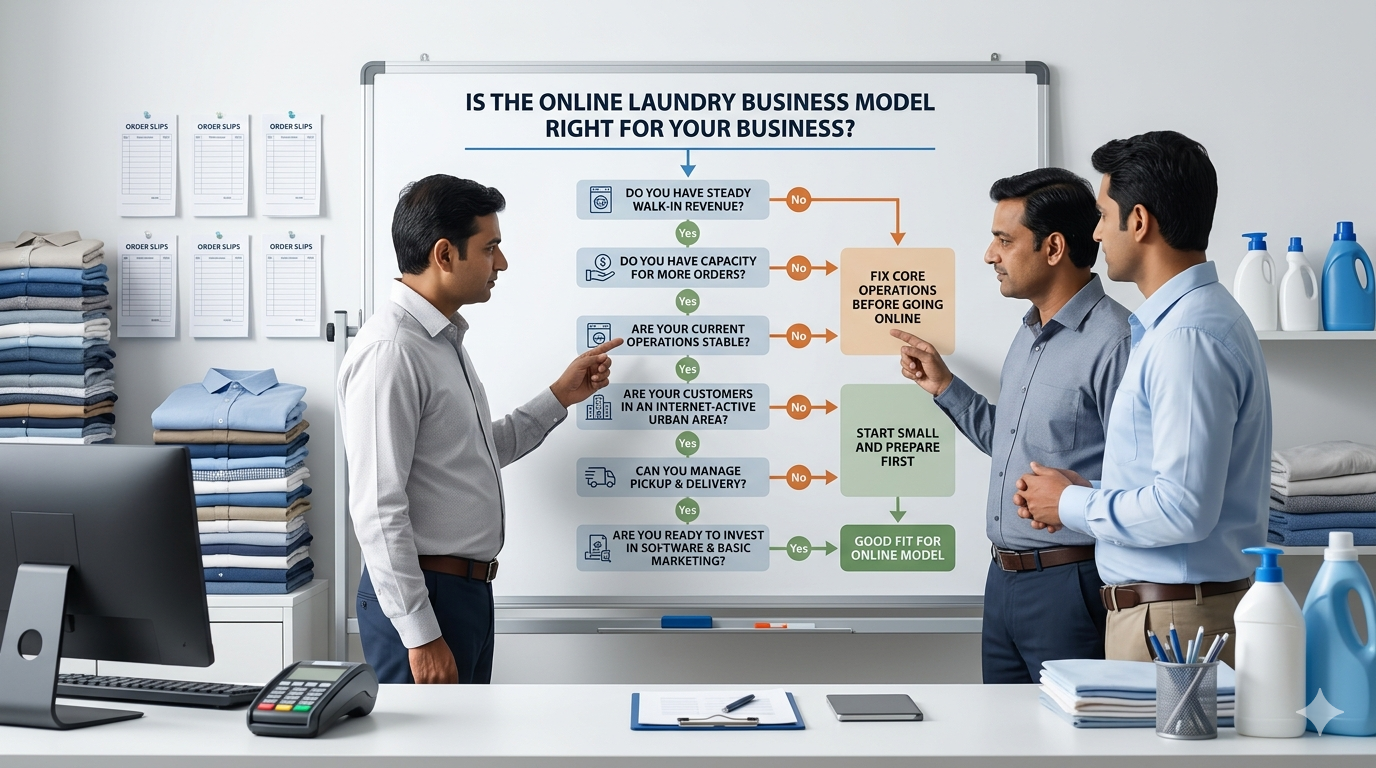
This model makes sense if you're in a city with reasonable internet penetration and customers who value convenience. Tier 1 and Tier 2 cities in India are ready for this. Smaller towns might be 2–3 years away from critical mass.
You need a minimum baseline revenue to justify the investment. If you're doing less than ₹50,000 monthly revenue currently, fix fundamental operational issues first. Online presence amplifies what you already do—if service quality is inconsistent, going online just means more people discover your problems faster.
The ideal candidate for this model: established shop with steady walk-in business, capacity to handle 20–30% more orders, and willingness to invest ₹60,000–₹1,50,000 in technology and initial marketing. You should also have or be willing to hire someone comfortable with basic technology.
Don't go online just because competitors did. Go online because you see specific customer segments you're not reaching—working professionals who can't visit during shop hours, residential complexes beyond your delivery range, or customers who prefer digital transactions.
FAQs
How much does it cost to start an online laundry business?
If you have an existing shop, expect ₹60,000–₹1,50,000 for website/app development, initial marketing, and software subscriptions. Starting from scratch adds shop setup costs (₹3–₹8 lakhs depending on location and equipment). Monthly operational costs run ₹15,000–₹40,000 including delivery, software, and marketing.
Can I run an online laundry business from home?
Legally yes, practically it's challenging. You need space for washing machines, drying equipment, and inventory storage. Zoning laws vary by city—residential areas often restrict commercial washing operations due to water usage and noise. Small-scale operations (5–10 orders daily) can work from home initially, but growth requires commercial space.
What software do I need for an online laundry business?
You need a system covering order management, customer tracking, billing with GST, and delivery coordination. Cloud-based Laundry Management Software works best because it's accessible from anywhere and includes mobile apps for customers. Budget ₹800–₹3,000 monthly depending on features and order volume.
How do I get customers for my online laundry business?
Start with Google Business Profile optimization and local SEO for "laundry near me" searches. Run targeted Facebook ads in your delivery areas. Partner with apartment complexes and corporate offices. Implement referral programs giving existing customers incentives to bring friends. Organic growth takes 3–4 months; paid ads work faster but cost more.
Is online laundry business profitable in India?
Margins typically run 25–40% after all costs if you manage operations efficiently. Profitability depends on order volume, delivery costs, and customer retention. Businesses crossing 100 orders monthly usually achieve sustainable profits. Competition in metro cities is intense, which pressures pricing, but suburban and Tier 2 cities offer better margins.
What's the difference between online laundry and traditional laundry shop?
Traditional shops rely on walk-in customers and manual order tracking. Online models let customers book via apps/websites, offer pickup and delivery, use digital payments, and track orders in real-time. The actual washing process is identical—the difference is in customer interaction and operational management through technology.
Do I need delivery staff or can I use third-party services?
Both work depending on order volume. Below 20 orders daily, third-party services like Dunzo cost less than hiring dedicated staff. Above 30 orders daily, your own delivery person becomes more economical and gives you better control over customer experience. Many businesses start with third-party and transition to in-house as volume grows.
Conclusion
The online laundry business model works, but it's not a magic solution to poor operations or bad service. Technology makes customer interaction smoother, tracking more reliable, and growth more manageable. It doesn't fix fundamental problems with quality, pricing, or delivery reliability.
Start small. Get your core operations solid, invest in proper software that handles orders and billing correctly, and expand your service area gradually. Track what matters—customer retention rate, average order value, and cost per acquisition—not just total orders.
If you're ready to move your laundry business online and want software that handles the complexity without overwhelming you, look for systems built specifically for Indian laundry operations with features like GST billing, WhatsApp integration, and multi-location support. The right technology doesn't just digitize your business; it gives you the foundation to scale sustainably.