
Online Pickup & Delivery System for Laundries: A Complete Guide
Running a laundry business in 2026 isn't just about washing clothes anymore. Customers expect convenience—they want their laundry picked up from home and delivered back without stepping out. If you're still asking customers to drop off clothes at your shop, you're leaving money on the table. This guide walks you through setting up an online pickup and delivery system that actually works for Indian laundry businesses, without burning through your budget or creating more operational headaches.
Why Laundry Businesses Need Pickup & Delivery Now
The shift happened faster than most shop owners expected. During the pandemic, contactless services became normal. Now? They're expected. Your competitors already offer home pickup. Corporate clients won't even consider you without it. Residential apartments are signing up with laundries that save their residents a trip.
But here's what most articles won't tell you: just adding delivery isn't enough. The real challenge is managing it without chaos. I've seen shops lose customers because delivery boys showed up two hours late, or because billing got mixed up between pickup and delivery orders.
The businesses that succeed treat pickup and delivery as a complete system, not an afterthought.
What Makes a Pickup & Delivery System Actually Work
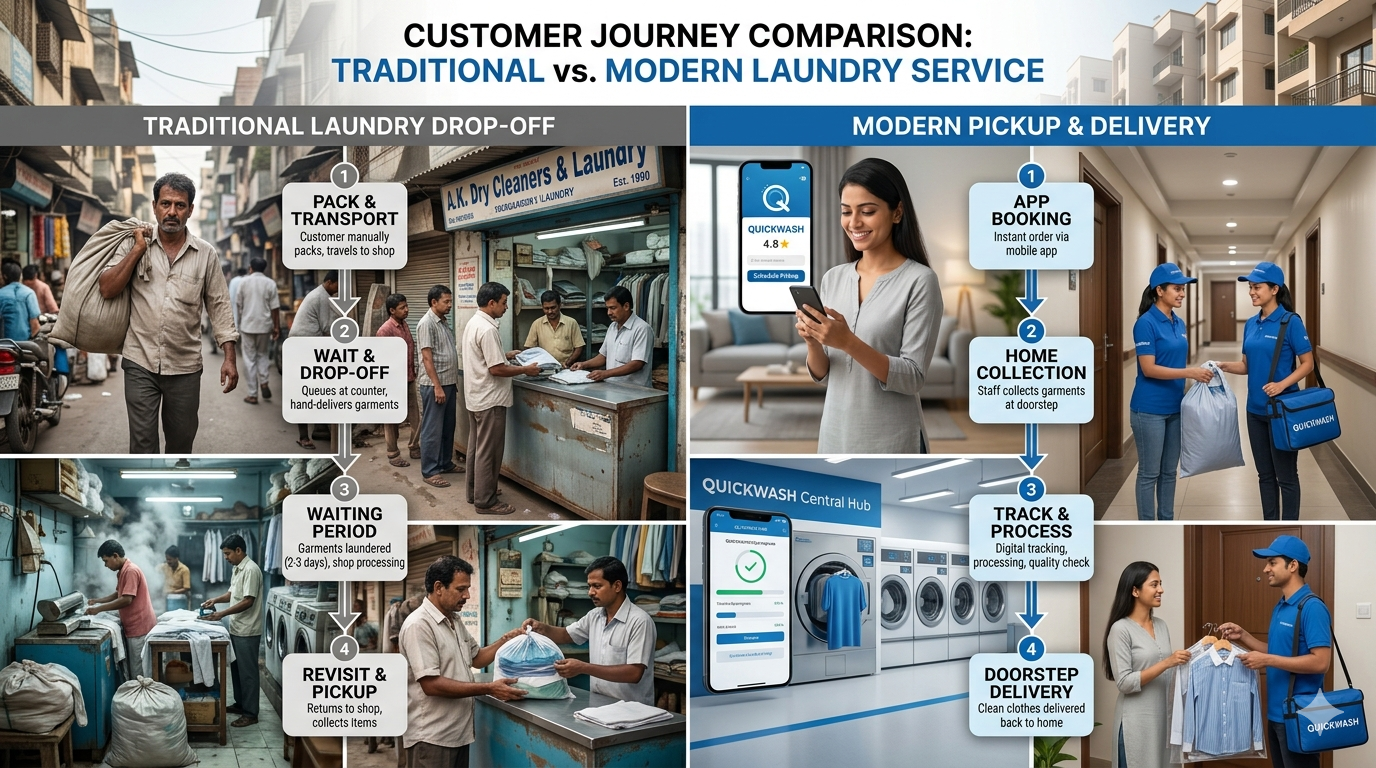
Let's be practical. You need three things working together:
Order management that tracks every garment. When someone calls for pickup, you need to know exactly what was collected, what service they want, when it's ready, and where it needs to go. Without this, you'll have delivery boys calling you every 30 minutes asking for addresses.
Route optimization. This sounds fancy but it just means planning pickups and deliveries efficiently. If your delivery person is crisscrossing the city because orders aren't grouped by area, you're wasting fuel and time. Some shops I've worked with were spending ₹8,000 monthly on fuel that could've been ₹4,500 with better route planning.
Real-time communication. Customers want to know when you're coming. A simple WhatsApp message before pickup and delivery reduces complaints by half. It's not complicated, but it needs to be systematic.
Setting Up Your Pickup & Delivery Operations
Start with your service area. Don't try to cover the entire city on day one. Pick 2-3 neighborhoods where you already have customers. Test there first.
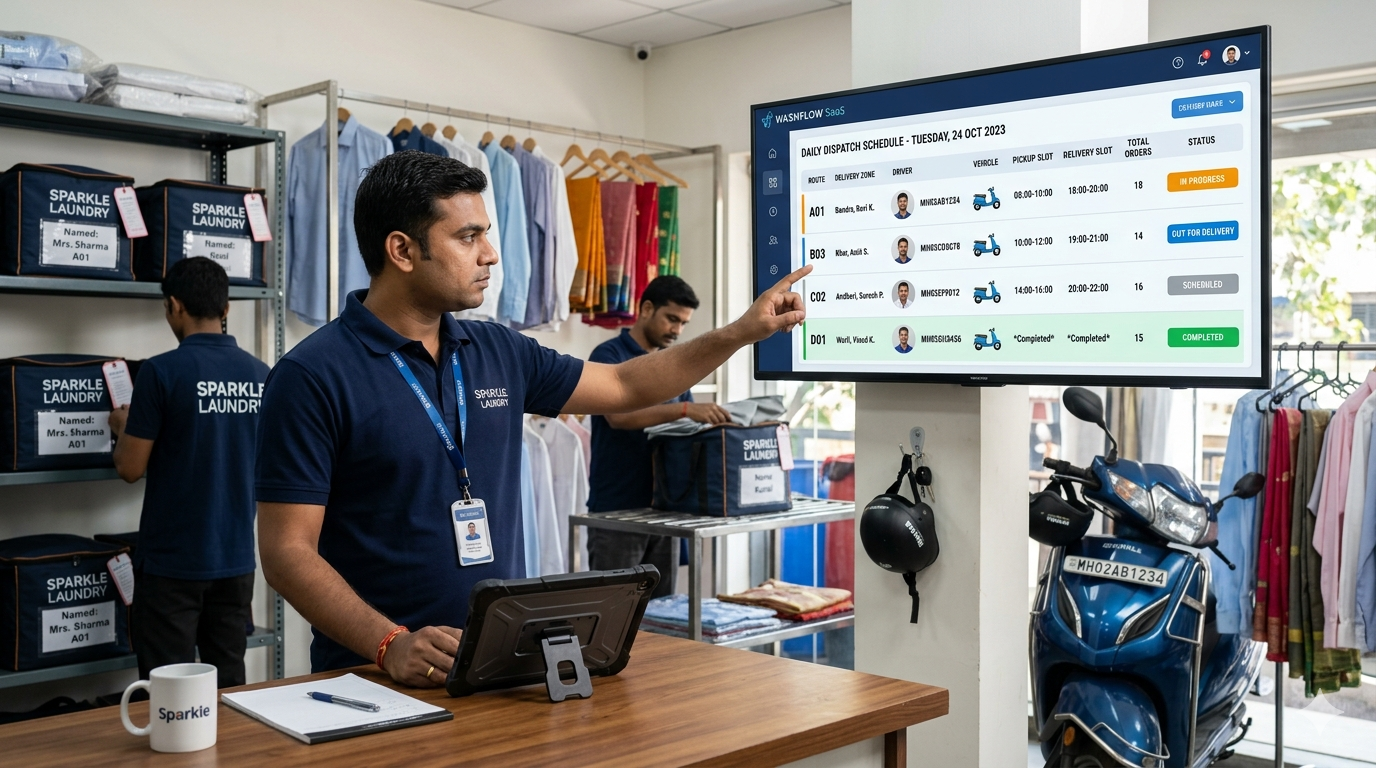
You'll need delivery personnel. Many shops start with one person doing both pickups and deliveries on the same route. Morning pickups, afternoon deliveries. It works until you hit about 15-20 orders daily, then you need to split the roles.
Here's a mistake I see often: shops buy expensive delivery vehicles immediately. Start with a two-wheeler. Seriously. Most residential orders fit in a large insulated bag. You can upgrade to a van when you're doing 50+ daily orders.
Set clear time slots. "We'll come between 10 AM and 2 PM" is too vague. "We'll pick up between 10-11 AM" is better. Even better? "Your pickup is scheduled for 10:30 AM." The tighter your windows, the more professional you look.
Pricing Your Pickup & Delivery Service
This confuses everyone. Should pickup and delivery be free? Should you charge extra? What do competitors do?
The answer depends on your average order value. If your typical order is ₹300-400, adding a ₹40 pickup charge feels expensive to customers. But if you're processing ₹800-1200 orders, customers don't mind paying ₹50-60 for the convenience.
Some shops offer free pickup and delivery above a minimum order value. ₹500 seems to be the sweet spot in most cities. Below that, charge ₹30-50 depending on distance.
Distance-based pricing makes sense but it's harder to communicate. Flat rates are simpler. You might lose a bit on distant orders but gain on closer ones. It balances out.
One pricing model that works: free regular delivery (3-4 days), paid express delivery (24 hours). Customers who need speed will pay. Others won't mind waiting.
Managing Customer Expectations and Communication
The biggest complaint isn't about washing quality. It's about uncertainty. "When will you pick up?" "Is my order ready?" "When are you delivering?"
You need a system that answers these questions without your customers calling you repeatedly. Some shops still use Excel sheets and phone calls. It works until you hit 20-30 daily orders, then it becomes impossible.
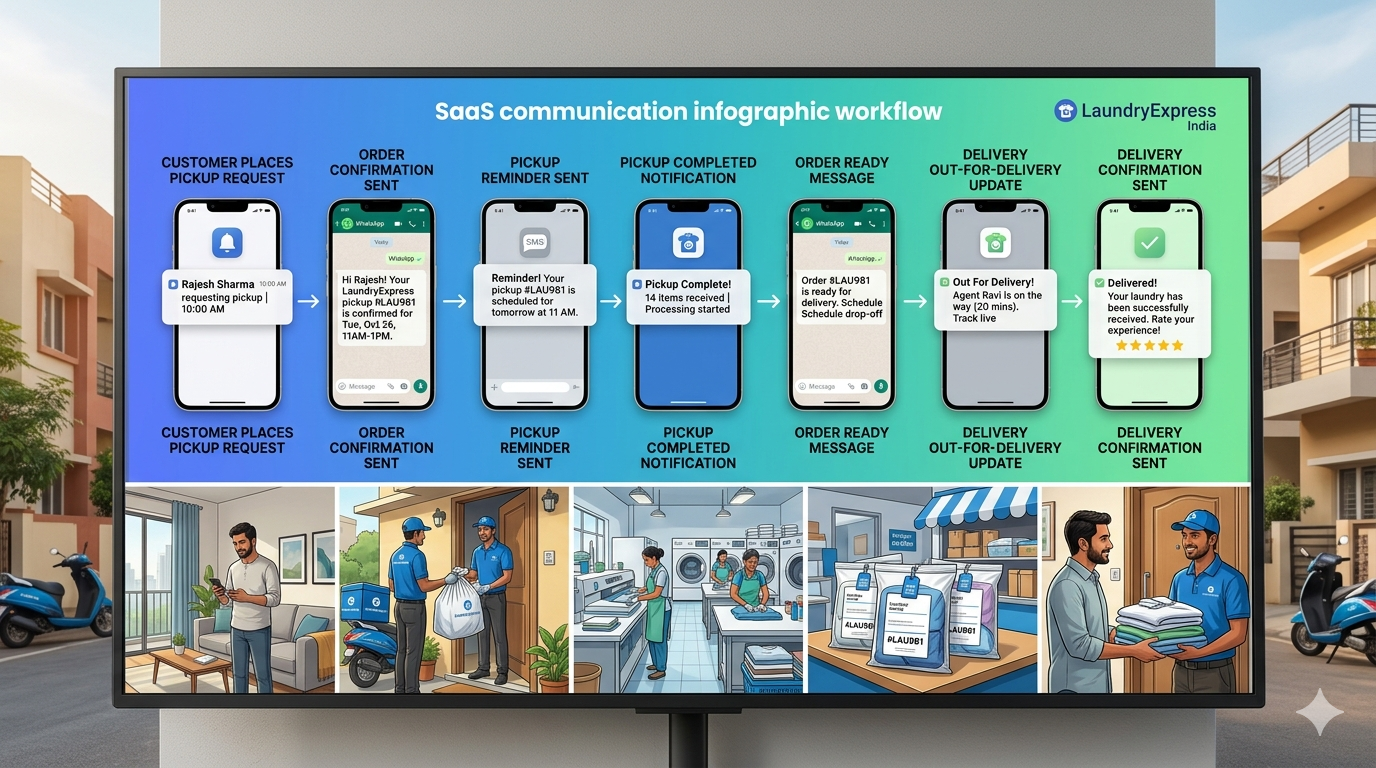
Automated notifications solve this. When a customer places an order online, they get a confirmation. When pickup is scheduled, they get a reminder. When clothes are ready, they get an alert. When delivery is out, they get a tracking update.
This isn't about being high-tech. It's about respecting your customers' time. The shops that do this well keep customers for years. The ones that don't keep searching for new customers to replace the ones they lose.
How Laundry POS Software Connects Everything
Here's where most laundry businesses struggle: they're using different tools that don't talk to each other. WhatsApp for orders, a notebook for tracking, Google Sheets for billing, manual route planning.
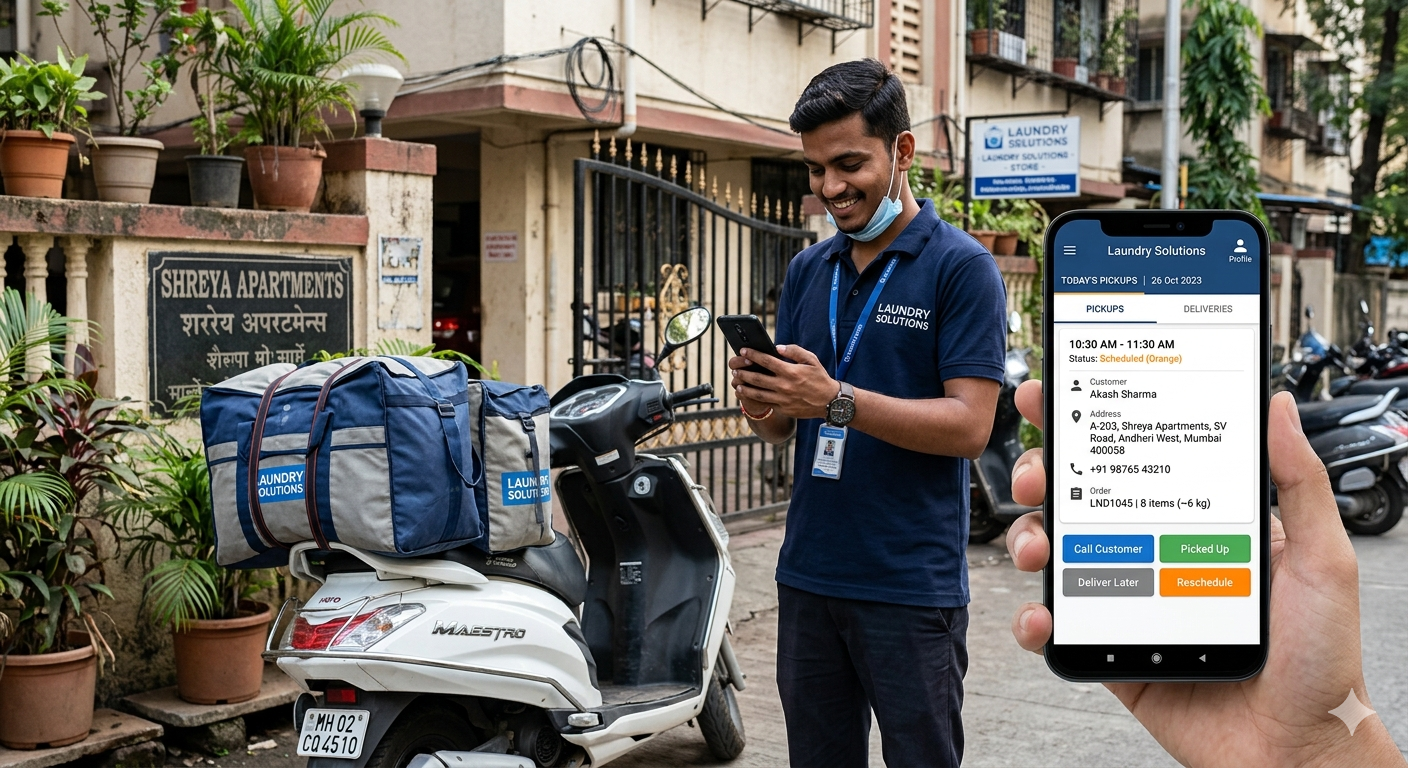
A proper laundry POS software brings everything into one place. When a customer books a pickup online or through your mobile app, it automatically creates an order in your system. Your staff sees it immediately. The delivery person gets the address on their phone. No confusion.
Billing happens at pickup. Your delivery person has a mobile app that lets them generate bills on the spot, apply discounts, and collect payment. The customer gets a digital receipt. Everything syncs to your main system in real-time.
The best part? You can track everything. Which areas generate most orders? What's your average delivery time? Which delivery person is most efficient? You make decisions based on data, not guesswork.
Good laundry management software also handles the messy parts—splitting orders across multiple delivery runs, managing returns and complaints, tracking garments through the wash cycle, ensuring nothing gets lost.
Ezer Laundry POS System
Streamline your laundry business with our comprehensive POS system. Features include smart billing, garment tracking, WhatsApp notifications, and cloud backup.
Common Mistakes That Kill Pickup & Delivery Services
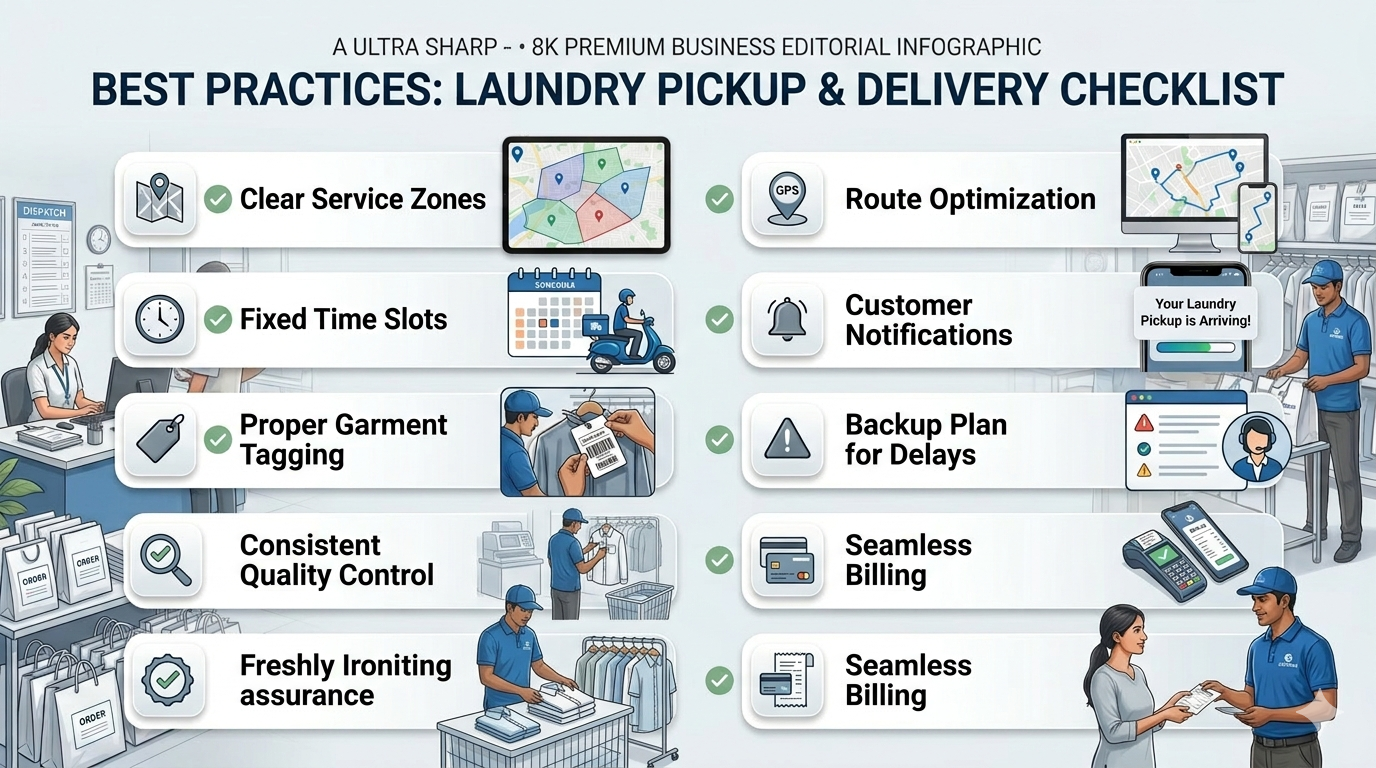
Underestimating delivery costs. Fuel, personnel salaries, vehicle maintenance, packaging—it adds up quickly. Calculate your actual cost per delivery before setting prices.
No backup plan for delays. Traffic, vehicle breakdowns, staff absence—things go wrong. Shops without contingency plans end up disappointing customers. Always have a backup delivery person or partner with a local courier for emergencies.
Ignoring return pickups. Customers sometimes aren't home when you deliver. You need a system for rescheduling, not just marking it as "delivery failed" and forgetting about it.
Overcomplicating the ordering process. If customers need to install an app, create an account, add payment details, and verify their phone before placing their first order, most won't bother. Make it simple. WhatsApp ordering works. Web forms work. Complicated apps don't.
Not training delivery staff properly. Your delivery person represents your business. If they're rude, careless with clothes, or constantly late, it doesn't matter how good your washing is.
Scaling Beyond Your First Service Area
Once you've mastered one area, expanding gets easier. But don't rush it. I've seen shops try to cover 10 localities simultaneously and fail everywhere because they spread themselves too thin.
Add one new area at a time. Wait until you're running smoothly there before adding another. This might feel slow, but it's sustainable.
Multi-branch operations need centralized management. If you open a second location, both branches should share the same system. Customer data, pricing, order history—everything should be accessible from both locations. This way, a customer in Area A can drop off clothes at your Area B branch without any confusion.
Technology becomes non-negotiable at this point. Managing multiple delivery routes, tracking inventory across branches, coordinating between locations—you can't do it with notebooks and phone calls.
Handling the Technology Side Without Technical Headaches
Many laundry owners avoid technology because they think it's complicated. It doesn't have to be.
Modern laundry POS systems are designed for shop owners, not IT experts. Cloud-based systems mean you don't need servers or technical maintenance. Everything runs on your phone, tablet, or computer through a web browser.
Look for systems that offer:
- Simple onboarding (you should be running within a day, not weeks)
- Mobile apps for delivery staff
- Customer-facing ordering options
- Automatic WhatsApp notifications
- GST-compliant billing
- Reports you can actually understand
Avoid systems that lock you into long contracts or charge per-transaction fees. Monthly subscription models are clearer and usually more affordable long-term.
The goal isn't to become a tech company. It's to use technology to handle the boring, repetitive tasks so you can focus on growing your business.
Measuring Success: What Numbers Actually Matter
Revenue per delivery route. If one route generates ₹12,000 daily and another generates ₹6,000, you need to understand why. Maybe the second route covers areas with smaller average orders, or the delivery person isn't as efficient.
Customer retention rate. Are customers ordering again? If you're constantly hunting for new customers instead of serving repeat ones, something's wrong with your service quality or communication.
Average order value from pickup vs walk-in customers. Usually, pickup orders are larger because customers send more clothes when they don't have to carry them. If yours aren't, you might need to adjust your minimum order value.
Delivery promise vs actual delivery time. If you promise 3-day turnaround but consistently deliver in 4-5 days, reset expectations. Under-promise and over-deliver works better than the reverse.
Cost per delivery. Include everything: fuel, salaries, vehicle costs, packaging. If this number is ₹60 but you're charging ₹40 for delivery, you're subsidizing convenience at your own expense.
FAQs
What's the minimum investment to start pickup and delivery for a laundry business?
You can start with ₹15,000-25,000. This covers a two-wheeler deposit (if you don't own one), insulated delivery bags, basic packaging materials, and a simple digital system for order management. Many shops start even cheaper by using personal vehicles and WhatsApp for coordination. Don't wait for the perfect setup. Start small, learn what works, then invest more.
How many orders do I need to make pickup and delivery profitable?
Around 20-25 orders per day makes a dedicated delivery operation worthwhile. Below that, you're likely losing money on delivery costs unless you charge premium fees. Between 15-20 orders, you can break even with careful route planning. Above 30 orders daily, delivery becomes a significant profit driver if managed well.
Should I hire delivery staff or use third-party delivery services?
Hire your own staff once you have consistent volume. Third-party services (like Dunzo or delivery apps) work for occasional deliveries but get expensive at scale. Plus, your own delivery person represents your brand and can build customer relationships. At 10-15 daily deliveries, third-party makes sense. Beyond 20, hiring becomes more cost-effective.
How do I handle missed deliveries when customers aren't home?
Set clear delivery windows and send reminders 30 minutes before arrival. If a customer misses delivery, have a policy: one free rescheduling attempt, then either charge a redelivery fee or ask them to pick up from the shop. Some laundries use building security or neighbors for safe drops in apartment complexes. Whatever your policy, communicate it clearly when customers place orders.
What's the best way to track garments from pickup to delivery?
Use a laundry POS software with barcode or tag-based tracking. When clothes arrive, they're tagged with a unique identifier linked to the customer's order. Every step—washing, ironing, quality check—is logged. This prevents mixing up orders and helps locate any garment instantly. Manual tracking with registers works for tiny operations but becomes unreliable beyond 10-15 daily orders.
Can small laundries compete with large chains on pickup and delivery?
Absolutely. Your advantage is personalized service and flexibility. Large chains have standardized processes but can't always accommodate special requests or provide the same level of customer attention. Focus on your neighborhood, build relationships, respond quickly to complaints, and maintain consistent quality. Many customers prefer supporting local businesses if the service matches or exceeds chain standards.
How long does it take to set up an online pickup and delivery system?
With ready-made laundry management software, you can be operational within 2-3 days. This includes setting up your system, training staff on the mobile app, and testing a few deliveries. Building everything from scratch (custom app, website) takes months and costs significantly more. Most successful laundries use existing platforms and customize them to their needs rather than building from zero.
Conclusion
Setting up pickup and delivery isn't about following some revolutionary strategy. It's about systematically solving operational problems—tracking orders accurately, managing routes efficiently, communicating clearly, and keeping costs under control.
The laundries that win aren't always the ones with the biggest budgets. They're the ones that treat pickup and delivery as a core service, not an add-on. They invest in systems that scale, train their staff properly, and actually listen when customers complain about late deliveries.
Start with one area. Get it right. Then expand. Use technology to handle the repetitive parts so you can focus on service quality and growth.
If you're ready to see how a modern laundry POS system can streamline your pickup and delivery operations, explore solutions designed specifically for Indian laundry businesses. The right tools make everything easier.
Best Laundry Management Software in India (2026 Guide) How to Start Your Laundry Business in 2026: Complete Guide