
Barcode & QR Tracking for Laundry: Stop Losing Garments in 2026
Lost a customer's expensive shirt? Mixing up orders during peak hours? If you're running a laundry or dry-cleaning business without proper garment tracking, you're playing a risky game. Barcode and QR code tracking isn't just for big retail chains anymore. Small laundry shops across India are using this technology to eliminate mix-ups, speed up operations, and build customer trust. This guide explains how barcode and QR tracking works, what it costs, and whether your laundry business actually needs it.
Why Traditional Tracking Methods Fail in Laundry Businesses
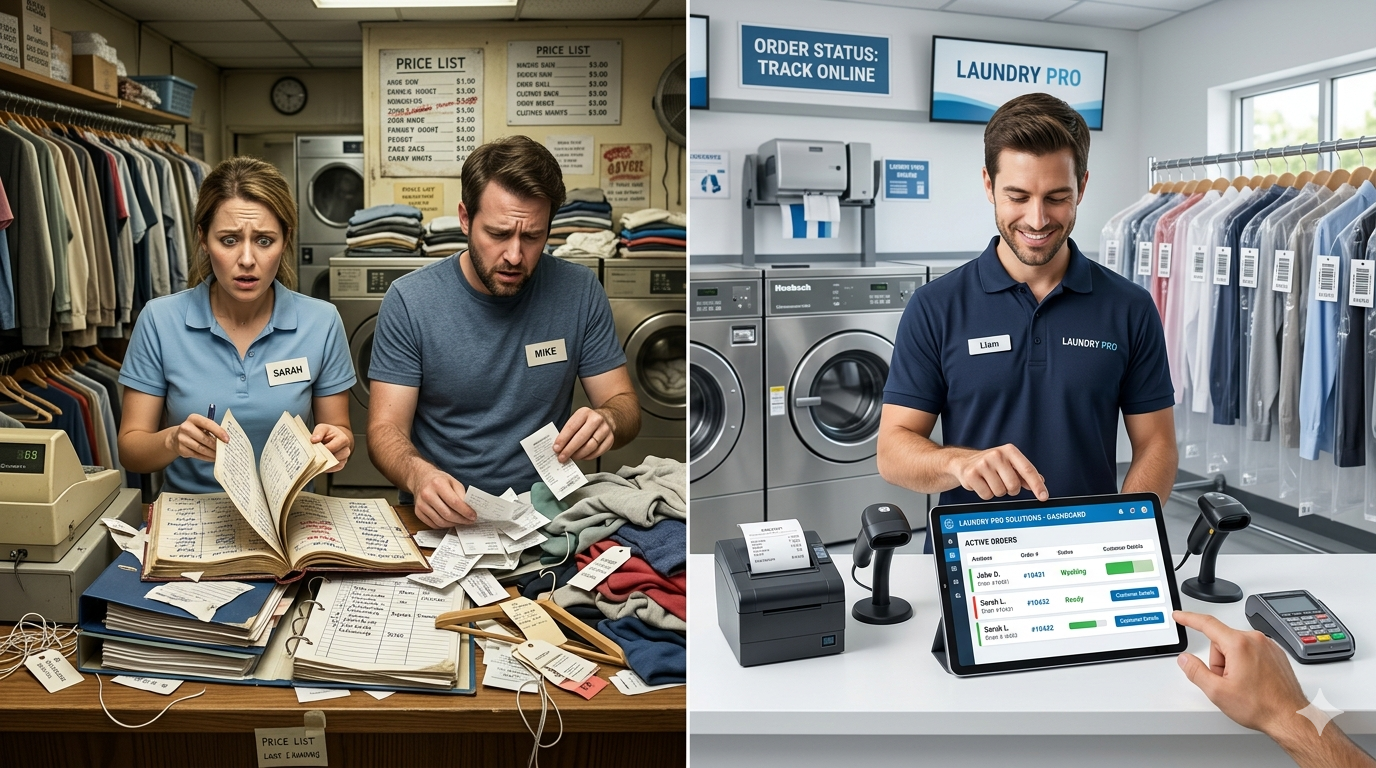
Most small laundries still use handwritten registers or basic Excel sheets. Sounds familiar? Here's the problem. When you're handling 50+ orders daily, manual tracking breaks down fast.
Common issues include wrong garment counts, misplaced items between washing and delivery, staff forgetting which bag belongs to which customer, and zero accountability when something goes missing. One wrong delivery can cost you a loyal customer.
Paper-based systems also slow down your staff. They waste time cross-checking registers, hunting for specific items, and manually updating status for every order. During rush hours, this creates bottlenecks that frustrate both your team and waiting customers.
What is Barcode & QR Code Tracking for Laundries?
Barcode and QR tracking assigns a unique digital identity to each garment or order. Think of it as an Aadhaar card for clothes.
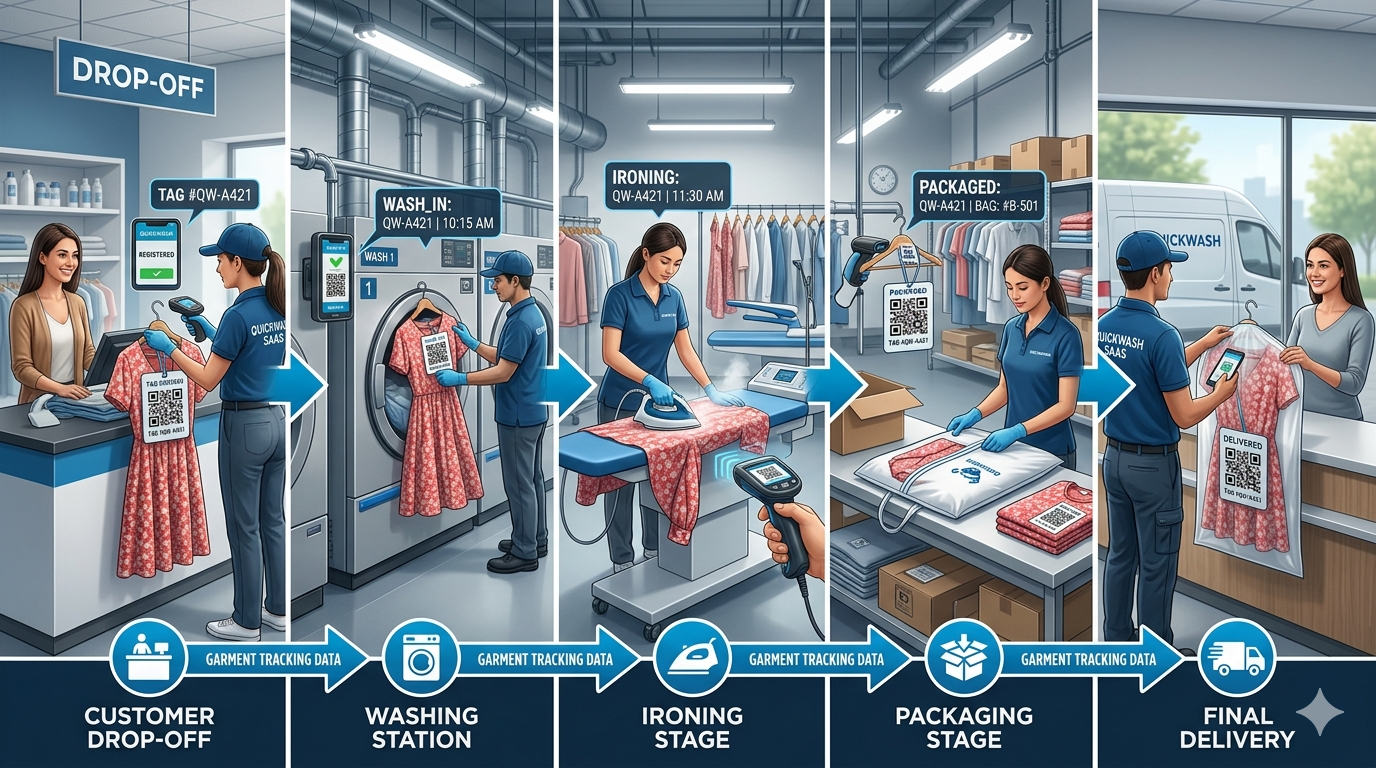
Here's how it works in practice. When a customer drops off clothes, your staff generates a unique code (barcode or QR) and attaches a tag to each item or bag. This code links to the customer's order details in your system. Throughout the washing, drying, ironing, and packaging process, staff scan the code at each checkpoint. The system automatically updates the status. When the customer arrives for pickup, you scan the code, verify the items, and complete delivery in seconds.
The difference between barcode and QR codes? Barcodes are simpler and cheaper but hold less information. QR codes can store customer details, special instructions, and even pricing data. Most modern laundry POS software supports both, so you can choose based on your needs.
Real Problems Barcode Tracking Solves
Let's talk about actual operational headaches. Garment mix-ups happen when you're processing multiple orders simultaneously. With barcode tracking, each item has a clear identity trail. You'll know exactly which shirt belongs to which customer, even if you're handling 200 garments a day.
Inventory visibility becomes crystal clear. You can see which items are in washing, which are ready for ironing, and which are packed for delivery. No more guesswork. Your staff knows the exact status without asking around or checking multiple registers.
Customer disputes drop significantly. When someone claims you lost their item, you have a complete digital trail showing when it entered your shop, which processes it went through, and when it was returned. This data protects your business from false claims while helping you identify genuine issues quickly.
Staff accountability improves automatically. If a garment goes missing at the ironing stage, your system shows who scanned it last. This isn't about blaming people. It's about identifying process gaps and training needs.
Setting Up Barcode Tracking: What You Actually Need
The setup is simpler than you think. You need three basic components.
First, a barcode scanner or smartphone. Basic handheld scanners cost ₹2,000-₹8,000. Many modern systems also work with Android phones, which means you might not need separate hardware at all. Your staff can scan codes using the camera app integrated with your laundry software.
Second, printable tags or labels. You can buy heat-resistant laundry tags designed to survive washing cycles. These cost roughly ₹0.50-₹2 per tag depending on quality. Alternatively, use paper tags for items that won't go through harsh processes. Some shops use reusable tags with printed QR codes attached with safety pins.
Third, software that generates codes and tracks scans. This is where laundry POS software becomes essential. The system should automatically generate unique codes when you create a new order, allow quick scanning at different stations, and update order status in real-time.
Total initial investment? Around ₹15,000-₹40,000 for a small setup. That includes basic scanning equipment, your first batch of tags, and software subscription for a few months.
How to Manage Laundry Orders Digitally in 2026: A Complete Guide
Step-by-Step: How to Implement Tracking in Your Shop
Start with order intake. When a customer brings clothes, create their order in your system. The software generates a unique barcode or QR code. Print this code and attach tags to each garment or create one tag per order bag, depending on your volume and customer expectations.
Set up scanning stations at key checkpoints. You need at least three: receiving counter, processing area (after washing), and delivery counter. If you have separate stations for ironing, folding, or special treatments, add scanners there too.
Train your staff on the scanning routine. It takes about 2-3 days for teams to develop the habit. The key is making it mandatory, not optional. If staff bypass the system even occasionally, your tracking data becomes unreliable.
Handle special cases smartly. For bulk orders from hotels or corporate clients, you might tag bundles instead of individual items. For premium customers who want item-level tracking, tag everything separately. Your system should accommodate both approaches.
Common Mistakes to Avoid
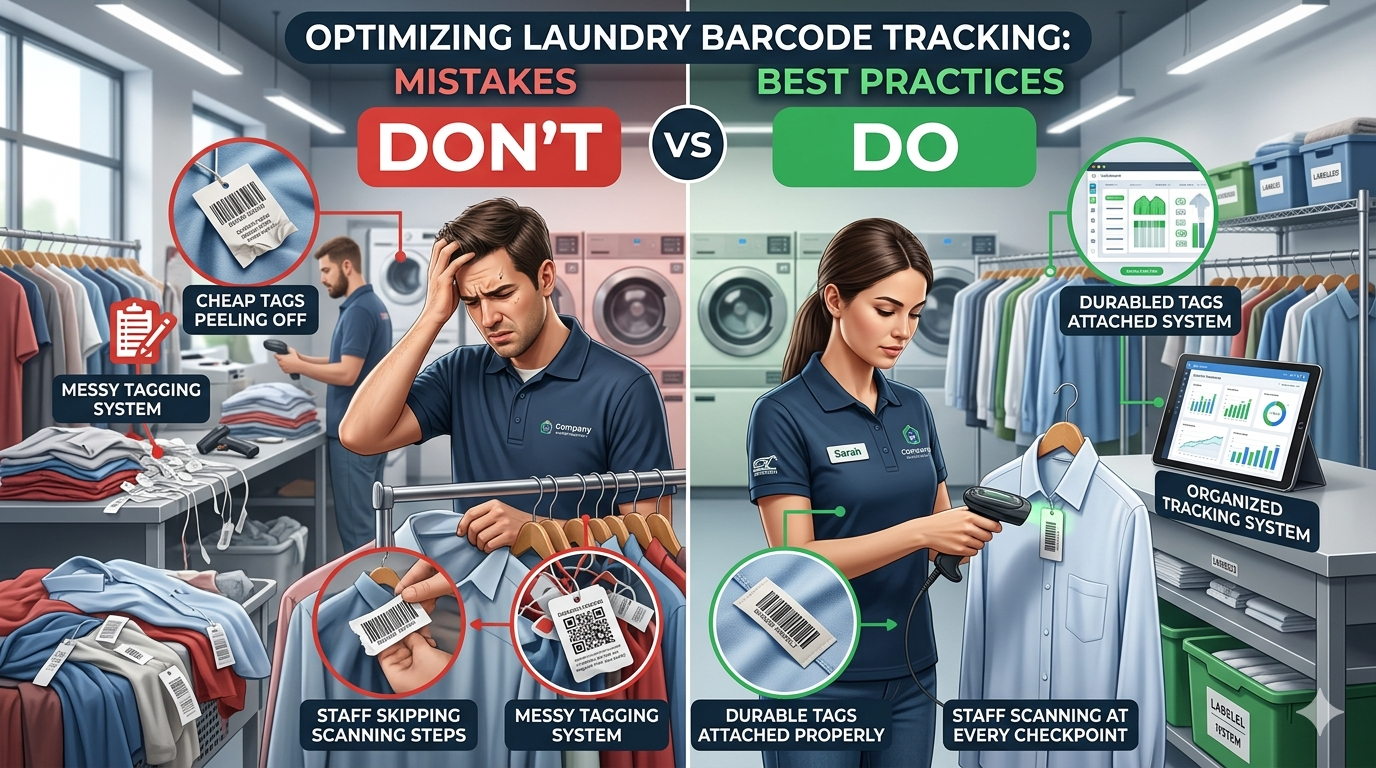
Don't over-complicate the initial setup. Some shop owners try to track every single sock and handkerchief separately from day one. Start with order-level tracking, then move to item-level for premium services. Build complexity gradually.
Avoid cheap, non-durable tags. Tags that peel off during washing defeat the entire purpose. Invest in proper heat-resistant or waterproof tags even if they cost slightly more. The alternative is re-tagging items, which wastes time and creates confusion.
Never skip staff training. Technology alone doesn't solve problems. Your team needs to understand why tracking matters and how it makes their jobs easier. If they see it as extra work, they'll find shortcuts that break the system.
Don't ignore data review. Tracking generates useful insights, but only if you actually look at the reports. Check weekly summaries to spot patterns like recurring delays at specific stations or items that frequently get misplaced.
Cost-Benefit Analysis: Is It Worth It?
Let's look at numbers. A typical small laundry handling 40-60 orders daily might spend ₹25,000 on initial setup and ₹3,000-₹5,000 monthly on software and tags.
What do you get back? Reduced garment loss saves money directly. If you were compensating customers for 2-3 lost items monthly at an average of ₹500 each, that's ₹1,500 saved. Time savings matter more. When your staff stops manually searching for items and cross-checking registers, they complete orders faster. This means you can serve more customers with the same team size.
Customer retention is the real benefit. In the laundry business, trust is everything. When customers see you scanning their items and can track order status themselves, they feel confident. This confidence translates to repeat business and referrals.
Most shop owners break even within 4-6 months. After that, the efficiency gains and reduced losses become pure profit.
How Laundry POS Software Makes Tracking Effortless
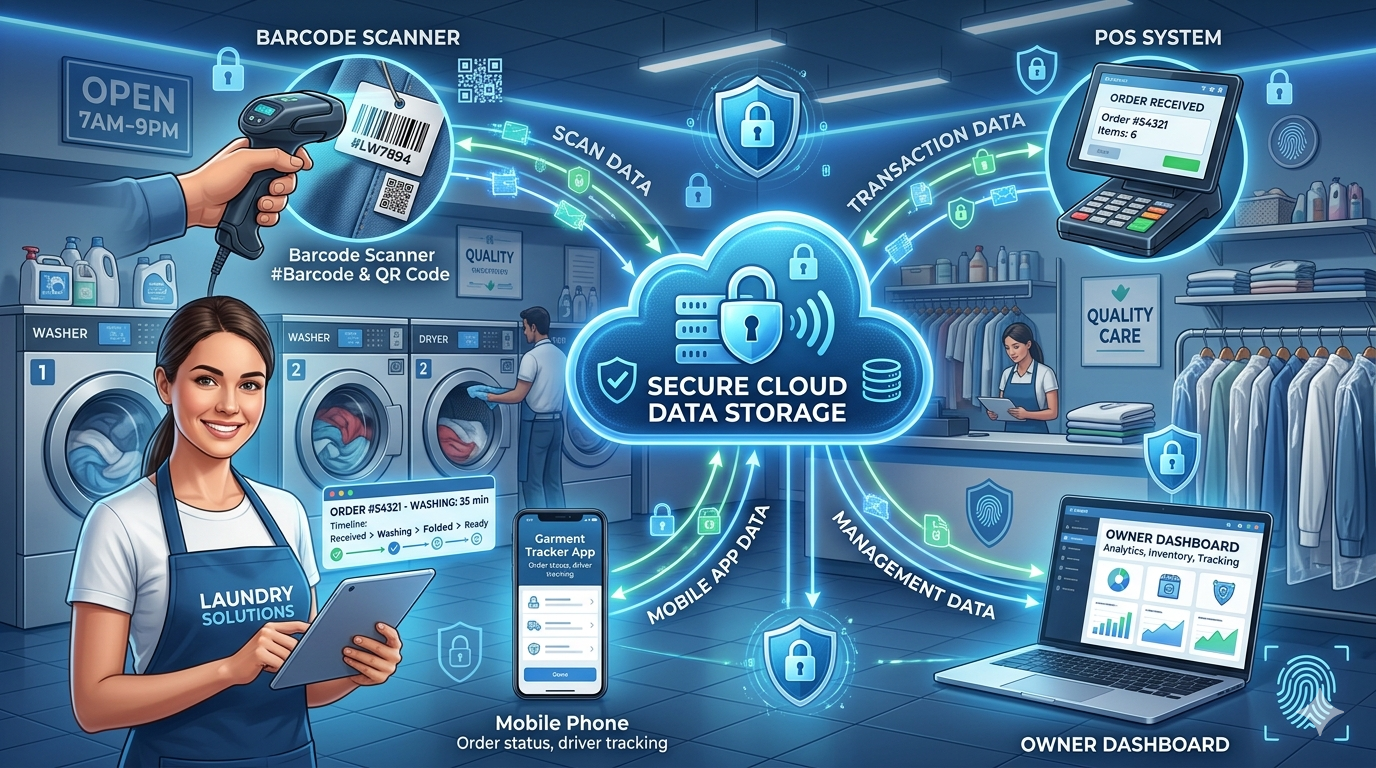
Modern laundry POS software integrates barcode and QR tracking into your daily workflow. You're not adding a separate system. Everything happens in one place.
When you bill a customer, the software automatically generates tracking codes. These sync with your customer database, so you can see complete order history instantly. If someone calls asking about their delivery, you scan or search their code and know the exact status without putting them on hold.
Mobile app integration changes customer experience entirely. Some systems let customers scan their own receipt QR code to check order status, see estimated delivery time, and even pay online. This reduces phone calls to your shop and makes you look more professional.
Multi-location tracking becomes possible if you're planning to expand. When you add a second branch or a pickup point, the same system tracks garments moving between locations. You maintain visibility even as your operation grows more complex.
Cloud-based systems mean you can check business performance from anywhere. Sitting at home on Sunday? You can see how many orders were processed Saturday evening, which items are pending delivery Monday morning, and whether your staff is maintaining scanning discipline.
Ezer Laundry POS System
Streamline your laundry business with our comprehensive POS system. Features include smart billing, garment tracking, WhatsApp notifications, and cloud backup.
Barcode vs QR: Which Should You Choose?
Barcodes work fine for basic tracking needs. They're cheaper to print, and most people recognize them instantly. If you're primarily tracking orders (not individual items) and don't need to store much information in the code itself, barcodes are sufficient.
QR codes offer more flexibility. You can embed customer phone numbers, special washing instructions, or pricing details directly in the code. This means even if your internet connection drops temporarily, staff can still access critical information by scanning the QR code. They also look more modern to customers.
Honestly? For most small laundries, either works. The software you choose matters more than the code format. Pick a system that supports both, so you have options as your needs evolve.
Integration with Pickup & Delivery Operations
If you offer home pickup and delivery, tracking becomes even more valuable. Your delivery staff can scan items when collecting from customers, providing instant confirmation. This eliminates disputes about what was actually picked up.
During delivery, the same process works in reverse. Scan codes to verify you're returning the correct items to the right customer. Get digital signature or confirmation through the app, and you have a complete audit trail from pickup to delivery.
Route optimization becomes easier when your system knows which orders are ready for delivery and which customers are waiting. Some advanced platforms even suggest efficient delivery routes based on location data linked to order codes.
How to Start Your Laundry Business in 2026: Complete Guide
Handling Customer Privacy & Data Security
You're storing customer information and tracking their belongings. This creates privacy responsibilities. Make sure your software provider offers data encryption and secure cloud storage. Customer names, phone numbers, and order details should never be accessible to unauthorized people.
Be transparent with customers about tracking. Most people appreciate knowing their clothes are being monitored. Some might have privacy concerns about QR codes containing personal information. In such cases, use codes that only work within your system, not publicly scannable ones with visible data.
Regular data backups matter. If your tracking system goes down and you lose order information, you're back to chaos. Choose software that automatically backs up your data daily to cloud servers.
Scaling Up: From One Shop to Multiple Locations
Barcode tracking makes expansion significantly easier. When you open a second branch, both locations can use the same tracking system. If a customer drops clothes at Location A but wants delivery at Location B, your system tracks the transfer seamlessly.
Centralized inventory becomes possible. You can see combined data across all branches, identify which locations handle more orders, and allocate resources accordingly. This business intelligence helps you make better decisions about staffing, equipment purchases, and marketing focus.
Franchising becomes cleaner too. If you're planning to franchise your laundry business, having a standardized tracking system demonstrates operational maturity. Franchisees get a proven process instead of having to build their own systems.
FAQs
Do I need different scanners for barcodes and QR codes?
Most modern barcode scanners read both 1D barcodes and 2D QR codes without any issue. Even budget scanners around ₹3,000-₹5,000 support both formats. Alternatively, any smartphone with a camera works perfectly for QR scanning through your laundry app.
What happens if a tag falls off during washing?
Use heat-resistant or waterproof tags designed specifically for laundry use. These tags survive regular washing cycles. If a tag does fall off occasionally, your staff can identify the item through order details and reattach a new tag. This is why keeping good order notes matters.
Can customers track their orders using the QR code?
Yes, if your laundry POS software includes customer-facing features. Customers can scan their receipt QR code through your mobile app or website to see real-time order status. This reduces calls to your shop asking "when will my clothes be ready?"
Is barcode tracking only for large laundries?
Not anymore. Cloud-based software has made tracking affordable for shops handling even 20-30 orders daily. The initial setup cost has dropped significantly, and you can start with basic order-level tracking, then add item-level tracking as you grow.
How long does it take for staff to learn the system?
Most staff members get comfortable within 2-3 days of regular use. Scanning is straightforward, point and click. The bigger challenge is building the habit of scanning at every checkpoint. With proper training and management insistence, teams adapt quickly.
What if my internet connection is unreliable?
Better laundry software offers offline mode. Your staff can continue scanning and updating orders even without internet. The system syncs data automatically once the connection returns. QR codes with embedded information also work offline since the data is in the code itself.
Can I use this system for other items like shoes or bags?
Absolutely. The tracking logic remains the same. Generate a code, attach a tag, scan at checkpoints, and deliver. Many laundries use the same system for shoe cleaning, bag repairs, and alterations. Just adjust your tagging method for different item types.
Conclusion
Barcode and QR tracking transforms laundry operations from chaotic to controlled. You eliminate garment mix-ups, speed up your processes, and build customer confidence. The technology isn't complicated or expensive anymore. Small shops across India are implementing these systems and seeing real results within weeks.
Start simple. Choose reliable software, get basic scanning equipment, and train your team properly. The investment pays back through reduced losses, faster operations, and happier customers. If you're serious about growing your laundry business, tracking is no longer optional.
Want to see how modern tracking works in a real laundry setup? Explore cloud-based laundry POS systems that include barcode tracking, customer apps, and delivery management in one platform.
7 Critical Mistakes to Avoid When Starting a Laundry Business in 2026